
Jonathan Freedland in The Guardian:
 It consists of nothing more than an intermittent correspondence between two friends. Yet the epistolary form is deceptively efficient, supplying backstory, plot, character, dialogue and more than one narrative voice before a conventional novel might have cleared its throat. Within a page or two, we are in the world of Martin and Max, both German, the latter a Jew now living in San Francisco, the former now back in Munich – two men who have been business partners, friends and whose families have, as we shall discover, been intimately connected.
Their exchange, spanning just 16 months between 1932 and 1934, illuminates not just the specific texture of the early Nazi period, but something more timeless. It serves as a guide to the way any politics of identity – especially one that invokes “the people”, rooting that idea in blood and soil – eventually, and often very rapidly, divides and polarises. Max and Martin have shared “the fireside”, there finding “warmth and understanding, where small selfishnesses are impossible and where wine and books and talk give a different meaning to existence”. But even the very best of friends can be rent apart. Once a dividing line is drawn, it’s astonishing how swiftly people can break from those who stand on the other side of it. In that sense, Address Unknown is a warning. We tell ourselves, as these characters do, that friendship is eternal, that some bonds will never be broken. This short story warns us that ideology, once it has turned to fever, is stronger than friendship.
More here.
 Is there anything CRISPR can’t do? Scientists have wielded
  A living room in Grantwood, N.J., has a good claim to being the birthplace, in the late 1920s and early 1930s, of a new science of humankind. Amid the demands of advising and fund-raising, the chair of the Columbia University anthropology department, Franz Boas, had decided to host regular Tuesday evening seminars at his suburban home. His students, passing plates of oatmeal cookies, were elaborating a way of seeing the world. They called it cultural relativity. Their essential finding was that societies did not come rank-ordered as civilized or primitive, moral or deviant. Each culture was only a sampling taken from the vast inventory of possible human beliefs and practices.
 Just about everything we know that decreases the risk of developing cancer — exercise, healthful eating, not smoking, and the like — is associated with healthier tissues, which favor normal cell types.
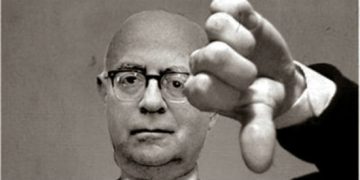 Academic, stuffy, German – Theodor W. Adorno has become emblematic of a certain sense of unfeeling in art. He was critical of TV, partial to Schoenberg, and aggrieved by the crassness of life in exile in 1940s America. Some of his students, infatuated with the youthful spontaneity of 1968, supposed that Adorno represented the old institutions that continued into post-war Europe, seeing his criticisms of mass culture being ‘pre-digested’ as identical to the conservative dismissal of contemporary art, culture, and even values. Determined to take action, they scrawled ‘If Adorno is left in peace, capitalism will never cease’ on the blackboard. Three of them surrounded him and exposed their breasts as others handed out leaflets proclaiming, ‘Adorno as an institution is dead.’ Adorno would confide in Max Horkheimer, writing: ‘To have picked me of all people, I who have always spoken out against every type of erotic repression and sexual taboo!’
 And yet the issues on which Boas and Mead made their interventions, issues around race and gender, are now at the center of public life, and they bring all the nature-nurture confusion back with them. The focus of the conversation today is identity, and identity seems to be a concept that lies beyond both culture and biology. Is identity innate, or is it socially constructed? Is it fated, or can it be chosen or performed? Are our identities defined by the existing state of social relations, or do we carry them with us wherever we go?
 A
A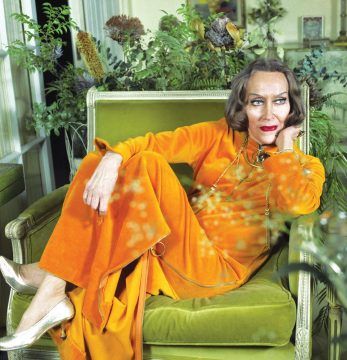 One evening in early 1950, the film mogul Louis B. Mayer hosted a small dinner party for the actress Gloria Swanson. She was fifty-one years old, which was not considered an ancient, crone-like age, even in an industry that values youth above all else. Still, she was in need of a professional boost. Mayer’s small soiree was something of a ceremonial gesture. Here was one of the last tycoons of classic Hollywood extending his hand and his hospitality to an actress who was tottering, on marabou-covered heels, back into the business after a decade-long fermata.
 Nicholas Christakis and I are on the same page: We would definitely sacrifice our lives to save a billion strangers, perhaps even several hundred million, plucked at random from Earth’s population. But, for sure, not a thousand strangers, or a million. Those numbers seem, somehow, too insignificant. Christakis, the director of the Human Nature Lab at Yale University, shared this
 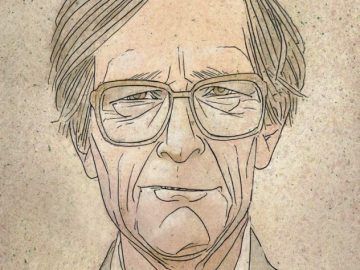 John Rawls
 Memory takes different forms. Memories can be encoded in the strength of neural connections in our brains, but there’s a sense in which photographs and written records are memories as well. What did people do before such forms of memory even existed? Lynne Kelly is a science writer and researcher who specializes in forms of memory in the ancient world, as well as a competitive memory expert in her own right. She has theorized that ancient structures such as Stonehenge might have served as memory palaces, encoding social knowledge over extended periods of time. We talk about how to improve your own memory, the origin of religion, and how prehistoric cultures preserved their know-how.
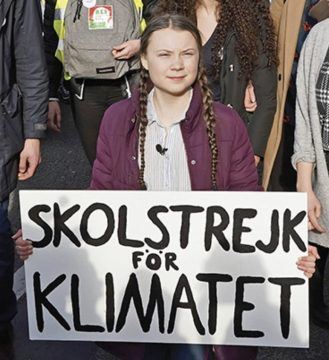 The climate crisis is an issue that requires long-term thinking across the generations, yet electoral politics is geared toward responding to immediate grievances. Politicians can talk about taking the long view, but without institutional changes to the way we practice democracy, they are unlikely to look beyond short-term political gains.
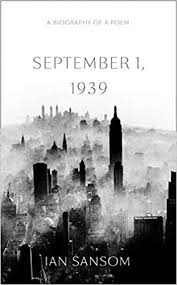 Few political poems strike emotional pay dirt with such consistency and effect as ‘September 1, 1939’. In the sprung rhythm of his three-beat line, with each of his eleven-line stanzas containing one sentence, the language leaps at our hearts and minds. Auden’s infamous cleverness and his wide allusiveness continue after many readings to startle in satisfying ways, even when we don’t recall exactly ‘what occurred at Linz’ or really know ‘What huge imago made/A psychopathic god’. What follows, of course, from these puzzling lines is the poem’s most clarifying moment: ‘I and the public know/What all schoolchildren learn,/Those to
 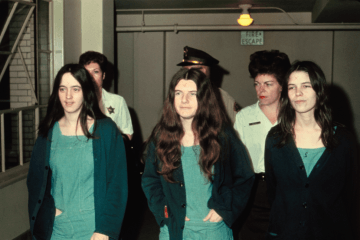 Around October 20, 1969, Sanders received a copy of an ecology newsletter called Earth Read-Out in the mail. The newsletter reprinted a five-day-old San Francisco Chronicle story describing two police raids on a remote desert ranch in California: “A band of nude and long-haired thieves who ranged over Death Valley in stolen dune buggies” had been rounded up. Sanders read the story with some interest, then put it aside. Six weeks later, when Manson’s picture was plastered across the front pages of newspapers, along with reports of the horrific crimes he’d allegedly orchestrated, Sanders recalled the thieves in the desert.
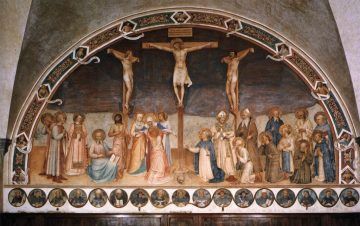 In the summer of 1873, Henry James visited a former monastery on Piazza San Marco in Florence. Surrounded by a scattering of low-slung, washed-out government buildings and conical Tuscan cypresses, the church and convent were in what is still the city’s center. When James first entered the convent, he saw Fra Angelico’s The Crucifixion with Saints in the chapter room. A brightly colored, semicircle fresco about thirty feet wide, Crucifixion depicts Christ and the two thieves on either side of him, nailed to their crosses, as saints and witnesses grieve below. “I looked long,” James wrote. “One can hardly do otherwise.” As the author moved throughout what had then just become a museum, he felt a spiritual urge, even though he had rejected his Christian upbringing. “You may be as little of a formal Christian as Fra Angelico was much of one,” he wrote in Italian Hours. “You yet feel admonished by spiritual decency to let so yearning a view of the Christian story work its utmost will on you.” Even Angelico’s colors, he added, seem divinely infinite, “dissolved in tears that drop and drop, however softly, through all time.”