THE HAPPINESS OF ATOMS
1.
According to Konstantin Tsiolkovsky, “the father of modern rocket science,”
in order for the earth to thrive every atom must be happy. “It is the organic
need and right of all atoms not to feel torment but to exist in peace and
happiness,” he wrote in 1934. And, “When the wrong path of humanity leads
it to a wild, destructive state, the atoms suffer much grief.”
2.
“You may say, But are there not natural disasters that sweep away this
happiness in a moment, as a broom sweeps away garbage?
Planets and suns explode like bombs. What life can resist it!
But I answer you, the lives of atoms arise many times.”
3.
He was born in the small Russian village of Izhevskoye, in 1857. At the age
of 10, he contracted scarlet fever which left him bedridden for many months
and hard of hearing. The village school refused to take him back. He studied
the books in his father’s library, and later in the central library of Moscow
where he lived in a small, drafty room and made experiments with
quicksilver and sulphuric acid. “I was happy with my ideas and my diet of
brown bread did not dampen my spirits.”
4.
But what is an atom? Werner Heisenberg said, “Atoms are not things. They
are only tendencies.” And Neils Bohr contended, “Everything we call real is
made of things that cannot be regarded as real.” To Max Planck, “There is
no matter as such—mind is the matrix of all matter.”
5.
“The universe is not only stranger than we imagine, it is stranger than we
can imagine.” (J.B.S. Haldane).
6.
Gentleness of lamps at night. Of inlets and coves, of secret edges. Wild
gentleness of the antiparticle, of the queerness of touch, the surveilled, the
wandering, the lost, the non-existent. Vagrant gentleness. Radical,
insubordinate, unsettled. The body’s cells in their most gentle captivity.
Basket nests, seeds. Quiet gentleness of the torn, the broken.

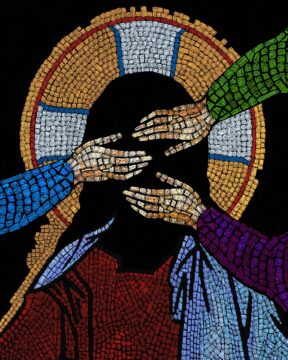 It sounds like a strategy meeting with the campaign team: “Whom do men say that I am?”
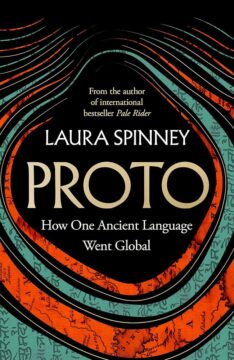 The words we use feel inevitable. We take them for granted. But they began life about 6,000 years ago, when copper was being smithed in the lands to the west of the Black Sea. Spinney says “an aura of magic must have hovered around the early smiths, who drew this gleaming marvel from blue-green rock”. New language hovered around them, too.
 Science has a trust problem — at least, that is the common perception. If only, the argument goes, we could get people to ‘trust’ or ‘follow’ the science, we, as a society, would be doing more about climate change, childhood vaccination rates would be increasing rather than decreasing and fewer people would have died during the COVID-19 pandemic. Characterizing the problem as ‘science denialism’, however, is misleading and wrongly suggests that the solution is to build greater trust between scientists and the public.
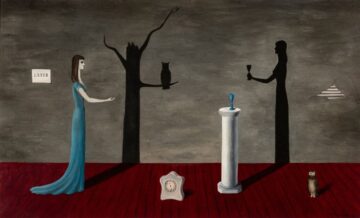
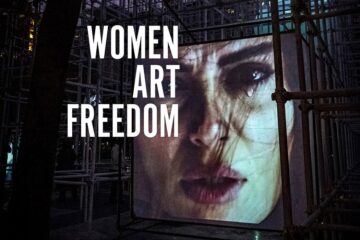 “What if we view street activities not as organic, evolving phenomena but as calculated efforts to challenge and subvert the state rules governing street dynamics?” Pamela Karimi asks in
  O
O A
A On March 19, 2024, we emailed the psychologist and Nobel laureate Daniel Kahneman, inviting him to appear on our podcast, “Lives Well Lived,” and suggesting a date in May. He replied promptly, saying that he would not be available then because he was on his way to Switzerland, where, despite being relatively healthy at 90, he planned to die by assisted suicide on March 27.
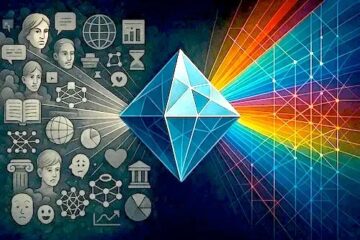 Today’s AI technologies are based on deep learning, yet “AI” is commonly equated with large language models, and the fundamental nature of deep learning and LLMs is obscured by talk of using “statistical patterns” to “predict tokens”. This token-focused framing has been a remarkably effective way to misunderstand AI.
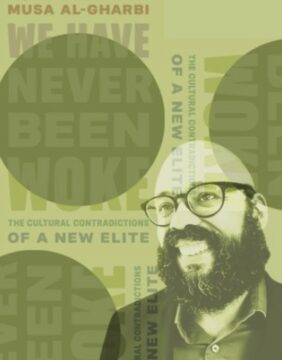 In recent decades, a paradox has haunted American political life. Given that political progressives wielded considerable political, economic, and cultural influence, how is it possible that our actual social order was so resistant to real change? Why did the black-white wealth gap remain unchanged, and why did economic inequality steadily increase? Why did basic access to affordable housing plummet? And why has higher education become a nightmarish debt sentence for poor and underprivileged people seeking a better life?
 Mishra is a relative latecomer to the Palestinian cause. It was Israeli heroes, not Arabs, with whom he was infatuated as a boy growing up in India: he even had a picture on his wall of Moshe Dayan, Israel’s defence minister during the Six Day War. Conversion came during a 2008 visit to Israel-Palestine, where Mishra was shocked to witness the humiliations heaped on the inhabitants of the West Bank. “Nothing prepared me for the brutality and squalor of Israel’s occupation,” he writes, “the snaking wall and numerous roadblocks … meant to torment Palestinians in their own land … the racially exclusive network of shiny asphalt roads, electricity grids and water systems linking the illegal Jewish settlements to Israel.”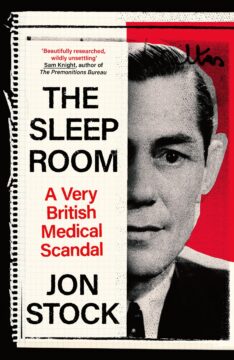
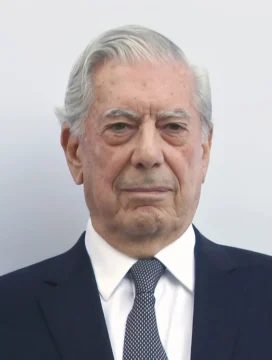 Once upon a time, during the last quarter of the 20th century, it was possible to argue that one person was America’s best novelist and best literary critic. I am talking about John Updike, whose long and elegant reviews in The New Yorker set reading agendas. Such was Updike’s influence that readers paid heed when, in the mid-1980s, he developed a sustained literary man-crush on the Peruvian writer Mario Vargas Llosa, who died on Sunday at 89.