
Richard Conniff in Scientific American:
 It is one of the great dilemmas of climate change: We take such comfort from air conditioning that worldwide energy consumption for that purpose has already tripled since 1990. It is on track to grow even faster through mid-century—and assuming fossil-fuel–fired power plants provide the electricity, that could cause enough carbon dioxide emissions to warm the planet by another deadly half-degree Celsius. A paper published Tuesday in the Nature Communications proposes a partial remedy: Heating, ventilation and air conditioning (or HVAC) systems move a lot of air. They can replace the entire air volume in an office building five or 10 times an hour. Machines that capture carbon dioxide from the atmosphere—a developing fix for climate change—also depend on moving large volumes of air. So why not save energy by tacking the carbon capture machine onto the air conditioner?
This futuristic proposal, from a team led by chemical engineer Roland Dittmeyer at Germany’s Karlsruhe Institute of Technology, goes even further. The researchers imagine a system of modular components, powered by renewable energy, that would not just extract carbon dioxide and water from the air. It would also convert them into hydrogen, and then use a multistep chemical process to transform that hydrogen into liquid hydrocarbon fuels. The result: “Personalized, localized and distributed, synthetic oil wells” in buildings or neighborhoods, the authors write. “The envisioned model of ‘crowd oil’ from solar refineries, akin to ‘crowd electricity’ from solar panels,” would enable people “to take control and collectively manage global warming and climate change, rather than depending on the fossil power industrial behemoths.”
More here.
 The idea that humans have cognitive instincts is a cornerstone of evolutionary psychology, pioneered by Leda Cosmides, John Tooby and Steven Pinker in the 1990s. ‘[O]ur modern skulls house a Stone Age mind,’
  Climate change is the greatest challenge humanity has collectively faced. That challenge is, to put it mildly, practical; but it also poses a problem to the imagination. Our politics, our societies, are arranged around individual and group interests. These interests have to do with class, or ethnicity, or gender, or economics — make your own list. By asserting these interests, we call out to each other so that as a collective we see and hear one another. From that beginning, we construct the three overlapping, interacting R’s of recognition, representation and rights.
 Despite the lowest unemployment rates since the late 1960s, the American economy is failing its citizens. Some 90 percent have seen their incomes stagnate or decline in the past 30 years. This is not surprising, given that the
  When we talk about the mind, we are constantly talking about consciousness and cognition. Antonio Damasio wants us to talk about our feelings. But it’s not in an effort to be more touchy-feely; Damasio, one of the world’s leading neuroscientists, believes that feelings generated by the body are a crucial part of how we achieve and maintain homeostasis, which in turn is a key driver in understanding who we are. His most recent book,
  It’s 7pm on a Sunday, and night is falling in this Michoacán town. The heat of the day is past, and there’s a pleasant breeze. The first visitors to the park have left for dinner, but many hang around.
 Foresters began noticing the patches of dying pines and denuded oaks, and grew concerned. Warmer winters and drier summers had sent invasive insects and diseases marching northward, killing the trees. If the dieback continued, some woodlands could become shrub land. Most trees can migrate only as fast as their seeds disperse — and if current warming trends hold, the climate this century will change 10 times faster than many tree species can move, according to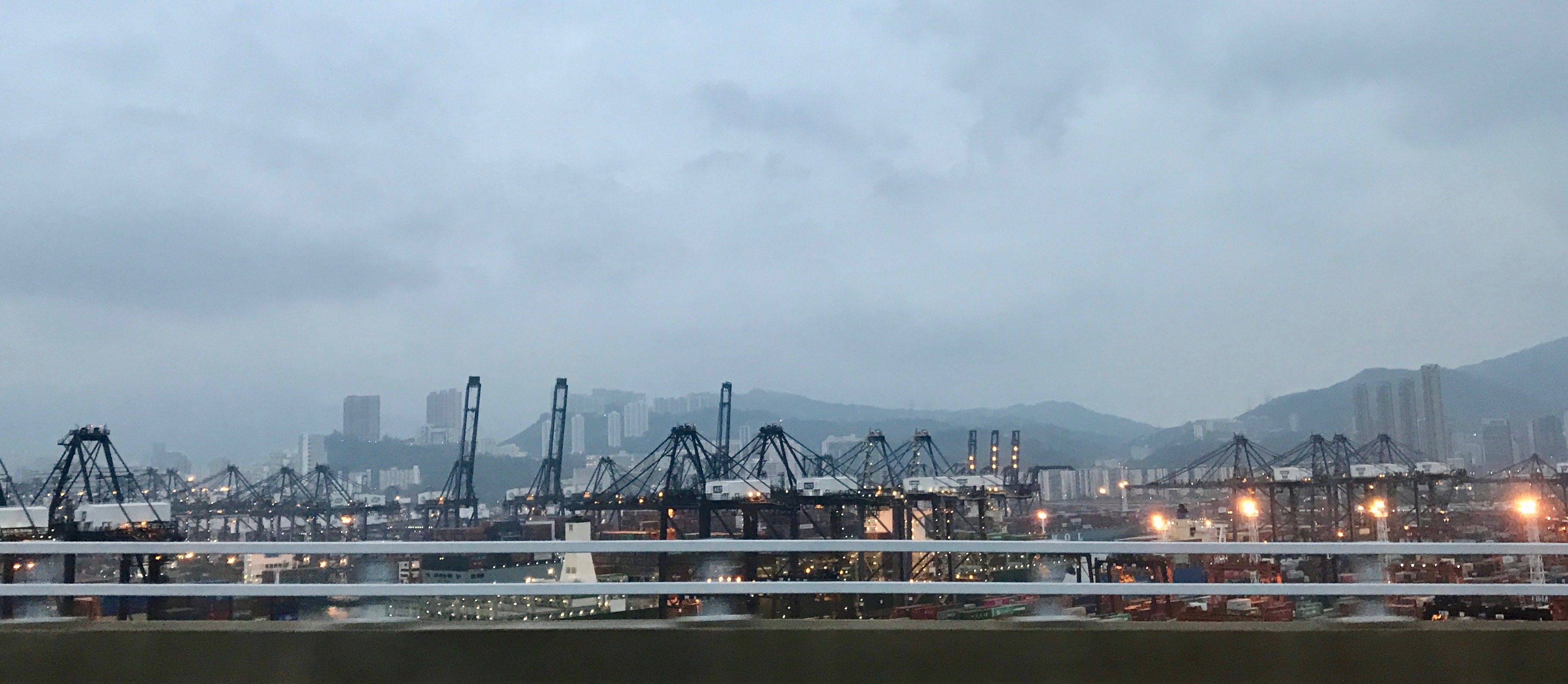
 Alongside cryptic epigraphs from F Scott Fitzgerald and Faiz Ahmed Faiz, the only-partially-reformed slam poet HM Naqvi began his debut novel Home Boy with a couplet from that most writerly act of old-school rap, Eric B & Rakim.
 Design submissions for the restoration of
  In early 1933, in the final days of the Weimar Republic, Eric Hobsbawm was in Berlin. He had lost his parents, and his uncle and aunt had taken him to Berlin where he joined his younger sister. As a teenaged student, Hobsbawm saw Germany falling into the hands of the Nazis. Hitler’s Brownshirts were unleashing widespread violence on the streets of Berlin. The country’s economy was in a shambles. Political instability was at its peak and the Nazi party was growing in popularity. Those were the formative years of the political Hobsbawm. “In this highly politicised atmosphere, it was perhaps hardly surprising that Eric soon became interested in the communist cause,” writes Richard J. Evans in Eric Hobsbawm: A Life in History, a biography of one of the most renowned historians of the 20th century.
 Imagine the outcry if, at the 2016 Summer Olympics, the legendary United States swim team – Michael Phelps, Ryan Lochte, Conor Dwyer and Townley Haas – still obliterated the competition, coming first in the men’s 4 x 200m freestyle relay, but only Haas, Lochte and Dwyer received medals, with nothing, not even a silver, for Phelps. ‘Unfair!’ you’d cry. And you’d be right.