
Erin O’Donnell in Harvard Magazine:
 HOW DID LIFE begin on Earth? On a young, rocky planet, how might chemicals have come together in just the right way to form the very first cells? How did those primitive cells start behaving like life: growing, dividing, and passing on advantageous traits to the next generation? The origins of life are especially murky because the geological record—the layers of rock and embedded fossils that hold clues about the history of Earth and life—disappears at roughly 3.9 billion years ago, erased by movements in the planet’s crust. As a result, scientists lack direct evidence for conditions on early Earth, including proof of the molecules that might have swirled in primordial ponds and formed the building blocks of life. This presents a host of questions, precisely the kind of big questions to which Jack Szostak is drawn. He and others believe they can reconstruct in the lab the long pathway that led from chemicals in space, to Earth’s formation, to pre-life chemistry on the planet, to early protocells, and finally to advanced cells with metabolism and protein synthesis. Sprawling explorations like these require expertise in many fields, including chemistry and biochemistry, geology and geophysics, and astronomy.
Szostak (pronounced SHAH-stak) may be the ideal person to pursue answers. A Nobel laureate, professor of genetics at Harvard Medical School, professor of chemistry and chemical biology in the Faculty of Arts and Sciences, the Rich Distinguished Investigator at Massachusetts General Hospital (MGH), and a Howard Hughes Medical Institute investigator, he is described by others as a brilliant, driven scientist. But he’s also known for mild-mannered humility, including a willingness to dive deeply into subjects that are new to him, and for his collegiality, for helping to foster idea-sharing that is moving science forward.
His own research focuses on one segment of the pathway to life: the protocell, “a really, really simple primordial cell that could assemble from chemicals that were around early on, on the surface of Earth,” Szostak explains. He hopes to understand how it would grow and divide and start to replicate, and eventually evolve. “We may not know what actually happened, but maybe we can work out different possible paths,” he says. “All we can do is try to assemble things in the lab that seem plausible.”
More here.
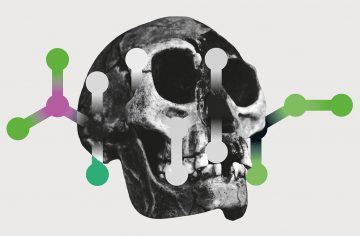 Some time in the past 160,000 years or so, the remains of an ancient human ended up in a cave high on the Tibetan Plateau in China. Perhaps the individual died there, or parts were taken there by its kin or an animal scavenger. In just a few years, the flesh disappeared and the bones started to deteriorate. Then millennia dripped by. Glaciers retreated and then returned and retreated again, and all that was left behind was a bit of jawbone with some teeth. The bone gradually became coated in a mineral crust, and the DNA from this ancient ancestor was lost to time and weather. But some signal from the past persisted.
 Antitrust law, established originally to limit corporate power, has become its friend. Think about the following anomalies:
 Games play an important, and arguably increasing, role in human life. We play games on our computers and our phones, watch other people compete in games, and occasionally break out the cards or the Monopoly set. What is the origin of this human impulse, and what makes for a great game? Frank Lantz is both a working game designer and an academic who thinks about the nature of games and gaming. We discuss what games are, contrast the challenges of Go and Poker and other games, and investigate both the “dark energy” that games can sometimes induce and the ways they can help us become better people.
 Ronald Dworkin has
  In 1998, with 250,000 of its citizens dying of AIDS each year, South Africa’s Parliament
 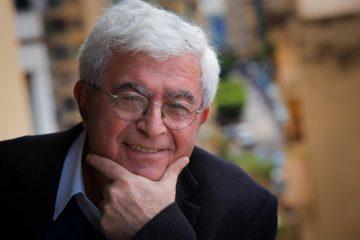 Adam Dannoun, the protagonist of Elias Khoury’s powerful new novel, calls himself a child of the ghetto. He does not mean the Warsaw ghetto — although, growing up in the newly established state of Israel, he allows his university colleagues to make that assumption. He means the “ghetto” of the Palestinian town of Lydda, created by Jewish forces who uprooted tens of thousands of Palestinians on a death march in one of the bloodiest massacres of the 1948 Nakba. (That term, which Arabs use for the founding of the Jewish state, means “catastrophe.”) Adam, a baby at the time, was one of those who remained.
 But a new study shows that many species plan out intricate detours to reach their prey—smarts usually associated with far bigger creatures.
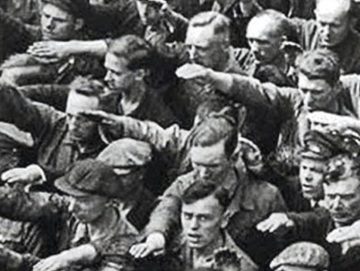 It can often feel hopeless to be an activist seeking social change on an obscure issue where most people seem opposed or at best indifferent to you. But according to a new book by Professor Cass Sunstein, they shouldn’t despair. Large social changes are often abrupt and unexpected, arising in an environment of seeming public opposition.
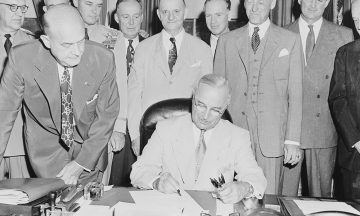 Since the Truman administration dissolved the Department of War and replaced it with a Department of Defense in the early years of the Cold War, our presidents — Republican and Democrat, conservative and liberal — have used the idea of defense to mask a hard-to-ignore fact: the United States has looked to black, brown, and Asian countries to imagine invasions and define enemies. It has fought wars in East Asia, Southeast Asia, Central America, East Africa, and the Middle East. It has declared none, because the United States no longer wages war against people; it defends itself against communism, crime, totalitarianism, and terrorism. Or so we’re told.
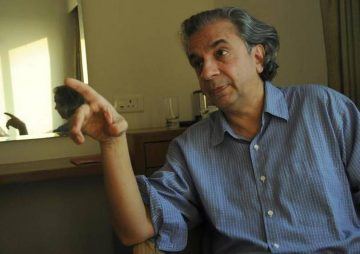 Jipson John and Jitheesh P.M. interview Akeel Bilgrami in Frontline:
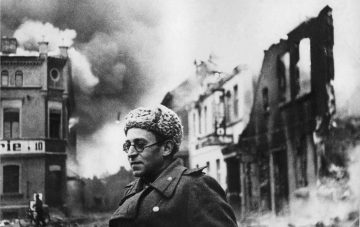 Sheila Fitzpatrick in The Nation:
 Tiffany Li & Belabbes Benkredda in Quartz: