The Upanishads and the Bhagavad Gita

Amit Chaudhuri at the TLS:

The Upanishads, then, can hardly be called originary. They sound more like the latest in a series of disagreements; a great deal has preceded them, and reached a state of ossification before their arrival. Among what they challenge is a particular sense of causality regarding the relationship between creation and creator, which seems to have been extant when they were composed. Many traditions believe in a first cause, after which the universe comes into existence and before which there was nothing. The Upanishad’s conception of consciousness – “He moves, and he moves not”; “He is far, and he is near” – complicates the point of origin. Again, unlike Descartes’s belief that thought is both a product and a proof of existence, the Upanishad’s “What cannot be thought with the mind, but that whereby the mind can think” introduces an absence at the heart of thought. If thought can’t conceive whatever it is that produces it, then thought can’t be wholly present – a formulation that’s antithetical to the Cartesian proclamation. And since causality constantly reasserts itself as a default mode of thinking throughout history, the Upanishads remain, essentially, oppositional. They can’t occupy the space of established thought, being opposed to that space. Nor can one reduce either the Upanishads or the Gita in sociological terms to being “Brahminical” without losing sight of the fact that their language is critical-poetic – that is, they raise a critique through paradox and metaphor – rather than dogmatic or hieratic.

more here.
Revisiting Carol Reed’s 1947 masterpiece Odd Man Out

David Lehman at The American Scholar:

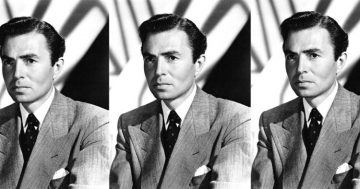
The secondary characters are extraordinary. As Penn State media professor Kevin Hagopian puts it in his film notes for the New York State Writers Institute, Odd Man Out is “festooned with gargoyles.” The crazed painter Lukey (Robert Newton) sees in Johnny’s suffering face the perfect model for a masterpiece of portraiture. With the bearing of a genteel bordello mistress, treacherous Theresa O’Brien (Maureen Delany) lets two of the bandits drink her whiskey in one room, while in another she informs the police of their whereabouts. Dim-witted Shell (F. J. McCormick), who collects birds and speaks in avian metaphors, discovers Johnny in a rubbish heap and relishes the reward he will get for turning in this bird with the wounded left wing. But Father Tom (W. G. Fay) persuades Shell that there is a greater reward than money and it is called Faith. When Shell wonders what Faith is, his roommate, a medical student, says, “It’s life.”

more here.

Smart Toilet That Can Detect Disease in Urine and Feces of User Created by Scientists

Hannah Osbourne in Newsweek:

A “smart toilet” that can detect disease by collecting data from the urine and feces of a user has been developed by scientists in the U.S. The team, led by researchers at Stanford University, developed a device that can be mounted to a standard toilet that incorporates a number of features, including test strips and video cameras, to analyze features of a person’s bodily waste. Details of the smart toilet have been published in Nature Biomedical Engineering. The team hopes their smart toilet could lead to disease prevention and prediction, by monitoring the user’s health and flag any anomalies as and when they may arise. Diseases that could be targeted include colorectal and urological cancers. Smart devices to aid with disease prevention and detection are becoming increasingly prevalent and the market is moving quickly.

In February, a global initiative was launched by researchers in the U.K. to harness wearables in a bid to find “fingerprints” of neurological diseases like Alzeheimer’s. By using digital health technology, the team hopes to identify people at most risk of these diseases improving early detection rates. Last month, research published in the Journal of the American College of Cardiology found mobile health devices, such as fitness trackers, smart watches and mobile phones, could be used to screen for and detect people with atrial fibrillation, which can cause an irregular heart rate. The idea of a smart toilet being used to monitor health is not new. Japanese firm Toto developed a toilet that could measure urinary sugar and hormone levels as far back as the early 2000s, but demand for the product was low. Last March, researchers at the Rochester Institute of Technology announced they had developed a toilet-based cardiovascular monitoring system. The toilet seat can measure things like heart rate and blood pressure. The seat could be given to people with congestive heart failure, and the data could be analyzed so if a person’s condition is deteriorating, health providers can be alerted.

The latest design goes further than other smart toilet designs as it collects data from a person’s urine and feces through a variety of gadgets. “Our concept dates back well over 15 years,” Sanjiv Gambhir, professor and chair of radiology at Stanford, and corresponding author on the Nature study, said in a statement. The team has now completed a pilot study of 21 participants. A user is identified by the smart toilet by fingerprint recognition on the flush, and a camera inside that can identify “the distinctive features of their anoderm.” Gambhir explained: “The whole point is to provide precise, individualized health feedback, so we needed to make sure the toilet could discern between users. We know it seems weird, but as it turns out, your anal print is unique.”

More here.

Thursday Poem


TheKnee

Officer, I can’t breathe
My oh my, I’m going to die
My oh my, I don’t know why
Officer, I can’t breathe
My oh my, I’m going to die
My oh my, I don’t know why
Officer, I can’t breathe
My oh my, I’m going to die
My oh my, I don’t know why
Officer, I can’t breathe

Officer, I can’t breathe

Officer, I can’t breathe

Officer, I can’t breathe
.

by Cornelius Eady
from Lyrics for Liberty

Customized DNA rings aid early cancer detection in mice

From Stanford Medicine:

Imagine: You pop a pill into your mouth and swallow it. It dissolves, releasing tiny particles that are absorbed and cause only cancerous cells to secrete a specific protein into your bloodstream. Two days from now, a finger-prick blood sample will expose whether you’ve got cancer and even give a rough idea of its extent. That’s a highly futuristic concept. But its realization may be only years, not decades, away. Stanford University School of Medicine investigators administered a customized genetic construct consisting of tiny rings of DNA, called DNA minicircles, to mice. The scientists then showed that mice with tumors produced a substance that tumor-free mice didn’t make. The substance was easily detected 48 hours later by a simple blood test. The technique has the potential to apply to a broad range of cancers, so someday clinicians might be able not only to detect tumors, monitor the effectiveness of cancer therapies and guide the developments of anti-tumor drugs, but — importantly — to screen symptom-free populations for nascent tumors that might have otherwise gone undetected until they became larger and much tougher to treat.

The hunt for cancer biomarkers — substances whose presence in an individual’s blood or urine flags a probable tumor — is nothing new, said the study’s senior author, Sanjiv “Sam” Gambhir, professor and chair of radiology and director of the Canary Center at Stanford for Cancer Early Detection. High blood levels of prostate-specific antigen, for example, can signify prostate cancer, and there are also biomarkers that sometimes signal ovarian and colorectal cancer, he said. But while various tumor types naturally secrete characteristic substances into the blood, the secreted substance is typically specific to the tumor type, with each requiring its own separate test. Complicating matters, these substances are also quite often made in healthy tissues, so a positive test result doesn’t absolutely mean a person actually has cancer. Or a tumor — especially a small one — simply may not secrete enough of the trademark substance to be detectable.

Gambhir’s team appears to have found a way to force any of numerous tumor types to produce a biomarker whose presence in the blood of mice unambiguously signifies cancer, because none of the rodents’ tissues — cancerous or otherwise — would normally be making it. This biomarker is a protein called secreted embryonic alkaline phosphatase. SEAP is naturally produced in human embryos as they form and develop, but it’s not present in adults.

More here.

Wednesday, July 8, 2020

Alexander Calder in Public and Private: Jed Perl in conversation with Morgan Meis

From The Easel:

Morgan Meis: Reading your second volume, I got a feeling that sometimes you struggled – as I think everyone has struggled – with where to place Calder in art history. Do you feel you reached a conclusion on that?

Jed Perl: Calder isn’t easy to place. Ultimately that’s the measure of his greatness. Many people have struggled with the question of Calder’s relationship with Surrealism. Calder and some close friends, like Miró and Masson, all insisted that they were at odds with Surrealism. What was important for them, and certainly for Calder, was being in an atmosphere and ambience of ideas, theories and experiments — people doing this or that. Calder, like Miró and Masson, was nourished by the Surrealist environment; sometimes, they contributed to it, at other times they opposed it. There was a complex and dynamic process going on. Neither Miró, Masson nor Calder wanted to be pinned down or labelled by André Breton, the ringleader of the Surrealists. Geniuses are nurtured in very mysterious ways. There are so many influences that were more important to Calder than whatever he absorbed from the Surrealists. Calder was deeply influenced by Bosch’s great triptych, The Garden of Earthly Delights. He was immensely interested in architecture and architectural forms, both ancient and modern.

More here.

Many American public-health specialists are at risk of burning out as the coronavirus surges back

Ed Yong in The Atlantic:

By now they are used to sharing their knowledge with journalists, but they’re less accustomed to talking about themselves. Many of them told me that they feel duty-bound and grateful to be helping their country at a time when so many others are ill or unemployed. But they’re also very tired, and dispirited by America’s continued inability to control a virus that many other nations have brought to heel. As the pandemic once again intensifies, so too does their frustration and fatigue.

America isn’t just facing a shortfall of testing kits, masks, or health-care workers. It is also looking at a drought of expertise, as the very people whose skills are sorely needed to handle the pandemic are on the verge of burning out.

More here.

How Biden’s Foreign-Policy Team Got Rich

Jonathan Guyer in American Prospect:

They had been public servants their whole careers. But when Hillary Clinton lost the 2016 election, two departing Obama officials were anxious for work. Trump’s win had caught them by surprise.
Sergio Aguirre and Nitin Chadda had reached the most elite quarters of U.S. foreign policy. Aguirre had started out of school as a fellow in the White House and a decade later had become chief of staff to U.N. Ambassador Samantha Power. Chadda, who joined the Pentagon out of college as a speechwriter, had become a key adviser to Secretary of Defense Ash Carter in even less time. Now, Chadda had a long-shot idea.

They turned to an industry of power-brokering little known outside the capital: strategic consultancies. Retiring leaders often open firms bearing their names: Madeleine Albright has one, as do Condoleezza Rice and former Secretary of Defense William S. Cohen. Their strategic consultancies tend to blur corporate and governmental roles. This obscure corner of Washington is critical to understanding how a President Joe Biden would conduct foreign policy. He has been picking top advisers from this shadowy world.

More here.

Charles Péguy: The Amodernist

Jay Tolson at The Hedgehog Review:

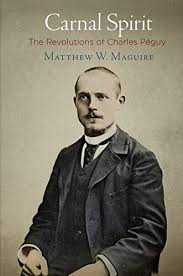
To be sure, enlightened progressives were committed to science, positivism, and liberal democratic values—all of which the reactionaries rejected in favor of hierarchy and a highly traditionalist, and exclusively Catholic nationalism. It would seem to be a clear-cut struggle between the modernists and the antimodernists, but not as as Péguy saw it. He found the progressive faith in a scientifically driven and ever-improving future no more immanentizing, and no more modernist in its deepest aspirations, than the reactionaries’ vision. “These wrathful particularists,” Maguire explains, “often intimate a loyalty to older notions of transcendence—including religious faith and its avowal of abiding truths—but they conceive of that which transcends time only as an arrested immanence. They often present an amalgamated past as a unity…which now must be reinserted mechanically into the present, without creativity or surprise.” More ironically, some of the faux antimodernists (including the right-wing Action Française founder Charles Maurras, an admirer of the positivist Auguste Comte) also believed that “‘science’ would “confirm their particularism and prejudices.” Péguy’s critical stance toward both broad coalitions made him neither a modernist nor an antimodernist, Maguire argues, but something quite distinctive and instructive: an amodernist.
more here.

Branwell Brontë

Darcey Steinke at The Paris Review:

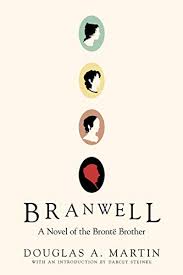
“I see no reason not to consider the Brontë cult a religion,” writes Judith Shulevitz. She calls the thousands of books inspired by the Brontës midrash, “the spinning of gloriously weird backstories or fairy tales prompted by gaps or contradictions in the narrative.”
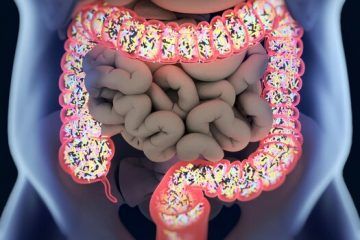
Martin’s Branwell dilates one such gap: the “unspeakable acts” Branwell was said to have committed at Thorp Green. In both Daphne du Maurier’s 1962 The Infernal World of Branwell Brontë and Martin’s book, Branwell’s claim of an affair with his employer’s wife, Mrs. Robinson, is seen as a screen for a homosexual liaison. The scholar Richard A. Kaye calls Branwell a queer speculative biography. He suggests that “queering the Brontës often involves an imaginative disregard for the available evidence regarding Brontë’s family secrets in order to take advantage of unresolved biographical cul-de-sacs.”

more here.

Wednesday Poem

My Twitter Feed Becomes Too Much

I come across pictures of two rubber bullets
nestled in a palm, their nose tips black
and rounded like a reporters’ foam-covered
mic. The caption reads These maim, break skin,
cause blindness. Another photo—a hollow
caved into a woman’s scalp, floating hands

in blue gloves dabbing at the spill. An offhand
comment in the replies—are you sure that rubber bullet
caused that type of damage?—the question hollowed
of genuine concern. The page refreshes. A black
man melts into a street curb from exhaustion, his skin
blotched with sweat and red. Protester’s hands cover

his body, and this is church. A baptism—cover
me with the blood. And there are more. Hand-
drawn threats—shoot the FUCK back­­. Police cars skinned
of their lettering and paint from the bullet-
aim of Molotov cocktails in Budweiser bottles. Black
Lives Matter marked in thick letters below the hollow

outline of the black power fist. A gas mask’s eye-hollows
glinting with tears. The page refreshes. Undercover
cops wearing matching armbands like a gang. A black
army tank crawling through city streets the way a hand
may tip-toe up a thigh. The page refreshes. A bullet
list of places to donate if I can’t put my skin

in the game protesting in the streets. The snakeskin
pattern of fires from a bird’s-eye view of DC. Hollowed
Target storefronts. The page refreshes. Rubber bullets
pinging a reporter and her crew as they run for cover,
a white woman’s reply—things are getting out of hand
punctuated with heart emojis. Protester’s shadows blacking

the fiery backdrop of the riots. Badge numbers blacked
over with tape. The page refreshes. A man skinned
by the asphalt when pulled from his car with both hands
up. A police car plowing into a peaceful crowd. The hollow
promises from white friends to “do better”—a cover-
up for how quickly they will bullet

into our inboxes and ask us to hand them the answers. Black
rubber bullets—the page refreshes—a woman’s forehead skin
split—page refreshes—a bloody hollow—refresh—take cover.

by Taylor Byas
from
Frontier Poetry

Are Personalized Diets Ready for Prime Time?

Debbie Koenig in WebMD:

When Howard Wolinsky was diagnosed with type 2 diabetes, he expected to kiss bagels goodbye — too many carbs. But a personalized diet based on his own gut microbiome offered a pleasant surprise: “It turns out those little bugs in my guts seem to like bread, if it’s combined with fats and proteins,” he says.
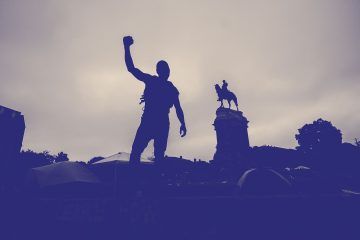
Wolinsky’s diet came from DayTwo, a company that uses research from the Weizmann Institute of Science in Israel to create customized advice for people with diabetes. From his home in suburban Chicago, Wolinsky, 71, sent the company a stool sample and a completed questionnaire, and he got back guidance about precisely which foods would spike his blood glucose and which would keep it steady. He was also taking an oral medication for his diabetes. “I could have a bagel, with cream cheese and lox,” he says. “That combination got a really good rating on the DayTwo scale.” He was amazed to find that when he followed DayTwo’s advice, his blood sugar remained within a normal range. It didn’t spike the way it would for foods outside their recommendations.

News Flash: Diets Aren’t One-Size-Fits-All

DayTwo has plenty of company in the personalized diet business. At least a dozen outfits offer nutrition advice customized to your body, based on DNA or blood tests, microbiome profiling, or a combination of those. Several promise weight loss, while others focus on specific conditions or just general “wellness.” Each uses its own proprietary process, and for some, the science behind it gets murky. Costs range from under $100 to nearly $1,000 for different services. DayTwo, for example, charges $499 for a microbiome testing kit, personalized app, orientation call with a registered dietitian, and microbiome summary report.

More here.

How to Confront a Racist National History

Isaac Chatiner in The New Yorker:

In her 2019 book, “Learning from the Germans: Race and the Memory of Evil,” the philosopher Susan Neiman examines the different ways in which Germany and the United States have confronted their past sins. Neiman, who grew up in the American South and now lives in Berlin, describes how Germany has reckoned with the Nazi era, through memorials, official acts of remembrance, and various forms of reparations. Indeed, just as the Nazi period has become the ultimate example of unadulterated cruelty, postwar Germany has become the paradigmatic example of a country that has fully considered its past. Could something similar be possible in the United States? As Neiman’s book seeks to answer this question, it also serves as a conscious attempt to “safeguard” Germany’s confrontation with history, at a time when the far right is on the rise there, as it is in many countries.

I recently spoke by phone with Neiman, amid renewed discussions in the U.S.—sparked in part by the killing of George Floyd—about how to remember slavery and segregation, and increasing controversy over whether Confederate memorials have any place in modern-day America. During our conversation, which has been edited for length and clarity, we discussed why it took the Germans longer than many people think to come to grips with Nazism, the different ways East and West Germany approached the legacy of the Third Reich, and what the German experience with reparations can teach the United States.
More here.

Tuesday, July 7, 2020

The Drunken Silenus: On Gods, Goats, and the Cracks in Reality

Leanne Ogasawara in the Dublin Review of Books:

A man finds himself in Antwerp with nothing to do. Then he remembers, among other things, that this is the town where the painter Peter Paul Rubens made his home. At first, this annoys him, because he has no interest whatsoever in the painter. But then he thinks, why not write a book about Rubens.
Why not, indeed?

Essayist and critic Morgan Meis sets out to develop a new style of writing about art, one that is informed by a passionate looking. One could argue that this is not new, that Meis is returning to a time when intellectuals had charmingly erudite conversations about paintings, history, and music. Not only could they bedazzle at a cocktail party, but they could write about it too ‑  art inspired by art. Meis’s long essay about one particular Rubens painting reminded me of William Golden’s classic discourse on Thermopylae or John Pope Hennessy’s study of the “Best Picture in the World”. For in the examination of the particular we are able to ponder deep truths. And like the greatest essayists before him, Meis is scholarly but not encyclopedic, meandering instead of direct.

More here.

Sean Carroll’s Mindscape Podcast: David Rosen and Scott Miles on the Neuroscience of Music and Creativity

Sean Carroll in Preposterous Universe:

Creativity is one of those things that we all admire but struggle to define or make concrete. Music provides a useful laboratory in which to examine what creativity is all about — how do people become creative, what is happening in their brains during the creative process, and what kinds of creativity does the audience actually enjoy? David Rosen and Scott Miles are both neuroscientists and musicians who have been investigating this question from the perspective of both listeners and performers. They have been performing neuroscientific experiments to understand how the brain becomes creative, and founded Secret Chord Laboratories to develop software that will predict what kinds of music people will like.
More here.

A Letter on Justice and Open Debate

Noam Chomsky, Margaret Atwood, Salman Rushdie, John McWhorter, and many others, in Harper’s Magazine (also published in Le monde, Die Zeit, La Repubblica, and El País):

Our cultural institutions are facing a moment of trial. Powerful protests for racial and social justice are leading to overdue demands for police reform, along with wider calls for greater equality and inclusion across our society, not least in higher education, journalism, philanthropy, and the arts. But this needed reckoning has also intensified a new set of moral attitudes and political commitments that tend to weaken our norms of open debate and toleration of differences in favor of ideological conformity. As we applaud the first development, we also raise our voices against the second. The forces of illiberalism are gaining strength throughout the world and have a powerful ally in Donald Trump, who represents a real threat to democracy. But resistance must not be allowed to harden into its own brand of dogma or coercion—which right-wing demagogues are already exploiting. The democratic inclusion we want can be achieved only if we speak out against the intolerant climate that has set in on all sides.

The free exchange of information and ideas, the lifeblood of a liberal society, is daily becoming more constricted. While we have come to expect this on the radical right, censoriousness is also spreading more widely in our culture: an intolerance of opposing views, a vogue for public shaming and ostracism, and the tendency to dissolve complex policy issues in a blinding moral certainty. We uphold the value of robust and even caustic counter-speech from all quarters. But it is now all too common to hear calls for swift and severe retribution in response to perceived transgressions of speech and thought.

More here.

Scott Aaronson on the attempt to cancel Steven Pinker

Editor’s Note: We at 3QD stand fully behind Steven Pinker. Please also see this public statement published today in Harper’s, Le monde, Die Zeit, La Repubblica, and El País with signatories such as Noam Chomsky, Margaret Atwood, Salman Rushdie, John McWhorter, and many others.

Scott Aaronson in Shtetl-Optimized:

Steven Pinker

If there were ever a time for liberals and progressives to put aside their internal squabbles, you’d think it was now. The President of the United States is a racist gangster, who might not leave if he loses the coming election—all the more reason to ensure he loses in a landslide. Due in part to that gangster’s breathtaking incompetence, 130,000 Americans are now dead, and the economy tanked, from a pandemic that the rest of the world has under much better control. The gangster’s latest “response” to the pandemic has been to disrupt the lives of thousands of foreign scientists—including several of my students—by threatening to cancel their visas. (American universities will, of course, do whatever they legally can to work around this act of pure spite.)

So how is the left responding to this historic moment?

This weekend, 536 people did so by … trying to cancel Steven Pinker, stripping him of “distinguished fellow” and “media expert” status (whatever those are) in the Linguistics Society of America for ideological reasons.

Yes, Steven Pinker: the celebrated linguist and cognitive scientist, author of The Language Instinct and How the Mind Works (which had a massive impact on me as a teenager) and many other books, and academic torch-bearer for the Enlightenment in our time. For years, I’d dreaded the day they’d finally come for Steve, even while friends assured me my fears must be inflated since, after all, they hadn’t come for him yet.

I concede that the cancelers’ logic is impeccable. If they can get Pinker, everyone will quickly realize that there’s no longer any limit to who they can get—including me, including any writer or scientist who crosses them.

More here.