When is it ethical to vote for ‘the lesser of two evils’?

Robert Simpson in Aeon:
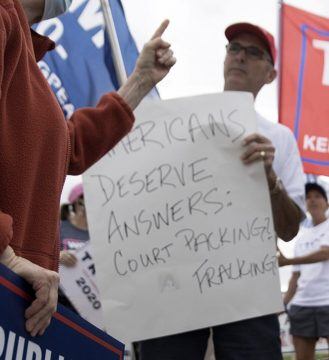
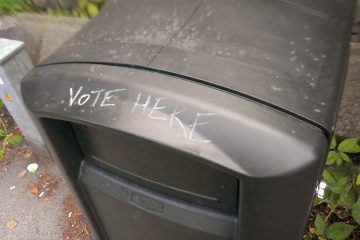
Suppose you believe the state should look after the wellbeing of the poor and combat the structural forces that enrich the wealthy. Suppose you’re in a two-party electoral system, and that the party notionally aligned with your ideals made a Faustian pact with business elites to shore up the policies that perpetuate poverty – low minimum wages, tax incentives for rent-seekers, privatisation of public services, etc. What kind of ballot should you cast? You can’t vote for the party pushing things further to the Right. And if you don’t vote, or you vote for someone who’s almost certain not to win, you’re helping that same regressive party get elected. Yet lending your support to the ‘lesser of two evils’ candidate, whose platform you don’t really support, feels like an unacceptable compromise to your ideals.

The moral dilemma behind these scenarios is the subject of a well-known argument in moral philosophy. Bernard Williams argued that you should care about maintaining integrity in your personal ideals – not necessarily at all costs, but at least a bit. That’s because you have a special proprietary responsibility for acts you perform. Those choices and acts are, in some special sense, yours, distinct from outcomes that result from combining your choices and acts with everyone else’s.

More here.

What it’s like shooting with a camera that costs as much as a Tesla

Stephen Shankland at CNET:

The camera costs $58,990, including a 70mm lens made by Phase One partner Rodenstock. If you want the 23mm, 32mm or 50mm lenses, expect to pony up another $11,990 each. A newer 90mm Rodenstock lens for more distant subjects is $13,000 (and another telephoto lens with a longer focal length is on the way, too). The kit I tried, with the camera and four lenses, had a total price tag of about $95,000.
That’s a lot more money than the vast majority of photographers will shell out, of course. But sometimes people spend big on their passions, whether it’s cars, clothes, travel or home entertainment systems. And professional photographers have their own calculations when it comes to factors like image quality, hourly billing rates and staying competitive.

Cameras from mainstream manufacturers accommodate poster prints. The Phase One XT lets you go even bigger.

More here.

Sean Connery was charismatic, contradictory – and more than just James Bond

Geoffrey Macnab in The Independent:

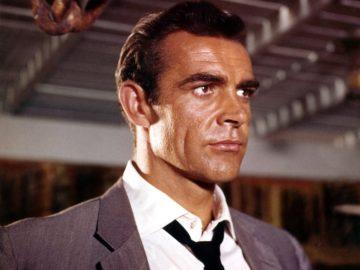
Sean Connery grew up in an overcrowded tenement flat in Fountainbridge, Edinburgh. He left school at the age of 13 and worked as a bricklayer and cement mixer, steel bender, lorry driver and coffin polisher. He was invalided out of the navy with duodenal ulcers. It’s worth bearing this background in mind when you consider that he became not only one of the biggest stars in post-war UK cinema but also one of the most accomplished screen actors. The working-class Scot wasn’t the most likely casting as Ian Fleming’s urbane spy hero James Bond, but Connery brought an edge, a hint of ironic humour, sadism and darkness to the character that stopped the early Bond pictures descending into camp.

In later years, that sadism became increasingly problematic. Connery’s first wife Diane Cilento accused him of abusing her. He caused consternation when he said it wasn’t the “worst thing to slap a woman” and then stood by the remark in a later interview. He eventually changed his perspective , commenting in 2006 that he didn’t believe “any level of abuse against women is justified” but, by then, the damage had been done. From today’s perspective, it appears beyond jarring and bizarre that one of the world’s biggest movie stars should have used such misogynistic language. That is why a certain wariness remains when discussing Connery’s monumental achievements as an actor.

“It has never been hard to tell the difference between a Scotsman with a grievance and a ray of sunshine,” PG Wodehouse famously wrote.  You half suspect that he may have been thinking of Connery when he made the observation. Connery seemed driven in his private and professional life by his grudges and pet feuds. It sometimes appeared he felt everyone, whether Bond producer Albert “Cubby” Broccoli or the Scottish press or the Hollywood system, was determined to cheat against him in exactly the same way as Auric Goldfinger had done against Bond on the golf course in Goldfinger. Of course, Connery was always far too canny to let this happen.

More here.

‘What is going on, you guys?’ US expats face tough questions abroad

From The Christian Science Monitor:

The American expat has enjoyed a storied position in culture and literature. In France, the role has been romanticized from Gene Kelly tap dancing his way through “An American in Paris” to Ernest Hemingway’s Paris-set “A Moveable Feast,” where he wrote, “There are only two places in the world where we can live happy: at home and in Paris.” Numbering around 250,000, Americans in France tend to lean Democratic and enjoy elite status, says Oleg Kobtzeff, an associate professor of international and comparative politics at the American University of Paris. “So Americans in France are themselves examples of soft power.” It’s not that they’ve been universally loved. Former President George W. Bush’s war on terror, including the Iraq War of 2003 that many allies condemned, made him as unpopular in France as President Trump is today.
But disdain has been replaced with a new, distinct sentiment that Ursuline Kairson, a Chicago-born jazz singer who has lived in Paris for over 20 years, sums up succinctly: “Now they feel sorry for us.”

Americans are now banned from visiting many countries around the globe because of the coronavirus. The U.S.-Canada border, the world’s longest undefended frontier, has been closed to nonessential travel for seven months. That closure is symbolic of how frayed America’s relationships have become. Canadians have arguably been the strongest U.S. ally in modern times. “The Canadians were always the first to arrive for us,” says Bruce Heyman, a former United States ambassador to Canada under Barack Obama. He says that ties became strained under Mr. Trump, who imposed trade tariffs on national security grounds and called Canadian Prime Minister Justin Trudeau “two-faced.” “I think Donald Trump’s done more damage to the U.S.-Canada relationship than any other single person maybe in the history of our two countries.”

More here.

Saturday, October 31, 2020

We’re Still Not Talking about the Patriotism America Needs

Ben Railton in US Intellectual History Blog:
In recent weeks, President Trump has spent a great deal of time articulating a specific and extreme vision of American patriotism. This vision asks us to remember and celebrate only the most idealized American histories and stories, and defines any deviation from those celebrations as nothing less than unpatriotic hate.

Trump expressed this absolute form of patriotism in the September 17th speech announcing his “Patriotic Education” Commission, calling the New York Times’ 1619 Project “a crusade against American history,” “toxic propaganda,” and “a form of child abuse.” He claimed that “patriotic moms and dads are going to demand that their children are no longer fed hateful lies about this country.” And he did so again in his recent Columbus Day proclamation, arguing that the “extremists” who would “replace discussion of [Columbus’] vast contributions with talk of failings … seek to revise [history], deprive it of any splendor, and mark it as inherently sinister,” and that in response “we must teach future generations about our storied heritage.”

More here.

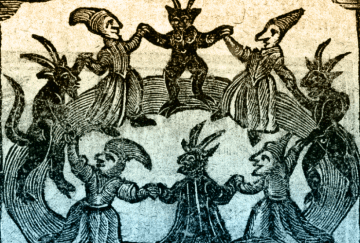
When Democracy Ails, Magic Thrives

Samuel Clowes Huneke in Boston Review:

On August 31 President Trump told Fox News host Laura Ingraham that people in “dark shadows” were controlling Joe Biden. When pressed by Ingraham, Trump elaborated, “We had somebody get on a plane from a certain city this weekend and in the plane it was almost completely loaded with thugs wearing these dark uniforms, black uniforms with gear and this and that.”

The president’s ravings might have seemed psychotic had they not fit a Zeitgeist of paranoid, conspiratorial, and even magical thinking that has arced across our land over the last four years. Earlier this year, Trump praised Stella Immanuel, a Houston minister and pediatrician who believes, among other things, that ovarian cysts are caused by sexual intercourse with demons. A swell of right-wing voters have taken to the QAnon conspiracy, the belief that a cabal of left-wing politicians and Hollywood elites lead an international child sex ring. In response to the swelling number of deaths caused by COVID-19, Vice President Mike Pence told the Republican National Convention, “America is a nation of miracles,” and that there would be a COVID-19 vaccine “by the end of this year.” Trump has also recommended injecting sunlight and bleach as possible COVID cures.

While such thinking is undoubtedly on a tear among right-wing Americans, the left too has indulged in its share of conspiratorial and mystical thought.

More here.

How to be an Epicurean

Catherine Wilson in Aeon:

Like many people, I am skeptical of any book, lecture or article offering to divulge the secrets of happiness. To me, happiness is episodic. It’s there at a moment of insight over drinks with a friend, when hearing a new and affecting piece of music on the radio, sharing confidences with a relative or waking up from a good night’s sleep after a bout of the flu. Happiness is a feeling of in-the-moment joy that can’t be chased and caught and which can’t last very long.

But satisfaction with how things are going is different than happiness. Satisfaction has to do with the qualities and arrangements of life that make us want to get out of bed in the morning, find out what’s happening in the world, and get on with whatever the day brings. There are obstacles to satisfaction, and they can be, if not entirely removed, at least lowered. Some writers argue that satisfaction mostly depends on my genes, where I live and the season of the year, or how other people, including the government, are treating me. Nevertheless, psychology and the sharing of first-person experience acquired over many generations, can actually help.

So can philosophy. The major schools of philosophy in antiquity – Platonism, Stoicism, Aristotelianism and, my favourite, Epicureanism, addressed the question of the good life directly. The philosophers all subscribed to an ideal of ‘life according to nature’, by which they meant both human and nonhuman nature, while disagreeing among themselves about what that entailed.

More here.

Modern, Pre-Modern, Or Post-Modern Money? A Brief Guide For The Perplexed

Robert Hockett in Forbes:

Money crises stoke money thought – some of it new, most of it old and recycled. Some of the money thought tends toward the crankish. Money crankery is like gingivitis, after all, ‘bleeding gums.’ It perennially emerges and re-emerges, opportunistically, in times of bodily stress.

But some new old money thought is well worth recycling. It can serve as a corrective for thought-ruts that we’ve fallen into – ruts that work mischief.

Corrective rediscovery and recycling of this kind only helps, however, if we are clear about what can be usefully recovered for what purposes. And here it behooves us to separate strands, tracing them back to their origins. For much that’s recycled originates in circumstances that are importantly different from ours, and must be updated to be useful.

I’d like here to do some of that disentangling and updating. That way we’ll better know what to accept and what to reject from new purveyors of new old money theories.

You can glean what I’m getting at in light of some recent political and monetary controversy – especially apropos the Fed’s many ‘easing’ programs post-2008 and now, in the midst of our Covid pandemic. What are ‘the Austrians’ saying about this, you might ask, ‘and how about MMT?’ ‘And what about Keynes – is Chairman Powell Keynesian, post-Keynesian, neo-Keynesian?’ ‘Is he classical or neo-classical?’ ‘And, by the way, where do liberalism and neoliberalism fit in here?’

More here.

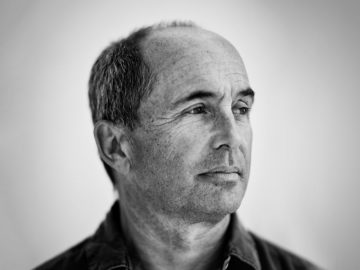
Best-selling crime writer Don Winslow on why he turned his sights on a new ‘criminal’ – Donald Trump

Clemence Michallon in The Independent:

For anyone with a platform, Donald Trump’s presidency comes with a choice. Should they – the artists, the creative types, the famous ones – defend what they believe in? Or should they refrain from “going political”, at a time when fans might readily forsake an artist’s output if they don’t land on the same side? For Don Winslow, there is no debate. The author, with 22 books to his name, is one of the most heralded names in contemporary crime fiction. He’s also one of the most outspoken anti-Trump activists in the current American literary landscape.

Winslow’s Twitter timeline is the most direct reflection of this occupation. “Dear Eric Trump,” reads one of his recent messages, addressed to the US president’s second son, “Name one person who ever hired you for a job that wasn’t your dad? You can’t.” “Dear Republicans, How can Joe Biden take away your guns?” he asks in another tweet, this time about gun legislation. “Didn’t @BarackObama take away your guns in 2008 and 2012? HE DIDN’T.  IT NEVER HAPPENED. THEY THINK YOU’RE SO STUPID THAT THEY ARE TELLING YOU THE SAME LIES.”

Activism used to be a side gig for Winslow. He’s been at it at least since June 2017, when he took out a full-page ad in The New York Times to denounce Donald Trump’s “woefully ignorant” approach to the war on drugs, a theme relevant to his Cartel trilogy. In the lead-up to the 2020 presidential election, Winslow’s advocacy work has ramped up. Novel writing has been placed “on the back burner”, he tells The Independent – although future books are “simmering nicely”.

More here.

Make a Plan to Resist

Paul Street in Counterpunnch:

The cable news talking heads seem obsessed with Joe Biden’s “significant” lead over Donald Trump in the national polls – as if this lead signifies a certain coming Biden victory in the presidential election. Also feeding the narrative that Biden is likely to win are stories and film clips of millions of Americans standing in long lines to vote early in record numbers.
This is dangerously pacifying. Nearly two and a half centuries since its founding, the United States, self-described homeland and headquarters of democracy, does not select its top elected official, the president, on the basis of a national popular vote. The Electoral College, devised by slave-owning constitutional framers for whom democracy was the ultimate nightmare, restricts the presidential election to the contest for all-or-nothing Elector slates in a relatively small number of states. And in these states, the horse race between Biden and Trump is much closer than it is in on the national scale. It seems likely that Trump will receive a significant amount of hidden white support, not captured by pollsters.

Overall, the Electoral College leans well to the right, over-representing the country’s most reactionary, white and rural regions so extremely that Biden cannot win the final tally without beating Trump by far more than a simple majority of the national popular vote.

More here.

Saturday Poem

On The Origin

I find an old copy of Darwin’s
On the Origin of Species
among my father-in-law’s
Bibles and theology books,
and my own laugh startles me
in the empty house. We never
talked about Darwin that I recall,
but of course this well-read man
wouldn’t have been afraid
of the church’s favorite villain
after Satan and Judas. His faith
was never threatened by thought.
I once thought that to be saved
was to laugh at science—what
a shock to later learn Darwin’s
sin was observing turtles and
pigeons, flying squirrels and bats,
and realizing that all things
change. I know that I can’t keep
everything and that nothing I take
will be enough to fill what’s lost,
but I pick the crumbling book
from the shelf, wrap it in tissue,
and tuck it into my suitcase to save.

by Katie Manning
from
The Ecotheo Review

‘The Interest’ by Michael Taylor

Fara Dabhoiwala at The Guardian:

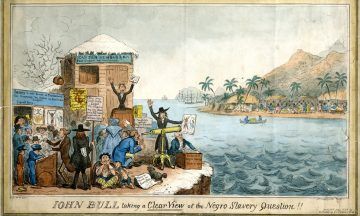
Britain’s national myth about slavery goes something like this: for most of history, slavery was a normal state of affairs; but in the later 18th century, enlightened Britons such as William Wilberforce led the way in fighting against it. Britain ended the slave trade in 1807, before any other nation, and thereafter campaigned zealously to eradicate it everywhere else.

As Michael Taylor points out in his scintillating new book, this is a farrago of nonsense. Slavery was certainly an ancient practice, but for 200 years the British developed it on an unprecedented scale. Throughout the 18th century, they were the world’s foremost slavers, and the plantation system they helped create devoured the lives of millions of African men, women and children. In the name of profit and racial superiority, English, Scottish, Welsh and Irish enslavers inflicted a holocaust of suffering on their human chattels, practising rape, torture, mutilation, and manslaughter.

more here.

Philip Pullman’s New ‘Dark Materials’ Book

Lev Grossman at The NY Times:

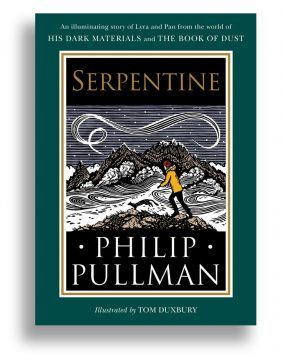
Since the last volume of “His Dark Materials” appeared in 2000, Pullman has written two more (superb) volumes of a second trilogy called “The Book of Dust”, as well as a few interstitial bits and bobs that fill in the odd blank spot in his vast legendarium. His latest work, “Serpentine,” is one of the latter, and as befits its title it is the slenderest of creatures, almost plotless and at 80 generously illustrated pages barely thick enough to have a spine. Set five years after the events of the first trilogy, the story finds Pullman’s heroine, the unquenchably curious Lyra, in an unquiet state of mind. She was once (in “The Amber Spyglass”) briefly separated from her daemon, Pantalaimon, and ever since then she’s been haunted by the question of what he did while they were apart.

more here.

Friday, October 30, 2020

A Plurality of Traditions: Anthony Davis and the Social Justice Opera

Thomas Larson in the Los Angeles Review of Books:

ANTHONY DAVIS, winner of the 2020 Pulitzer Prize in Music for his opera The Central Park Five, is a composer with a great future behind him. Five is his eighth opera, and during those labors, spanning four decades, he’s found the time and talent to write orchestral pieces and music for plays, to record solo piano albums, to gig widely, and to make records with his group, Episteme. Under the microscope, Davis, who is 68 and a professor at the University of California at San Diego, reveals a rare strain of the American composer’s DNA, a synthesis of the diasporic music of African descendants and the uncompromising voice of contemporary opera.

Fresh out of Yale and into New York City in 1977, Davis began to explore and reimagine jazz and composition, which he simmered with themes of social justice, à la his equally subversive forefather, Charles Mingus. Another primal influence was the Chicago-based Association for the Advancement of Creative Musicians — havoc specialists, with roots in the 1960s, for whom live improvisation has been the gold standard. Yet Davis dislikes the “jazz” label. He prefers what he calls “a plurality of traditions,” an eclectic assortment of mentors from Wagner to Thelonious Monk, Stravinsky to Anthony Braxton.

More here.