
Tom McCarthy in The Guardian:
 Alexandria Ocasio-Cortez has criticised the Democratic party for incompetence in a no-holds-barred, post-election interview with the New York Times, warning that if the Biden administration does not put progressives in top positions, the party would lose big in the 2022 midterm elections. Signaling that the internal moratorium in place while the Democrats worked to defeat Donald Trump was over, the leftwing New York representative sharply rejected the notion advanced by some Democrats that progressive messaging around the Movement for Black Lives and the Green New Deal led to the party’s loss of congressional seats in last week’s election. The real problem, said Ocasio-Cortez, was that the party lacked “core competencies” to run campaigns.
“There’s a reason Barack Obama built an entire national campaign apparatus outside of the Democratic National Committee,” she told the Times’ Astead Herndon. “And there’s a reason that when he didn’t activate or continue that, we lost House majorities. Because the party – in and of itself – does not have the core competencies, and no amount of money is going to fix that.” Ocasio-Cortez, who defeated a longtime Democratic politician in 2018 and who won re-election in her Bronx district by more than 50 points, endorsed the Vermont senator, Bernie Sanders, over Joe Biden in the Democratic presidential primary.
More here.
 IN OLIVER HIRSCHBIEGEL’S
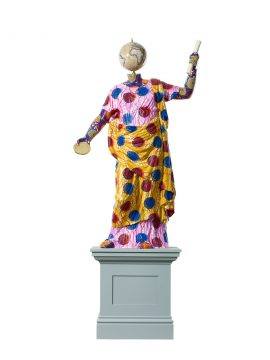
 Adam Shatz in the LRB:
 Audrey Truschke in Aeon:
 Two themes seem
 A powerful gene-editing tool called Crispr-Cas9, which this month
 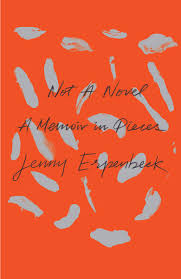 The essays explore the subjects – walls and borders, truth and silence, identity and memory and the limitations of language – present in her fiction while her autobiographical accounts give valuable context. Despite having slept through a nation’s collapse, Erpenbeck swiftly realised: “Everything that had been called the present up until then was suddenly called the past.” And so she erected another border inside herself, “made of time, between the first half of my life which was transformed into history by the fall of the wall… and the second half, which began at that same moment”. She clearly enjoyed a happy childhood. In John we learn about the lovesick schoolboy who would phone her and, refusing to reveal his identity, would quote Beatles lyrics. Years later, when Erpenbeck requested her file from the Stasi, she discovered that they had intercepted John’s daily record of who had arrived and left her apartment block. In Open Bookkeeping her mother’s death in 2008 is reduced to a poignant list of everything Erpenbeck has to find a home for, the accounts she has to close, the refunds that come in and those that don’t.
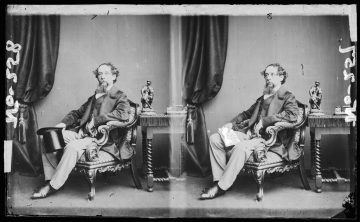 A.N. Wilson has been for many years one of England’s most formidable biographers, as well as an amazingly productive novelist — 23 novels under his belt, to match nearly the same number of nonfiction considerations of subjects ranging from Jesus and St. Paul to Milton, Darwin, Hitler, C. S. Lewis and the queen. (Along the way he spent seven years lecturing on medieval literature at Oxford.) His knowledge is wide, his writing fluent — one can only wonder why his name and reputation haven’t flourished here in America the way they have in his own country, where he is something of a Figure. Alas, I don’t believe that this is going to change with his latest book, “The Mystery of Charles Dickens,” which is appearing just in time for the Dickens anniversary. Here, to put it bluntly, is a highly peculiar biography — peculiar not for what it says about Dickens but for what it says about Wilson himself.
 Look away, America. For your own good, look away. Everything will still be there when you come back. Even once the vote counting’s done, there’ll be the recounting, and the tag-along lawsuits.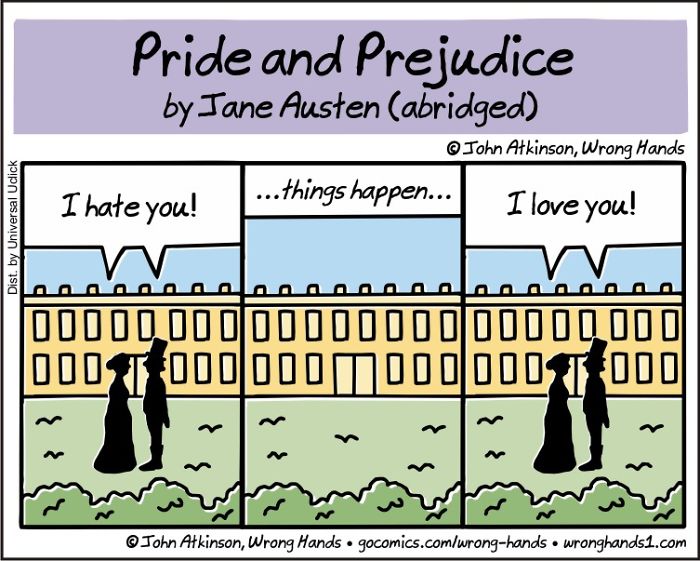
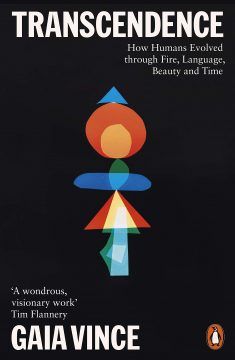 Let’s turn to Transcendence by