
Justin E. H. Smith in his Substack Newsletter:
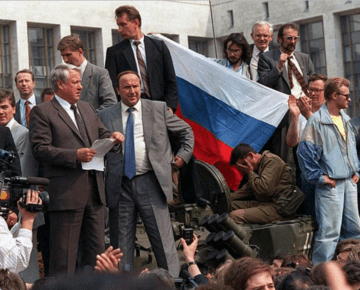 Often it seems a shame that those in opposing camps do not take time to stop and appreciate what they have in common: their certainty.
This shame has been particularly evident since January 6, in the work of all the hermeneuticists newly dedicated to interpreting that day’s events and what they portend for our republic. Was it a gruesome death-throe of Trumpism, or was it just the beginning of our own anni di piombo? Was it a proper fascist insurgency, or mostly just larping? Now that it has happened —whatever it was— should Trump be impeached for a second time, and Ted Cruz and Josh Hawley punished and ostracized, or should the Democrats focus, as Biden seems to want to do, on other pressing matters and let bygones be bygones for the sake of national unity? Are Trump’s suspension from social media and Parler’s disappearance from big-tech platforms justified, or is it an unacceptable state of affairs in which private media companies make largely arbitrary and inconsistent decisions as to who can be heard, rendering themselves in effect more powerful than democratically chosen leaders?
More here.
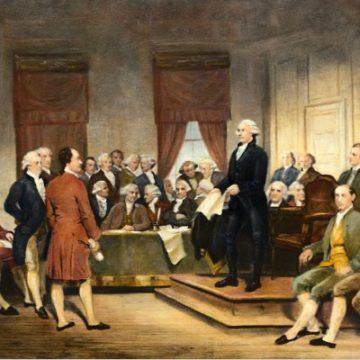 The first full week of 2021 has been action-packed for those of us in the United States of America, for reasons you’re probably aware of, including a riotous mob storming the US Capitol. The situation has spurred me to take the unusual step of doing a solo podcast in response to current events. But never fear, I’m not actually trying to analyze current events for their own sakes. Rather, I’m using them as a jumping-off point for a more general discussion of how democracy is supposed to work and how we can make it better. We’ve talked about related topics recently with
  American foreign policy tends to oscillate between inward and outward orientations. President George W. Bush was an interventionist; his successor, Barack Obama, less so. And Donald Trump was mostly non-interventionist. What should we expect from Joe Biden?
 In what would tragically turn out to be the last years of his life, Camus returned imaginatively to the landscape of his youth—a landscape that, because of the Algerian War, was not accessible to him in the way it once had been. In 1958, he agreed to a French edition of The Wrong Side and the Right Side, republished by Gallimard. The timing was significant. “I still live with the idea that my work has not even begun,” Camus wrote in his preface to the new edition. It was an odd claim for a writer who had just been given the Nobel Prize for Literature, but Camus was more troubled by the award than he was honored by it. Pained by the war in his native Algeria, shunned by Parisian intellectuals for his critique of the revolutionary Left, he feared he was finished as a writer—a fear that the Nobel Prize, which usually honors work done over a long career, only served to heighten. Refusing an interview with the newspaper L’Express, Camus explained that he wanted the noise and publicity surrounding the award to die away quickly. “I want to disappear for a while,” he said. To his friend Roger Quinox, he seemed “like someone buried alive.”
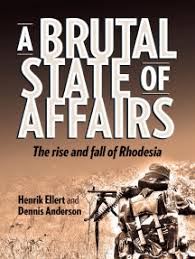 The authors of this book paint a detailed and dispassionate yet wrenching picture of the painful and bloody transformation of Rhodesia into Zimbabwe in the period following the white leader Ian Smith’s unilateral declaration of independence from Britain in 1965. Their main gift to historians is the wealth of information they provide, much of it hitherto unknown outside secret service circles, about how Rhodesia’s Special Branch, of which the authors themselves were two of the wiliest spooks, helped to keep the forces of African liberation at bay for so long.
 Asia has a high number of
  The reign of King Louis Philippe, the last king of France, came to an abrupt and ignominious end on Feb. 24, 1848, after days of increasingly violent demonstrations in Paris and months of mounting agitation with the government’s policies. The protesters surging through the city at first were fairly orderly: students chanting, well-dressed men and women strolling, troublemakers breaking windows and looting. But late in the evening of Feb. 23, the tide turned dark. Soldiers had fired on the crowd near the Hôtel des Capucines, leaving scores of men and women gravely wounded. Some blocks away, a journalist was “startled by the aspect of a gentleman who, without his hat, ran madly into the middle of the street, and began to harangue the passers-by. ‘To arms!’ he cried. ‘We are betrayed.’”
 During the 1650s, the admired Dutch diplomat Constantijn Huygens often found himself with time on his hands. He was the loyal secretary to successive princes in the House of Orange, the ruling dynasty in the northern Netherlands during the Eighty Years’ War with Spain, and had been knighted by both
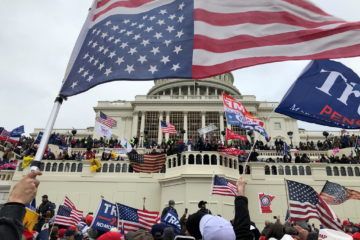
 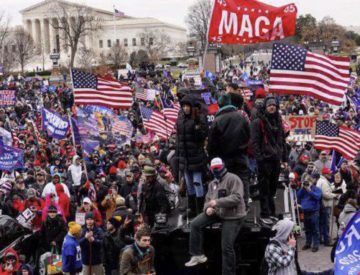 The storming of the US Capitol on January 6 is easily misunderstood. Shaken by the ordeal, members of Congress have issued statements explaining that America is a nation of laws, not mobs. The implication is that the disruption incited by President Donald Trump is something new. It is not. The United States has a long history of mob violence stoked by white politicians in the service of rich white Americans. What was unusual this time is that the white mob turned on the white politicians, rather than the people of color who are usually the victims.
 He calls himself a fermentation revivalist. With several award-winning books on the subject and a very large following on YouTube, Sandor Ellix Katz is part fermentation expert and part fermentation superstar. But I wondered: why revivalist? Did fermentation ever go out of fashion? Where I spent my adult life ‑ in Japan ‑ fermentation has always stood centre-stage. From soy sauce to miso and from sake to tsukemono, it is hard to imagine Japanese food without it.
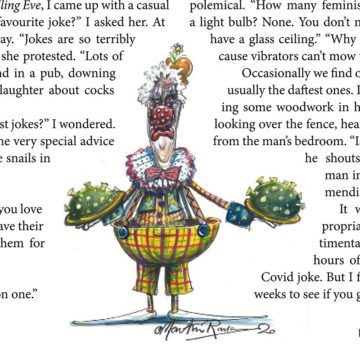 It was, in all respects, another typical Covid evening. We’d finished our regulation bottle of Chianti, yet again postponed our online Italian lesson, and decided that not one of the films on television merited a moment of our time. Three vacant hours lay between us and bedtime.
 A kinder fate might have cast Donald J Trump as a maitre d’ in the world of swank, careful to save the best tables for his best customers, warmly responsive to a good tip, the ultimate outsider as insider, being and also impersonating a man whose fondest memory of youth is the first time he heard “I Did It My Way.” But fate was not kind. It made him a billionaire of sorts with a trick of putting his name on vodka bottles and casinos, of growing richer through bankruptcies and bad debt, of enthralling the tabloids. And yet, despite all this, Manhattan seems to have remained unimpressed. A tower almost as tall as he said it was, remarkable hair, and yet he was the baffled outsider trying to figure out what he was getting wrong. What began as farce is ending as tragedy.