
 Adam Shatz in the LRB:
So this is how it ends. Four years of rage and lies; four years of racism and xenophobia so coarse and inflammatory Richard Nixon might have blushed; four years of dismantling economic and environmental regulation, packaged as a populist revolution on behalf of the forgotten (white) American; four years of ‘law and order’ indistinguishable from moral and political disorder; four years of war against the media, ‘globalists’, ‘elites’ and other ‘enemies of the people’, which is to say his people, or rather his loyalists; four years of contempt for the vulnerable, whether Muslims, undocumented immigrants, Black victims of police brutality or those afflicted with Covid-19; four years of garish exhibitionism parading as leadership – four years of Donald Trump in power have led to the bizarre and grotesque spectacle of 6 January.
To call the explosion of the mob that took over the Capitol building an attempted coup, or an insurrection, is unfair to the plotters of coups and insurrections. Like the man who egged them on in a speech that morning – and who had spent the last two months refusing to concede the election, going so far as to order Georgia’s secretary of state to ‘find’ votes to overturn the outcome – the revellers in DC were practitioners of what political scientists call ‘expressive’ politics, capable only of defiant stonewalling and destructiveness. Some had arrived in full Civil War re-enactment regalia, carrying rifles and Confederate flags. Others looked as if they were auditioning for a sequel to The Big Lebowski, notably the ‘QAnon shaman’, Jake Angeli, a tattooed, shirtless man who strutted through the chambers of the Capitol with horns on his head and red, white and blue paint on his face. And then there were the neo-Nazis, white supremacists and militia members, the ‘fine people’ of Charlottesville. For all their shouts of ‘USA, USA,’ they represented a furious, desperate, lumpen minority unwilling, or unable, to accept defeat – or the ‘surrender’ of Trump’s Republican collaborators, who could no longer go on pretending that Joe Biden hadn’t won, especially when they realised the potential political costs of doing so.
More here.

 Jonathan Kramnick in Critical Inquiry:
 Liza Featherstone in JSTOR Daily:
 Mike Davis in the NLR’s Sidecar:
 T
T Stories of Arctic expeditions continue to fascinate us because they expose humanity in extremis — people pushed to their best and worst by hypothermia, hunger and despair. Sir John Franklin’s 1845 Arctic expedition to find a northwest passage became the shame of Britain when it was discovered that his men, trapped for months in Canada, resorted to cannibalism. Ernest Shackleton is a hero for rescuing all but three of his crew in Antarctica after his ship, the Endurance, was lost.
 At noon, one hour before the two chambers met in joint session, President Trump took the stage before a crowd not far from 1600 Pennsylvania Avenue. There he whipped up the faithful, men and women he had fed and fattened with stories of election fraud and voting dumps, to march on the Capitol and protest outside. The crowd cheered him on, considering themselves to be real (and armed) patriots there to save America at the “Save America rally.”
 On Wednesday afternoon, as insurrectionists assaulted the Capitol, a man wearing a brown vest over a black sweatshirt walked through the halls of Congress with the Confederate battle flag hanging over his shoulder. One widely circulated photo, taken by Mike Theiler of Reuters, captured him mid-stride, part of the flag almost glowing with the light coming from the hallway to his left.
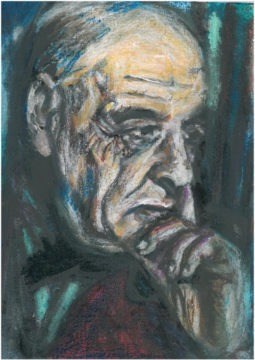 The impact of Germany on Ortega’s thoughts about his own country can be seen in his first major publication, Meditations on Quixote (1914), a book which, far from merely being a commentary on the famous Spanish novel, serves as a summary of Orteguian thought. Influenced by the biologist Jacob Von Uekull’s idea that a living organism must be studied within its environment in order to be understood, Ortega argued that human life must also be understood through its circumstances: “Circumstantial reality makes up the other half of me as a person: I need it to imagine myself and to be my true self,” he wrote. Social status, historical period, nationality, geographic location, and economic situation are all relevant when it comes to understanding how one sees the world and oneself, since they determine our perspective. This idea is summarized in Ortega’s most famous quote: ‘‘I am I and my circumstance, and if I do not save it, I do not save myself.’’ In just the same way that Ortega ventures out into the world down the Guadarrama river near his hometown, or that the Ancient Egyptians would have ventured out down the Nile, we also venture out into the world from our own places of origin. Regardless of how many new ideas you may open yourself to, and no matter how much they change your way of thinking, it will always be you perceiving them; your past experiences, your childhood, your economic and social status, your nationality, your historical period are vital in defining you as a person.
 Their oeuvre comprises two categories, into which the bulk of Black Romantic art can also be slotted: “Home and Family Life” and “Religious and Spiritual Paintings.” The former is all nuclear bliss and filial piety—Mommy and Daddy dole out kisses and baths and lead the children in bedtime prayers. Little black girls come draped in the oversize uniforms of secretaries and teachers, the boys outfitted as preachers, lawyers, and athletes, all smiling a bit too wide and glowing the same glazed-honey-bun brown. The aforementioned Daniel belongs to the latter grouping, alongside other familiar biblical tableaux, the figures all recast as black and rendered with expressive detail. Christ, pressed hair agleam beneath the halo, shepherds his flock through thick Edenic brush. A personal favorite is Visitation, 1998, in which a white-robed girl gazes heavenward, the sky behind her a froth of crepuscular blues, greens, and plums. Her exposed neck imparts a devilish stroke of carnality welcome amid the otherwise pious scene. Likewise her glossed lips, which, along with her wispy bangs, situate her firmly in modernity, a Madonna-cum–round-the-way girl. Before her are lilies of all varieties and in all stages of bloom, their sharp, distinct oil lines contrasting with the gauzy, airbrushed sky. Smaller, yellow buds blossom throughout, a tonal invocation of the orisha Oshun, lover of honey, sensuality, and mayhem. The infusion of paganism and possibly Yoruba symbolism unyokes the portrait from its stodgy biblical origins and releases it into more rousing territory. Are we witnessing a visitation or a conjuring? Is hers the white robe of the Pentecost or the Priestess?
 Imagine a drowning city. The collapse of the Greenland ice sheets has led to a ten-foot rise in global sea-levels. You think this is bad, but it is followed by further melting at the Aurora Basin in East Antarctica, resulting in another forty-foot rise. In his novel,
  Data science is remaking countless aspects of society, and medicine is no exception. The range of potential applications is already large and only growing by the day. Machine learning is now being used to
 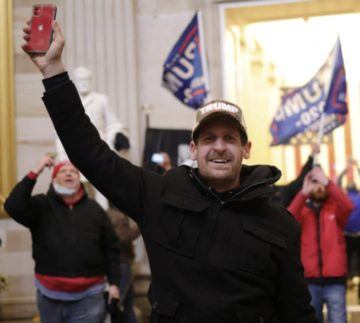 Although it is certainly true that Trump maintains a significant following among White women, his most fervent supporters tend to be White and male. Distributed across a wide swath of socioeconomic status, these men have unwaveringly — and even violently — supported the president, despite the historic risks his administration poses to public health, safety, and American democratic structures and ideals. No shortage of pundits and prognosticators have speculated about the factors underlying this support:
  There is