David Sedaris in The New Yorker:
 My mother became interested in astrology in the nineteen-eighties. She wasn’t a kook about it; she simply started reading the horoscopes in the Raleigh News & Observer. “Things are going to improve for you financially on the seventeenth,” she’d say over the phone, early in the morning if the prediction was sunny and she thought it might brighten my day. “A good deal of money is coming your way, but with a slight hitch.”
“Oh, no!” I’d say. “Are you dying?” I thought it was hooey, but in the back of my mind a little light would always go on. I guess what I felt was hope—my life would change, and for the better! The seventeenth would come and go, and, although I’d be disappointed, I would also feel vindicated: “I told you I wouldn’t find happiness.”
She never had her chart done, my mother, but she did branch out and start reading the horoscopes in Redbook, and in Ladies’ Home Journal, a magazine that had come to our home for as long as I could remember. The only column in it that interested me, the only one I regularly read, was called “Can This Marriage Be Saved?” You could have taken everything I knew about long-term relationships back then and fitted it into an acorn cap. I thought that, in order to last, you and your wife or boyfriend or whatever had to have a number of mutual interests. They didn’t need to be profound. Camping would qualify, or découpaging old milk cans. The surprise is that sometimes all it takes is a mutual aversion to overhead lights, or to turning the TV on before 11 p.m. You like to be on time and keep things tidy, the other person’s the same, and the next thing you know thirty years have passed and people are begging you to share your great wisdom. “First off,” I say, “never, under any circumstances, look under the hood of your relationship. It can only lead to trouble.” Counselling, I counsel, is the first step to divorce.
I’ve thought of that Ladies’ Home Journal column a lot lately, wondering if marital problems in the seventies and eighties weren’t all fairly basic: She’s an alcoholic. He’s been sleeping with his sister-in-law. She’s a spendthrift and a racist, he’s a control freak, etc.
More here.

 Why has the impending eviction of six Palestinian families in East Jerusalem drawn Israelis and Palestinians into a conflict that appears to be spiraling toward yet another war? Because of a word that in the American Jewish community remains largely taboo: the Nakba.
 It’s been a long, strange trip in the four decades since Rick Doblin, a pioneering psychedelics researcher, dropped his first hit of acid in college and decided to dedicate his life to the healing powers of mind-altering compounds. Even as antidrug campaigns led to the criminalization of Ecstasy, LSD and magic mushrooms, and drove most researchers from the field, Dr. Doblin continued his quixotic crusade with financial help from his parents. Dr. Doblin’s quest to win mainstream acceptance of psychedelics took a significant leap forward on Monday when the journal
  “Good architecture can be startling, or at least might not look like what we are used to,” writes the critic Aaron Betsky in Architect magazine. “Experimentation can sometimes look weird at first, but it is a necessary part of figuring out how to make our human-built world better.” Now so used to buildings that break the bounds of convention, we find the suggestion that experimentation is an essential part of good architecture unremarkable, even banal. But is it true?
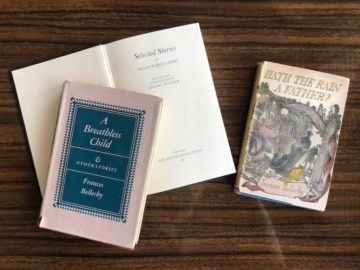 In Women’s Fiction and the Great War (1997), Nathalie Blondel argues that Bellerby spent the rest of her life replaying this grief in her fiction. “People live double lives” in Bellerby’s stories, Blondel explains: they exist in the land of the living while also “dwelling in memories of the dead.” Like Sabine Coelsch-Foisner—who, in her chapter on women’s writing in the first half of the twentieth-century in The British and Irish Short Story (2008), argues that “Bellerby’s stories typically convey a halt in the continuum of life and verge on the unspeakable”—Blondel highlights how Bellerby demonstrates this linguistically: “the estrangement of the bereaved from the world of the living is imaged through their estrangement from language itself.”
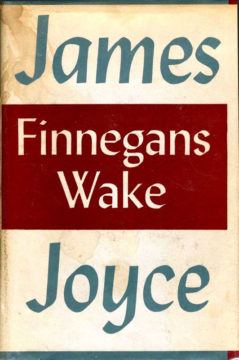 James Joyce once famously said that if it took him seventeen years to write Finnegans Wake, then a reader should take seventeen years to read it. In his usual prophetic way, he turned out to be exactly right. My Finnegans Wake Reading Group started in July 2004. We finished in February 2021.
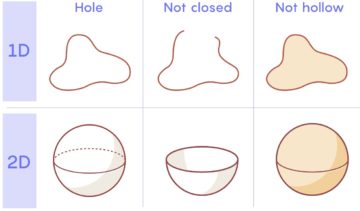 At first,
  What if I told you that History is not random? That it follows clear rules?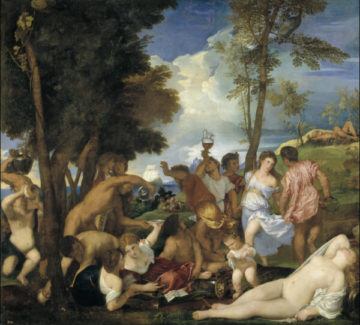
 Feminist is not a descriptor she embraced until late in life (she died in 2002 at the age of seventy-one). Mostly, it’s a label that has been bestowed upon her in attempts to contend with her quixotic ambition. Her resistance to the term, though, derived not from a real quarrel with its meaning so much as from some murky combination of misunderstanding, eccentricity, and calculation. Her personal brand of rebellion emerged before the advent of the women’s movement proper, in the pregnant pause between the publication of Simone de Beauvoir’s The Second Sex in 1949 (when she was an eighteen-year-old fashion model about to marry her first husband, Harry Mathews) and Betty Friedan’s The Feminine Mystique in 1963, by which point Saint Phalle had already taken up arms against the church, the Father, and the picture plane. Her wrath against her family for her abusive, conformist upbringing, and her determination to revolt, in life and art, emerged independently of any movement or schooling. Hospitalized in 1953 after a suicide attempt—the low point of a psychic deterioration instigated by the realities of marriage and motherhood—she became an artist over the course of her six-week stay.
 T
T The universe bets on disorder. Imagine, for example, dropping a thimbleful of red dye into a swimming pool. All of those dye molecules are going to slowly spread throughout the water. Physicists quantify this tendency to spread by counting the number of possible ways the dye molecules can be arranged. There’s one possible state where the molecules are crowded into the thimble. There’s another where, say, the molecules settle in a tidy clump at the pool’s bottom. But there are uncountable billions of permutations where the molecules spread out in different ways throughout the water. If the universe chooses from all the possible states at random, you can bet that it’s going to end up with one of the vast set of disordered possibilities. Seen in this way, the inexorable rise in entropy, or disorder, as quantified by the second law of thermodynamics, takes on an almost mathematical certainty. So of course physicists are constantly trying to break it.
 On arriving in Paris in 2013, I went to open a bank account. The personal banker assigned to me, who would remain with me for a few years after that, was a Senegalese immigrant, a proud professional, and most of all a proud Frenchwoman. When I showed her my immigration papers and my confirmation of employment by the University of Paris, she said something like, “Oh, sure, you’re one of the good immigrants.” I thought she had meant to speak damningly of the hypocrisy of her adoptive country, and I started to say, “You mean because I’m…”. But before I got to that color-coding adjective I wrongly presumed she had in mind, she completed her thought: “You’re one of the good immigrants, like me. You’ve got diplomas, you’ve got a job.” Then she pointed to the family of Roma people encamped on a styrofoam mattress on the sidewalk right outside: “Not like them,” she said, “they don’t want to work. It’s easier to just sit there and make people feel sorry for you.”
 “A way that math can make the world a better place is by making it a more interesting place to be a conscious being.” So says mathematician Emily Riehl near the start of this episode, and it’s a good summary of what’s to come. Emily works in realms of topology and category theory that are far away from practical applications, or even to some non-practical areas of theoretical physics. But they help us think about what is possible and how everything fits together, and what’s more interesting than that? We talk about what topology is, the specific example of homotopy — how things deform into other things — and how thinking about that leads us into groups, rings, groupoids, and ultimately to category theory, the most abstract of them all.