
Sabine Hossenfelder in Back Reaction:
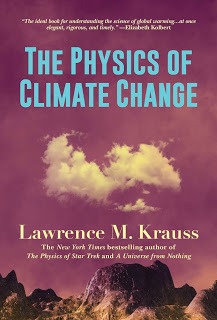 In the past years, media coverage of climate change has noticeably shifted. Many outlets have begun referring to it as “climate crisis” or “climate emergency”, a mostly symbolic move, in my eyes, because those who trust that their readers will tolerate this nomenclature are those whose readers don’t need to be reminded of the graveness of the situation. Even more marked has been the move to no longer mention climate change skeptics and, moreover, to proudly declare the intention to no longer acknowledge even the existence of the skeptics’ claims.
As a scientist who has worked in science communication for more than a decade, I am of two minds about this. On the one hand, I perfectly understand the futility of repeating the same facts to people who are unwilling or unable to comprehend them – it’s the reason I don’t respond when someone emails me their home-brewed theory of everything. On the other hand, it’s what most science communication comes down to: patiently rephrasing the same thing over and over again. That science writers – who dedicate their life to communicating research – refuse to explain that very research, strikes me as an odd development.
This makes me suspect something else is going on. Declaring the science settled relieves news contributors of the burden of actually having to understand said science. It’s temptingly convenient and cheap, both literally and figuratively. Think about the last dozen or so news reports on climate change you’ve read. Earliest cherry blossom bloom in Japan, ice still melting in Antarctica, Greta Thunberg doesn’t want to travel to Glasgow in November. Did one of those actually explain how scientists know that climate change is man-made? I suspect not. Are you sure you understand it? Would you be comfortable explaining it to a climate change skeptic?
More here.
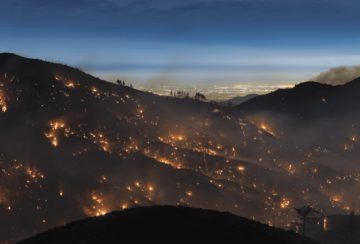 To those who still harbor doubts about the justness of this war, who continue to question the scientific consensus on global warming and the ravages it promises, I ask only that you entertain, if there is a chance you are right, that there is also a chance you are wrong. Let us even say, for argument’s sake, that the virtual certainty of scientists were reduced to 50 percent confidence and the forecasted effects of climate violence were reduced in severity by 50 percent as well. That would still justify the most massive mobilization of human energy and resources the world has ever seen, because the likely outcome would still be far worse than any threat we have faced in the past.
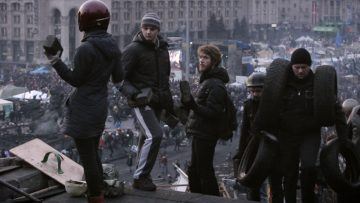 Ukrainian director Sergei Loznitsa once said that his films were about “the decay and disintegration of the former Russian Empire.” With 29 titles under his belt, ranging from fiction to observational and archival documentaries, Loznitsa demonstrates a keen interest in form, particularly in using fictional devices within documentary. He also opposes the recent tendency in Eastern Europe to frame histories with war and authoritarianism in heroic or rosy terms.
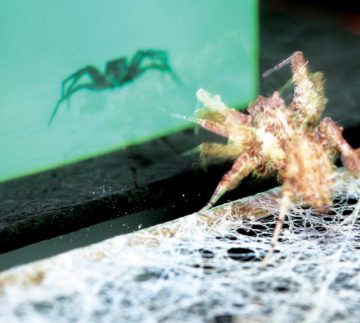 In the 1980s, zoologists were thus astonished to discover that Salticidae, or jumping spiders, a family of the arachnids that contains more than five hundred genera and over five thousand separate species, had vision systems on par with cats, mammals famous for their acute eyesight. With around six hundred thousand neurons in its brain (roughly half that of a fly or a honeybee), a jumping spider can recognize images on a television screen and is the only invertebrate known to be capable of such a sophisticated feat of visual processing. “How does this speck of dust of a brain achieve such a complicated task?” asks Simon Pollard, curator of invertebrate zoology at the Canterbury Museum in Christchurch, New Zealand. “We need to look deep into these unblinking eyes.”
 T
T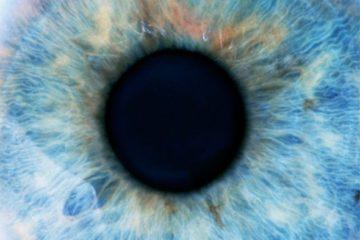 It has been said that “the eyes are the window to the soul,” but new research suggests that they may be a window to the brain as well.
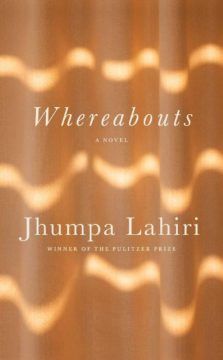 WHEN WRITERS BEGIN to learn our craft, we’re told to write for ourselves. As one becomes further embedded in the creative process, it can be difficult to work with this pure impulse in mind. Write for ourselves, yes, but if the work never finds readers, what does that say about us? Do stories that exist in a one-sided conversation with their authors have as much value as stories that take on a life of their own?
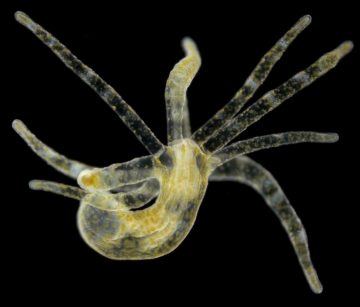 The hydra is a simple creature. Less than half an inch long, its tubular body has a foot at one end and a mouth at the other. The foot clings to a surface underwater — a plant or a rock, perhaps — and the mouth, ringed with tentacles, ensnares passing water fleas. It does not have a brain, or even much of a nervous system.
 Israel’s attempt to justify its latest brutal assault on Gaza rings hollow to anybody familiar with events in Israel, where the government of Prime Minister Binyamin Netanyahu, backed by anti-Arab racists, has systematically, cruelly, and persistently violated the basic human rights of the Arab population. Human Rights Watch, a global NGO with many Jewish leaders, has recently condemned Israel for
 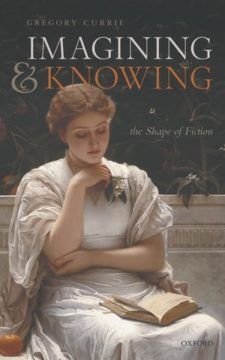 Few would dispute that, all things considered, some exposure to works of imaginative literature (novels, plays, poems) as part of a rounded education is better than no such exposure. Beyond that, disagreements are rife. Culture wars loom, with anxieties over curriculum choice, gender and racial bias, elitism, contested pedagogic methods, and a disconcerting vagueness about aims sought.
 As we traveled from Nabi Saleh to Ramallah by bus, we engaged in a vigorous discussion about the military occupation of the West Bank and whether it resembled apartheid. Yehuda Shaul of BtS told us he had escorted Barbara Hogan, an ANC member and former South African political prisoner, around the occupied territories. Hogan had declared after her tour that apartheid was in fact not an appropriate comparison, because what Hogan saw of Israel’s military occupation of the West Bank was so much more extreme than what she knew of apartheid South Africa. Whatever the correct descriptor might be, the military occupation of the West Bank is hard to understand until you see it. You might be surprised at your own intolerance of the idea of a democracy maintaining an open-air prison for 2.7 million people. Before going there myself, I had heard this phrase, open-air prison, and figured it was not literally a prison. (As someone who spends a fair amount of time in prisons, I’m sensitive to its use as a metaphor.) But everywhere I went I saw guard towers and concrete barriers and razor wire—truly an open-air prison—except where there were settlements, which featured posh, Beverly Hills–style landscaping: little blooming flowers, fragile and bright, the guard towers in the far distance.
 P
P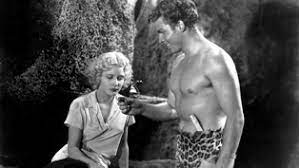 Elaine Morgan had sass. In Descent of Woman, published in 1972, she asked her readers to take science into their own hands. “Try a bit of fieldwork,” she suggested. “Go out of your front door and try to spot some live specimens of Homo sapiens in his natural habitat. It shouldn’t be difficult because the species is protected by law and in no immediate danger of extinction.” After completing observations of 20 random people, she suggested, substitute them when you are reading statements about universal human nature. The result?
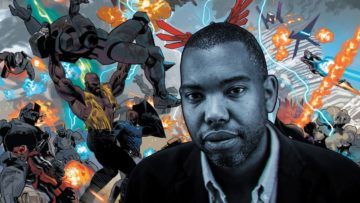 Coates made his name as a journalist and commentator at The Atlantic, writing articles and essays that explored how America’s history of systemic racism continues to affect politics, housing, and other aspects of American life. Marvel reached out to him with the opportunity to write Black Panther in 2015, and those initial scripts would become the first fictional work he’d publish. (He’d been working on his novel,