
Poignant Moment, listening to “Lakes” played by
the Pat Metheny Group. Sunset Beach, Summer,
1984
The song comes over me like a wheatfield. my face
…… brushed by golden stalks
My spirit moves forth like a blind one and when
……things touch me…I see them
How could I know there was so much tenderness
……hidden in things, in my flesh?
How could I know the love of white paint for
……the porch of the house where it clings
……and flakes? How could I know my daughter
……would come back?
How could I know about the air of the inquiring,
……efficient blood, returning to its cells?
I see the love of the pale blue wind for our clothes,
……blown out from the line,
The wind loves our house, whistling through tiny
……cracks, blowing steadily toward us.
There is something in me that listens and stirs.
……Everything flows, grasping. Everything is
……a kind of attachment, a music; time aching
……through us.
It is too much to feel. I put down my pad. Even
……breathing is a kind of ceaseless music.
I see we cannot rest, ever. We seek for love.
……continually, carried along like dust, swept
……across lakes. How did I ever come to be
……here, to know these people, to love them?
Our need for love exceeds us, reaching ahead,
……dark hair blowing like a torch in the halls
……of the old castle. It goes ahead, looking
……for signs, listening, searching.
And then the wind catches it suddenly and lifts it,
……swift and beautiful, carries it far out over
……the lakes—sail without a boat, banner,
……of our incorrigible longings.
by Lou Lipsitz
from Seeking the Hook
Signal Books, 1997
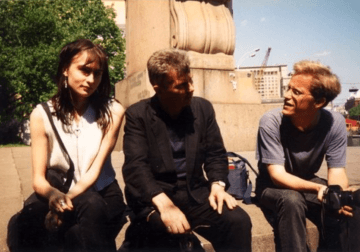 In a speech to the First All-Union Congress of Soviet Writers in Moscow in 1934, Central Committee secretary Andreï Zhdanov reminded those assembled of Comrade Stalin’s recent declaration that, in the Soviet Union, writers are now “the engineers of the human soul”.
 In the 1950s, four decades before he won a Nobel Prize for his contributions to
  On June 2 ,Bill Gates’ advanced nuclear reactor company TerraPower, and Warren Buffett’s PacifiCorp announced that they’ve chosen Wyoming as the state to launch their Natrium advanced nuclear reactor project.
 Five years ago this month, I attended the
 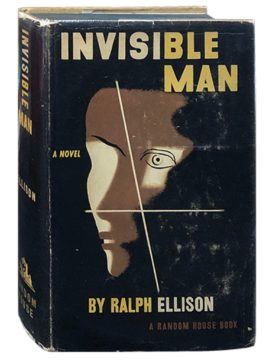 I first saw
 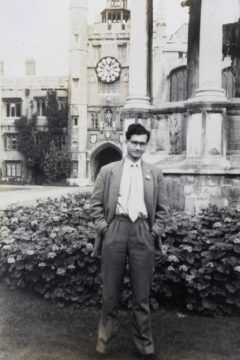 Coming from a long line of Hindu intellectuals and teachers, Amartya Sen enjoyed advantages and freedoms that few others did in a deeply-stratified India of the 1930s, during the waning days of the British empire. Teaching was in his blood, and from an early age, Sen was struck by the stark economic inequities he saw all around him under the British raj. Identifying and understanding the causes and effects that inequalities, like those surrounding poverty or gender, had on people’s lives would become a lifelong intellectual lodestar for the political economist, moral philosopher, and social theorist. Many economists focus on explaining and predicting what is happening in the world. But Sen, considered the key figure at the convergence of economics and philosophy, turned his attention instead to what the reality should be and why we fall short. “I think he’s the greatest living figure in normative economics, which asks not ‘What do we see?’ but ‘What should we aspire to?’ and ‘How do we even work out what we should aspire to?’” said Eric S. Maskin ’72, Ph.D. ’76, Adams University Professor and professor of economics and mathematics.
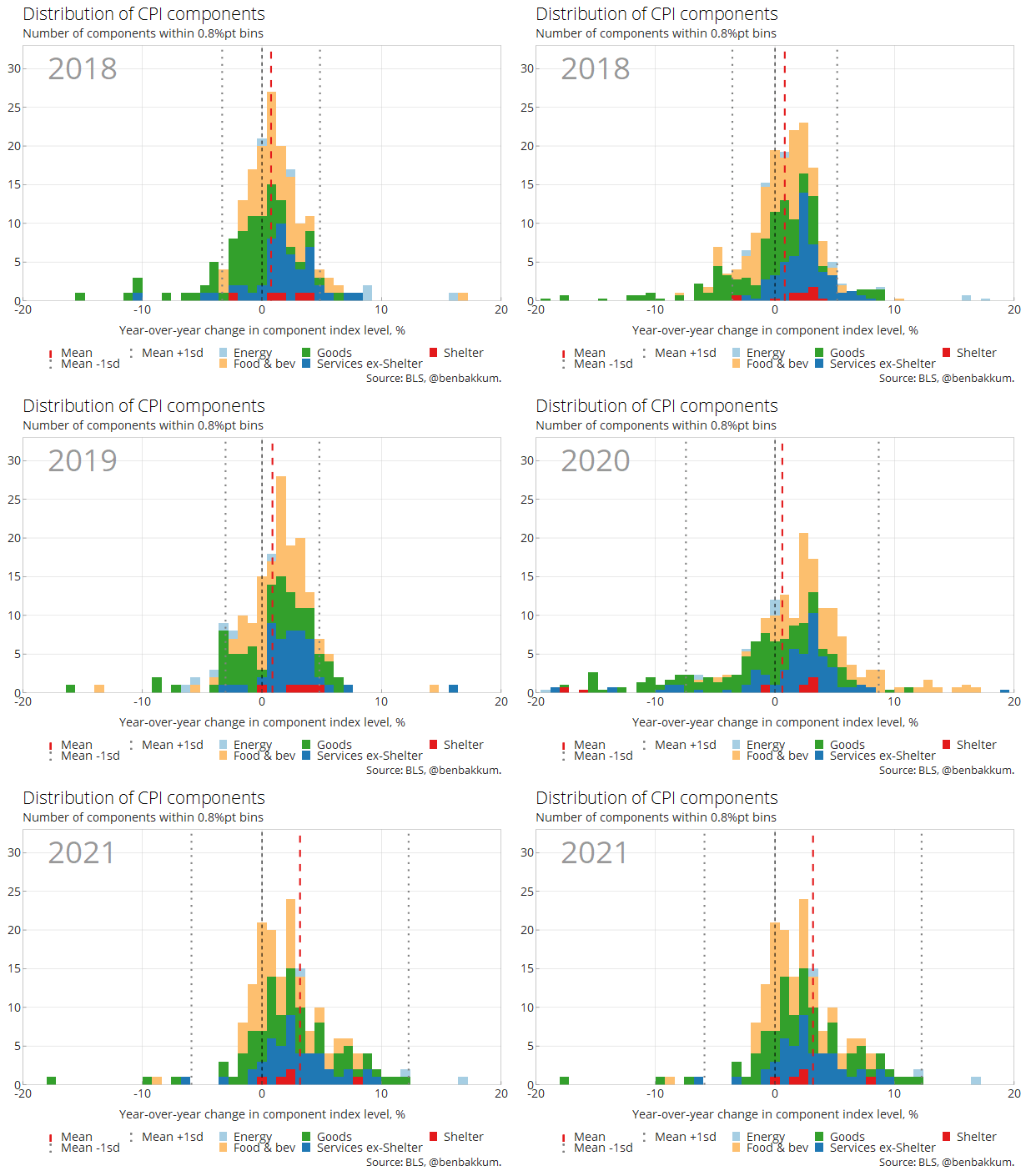 Ben Bakkum in Macro Chronicles:
 The Bone House, published in 2005, is either a decade’s work or a lifetime’s, depending on how you look at it. It is the distillation of an expansive mind that seeks to delve and delve. Her tone is never didactic—rather, discursive, exploratory, delighted, unjaded, alive. To read more than a few pages at a stretch is to travel a long way from where you set out. Sometimes to travel so far as to lose the view of the mountain, only to be brought back via an unfamiliar face of it.
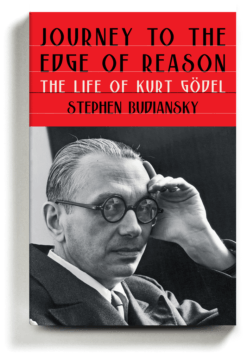 Gödel could go for long walks with his fellow institute scholar Einstein, who sponsored Gödel’s citizenship application and called him the greatest logician since Aristotle, but he was wracked by physical ailments and nervous conditions. A doctor told him he had a bleeding ulcer, which he strangely refused to believe, even though he was also a self-medicating hypochondriac. He subscribed to all sorts of conspiracy theories, insisting that “nothing happens without a reason,” and that the reason was almost always a hidden one. The unlimited freedom he had at the institute proved to be double-edged, Budiansky observes. In one sense, it saved Gödel’s life; but it also allowed his consciousness to wander into the darkest places, without the checks on his expansive anxieties that interactions with the ordinary world might have otherwise provided.
 W
W Just over five years ago, Inky the octopus became a folk hero because of his escape from a New Zealand aquarium. After squeezing through a narrow chink in his tank, he crawled across the floor and found an opening to a 164-foot-long drainpipe that led to the ocean. As much as I enjoyed the film based on Stephen King’s “The Shawshank Redemption”, which climaxes in Tim Robbin’s daring prison break, I only wish that a gifted animation team like the one that made “How to Train Your Dragon” could tell Inky’s story.
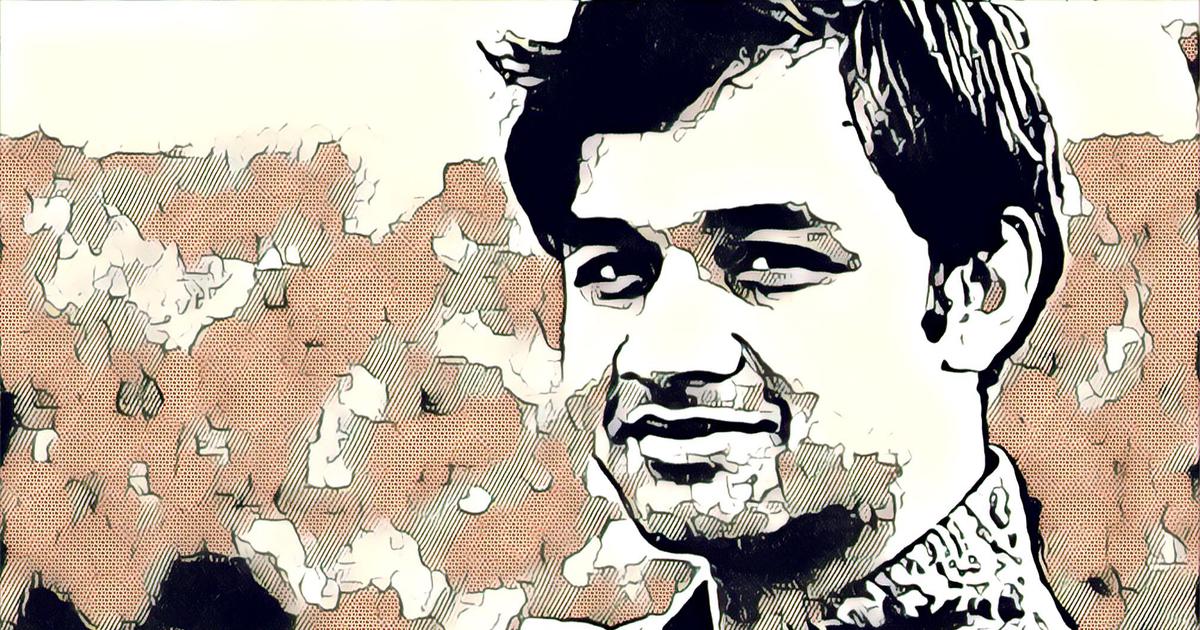 In Delhi, Shahid also became aware of the city’s Mughal and colonial history, and was impressed by its architecture. In the early ’60s, the Mexican poet Octavio Paz had visited New Delhi and had been charmed by its architecture. He wrote numerous poems about the city and about all that he had witnessed here. He found Delhi’s “aesthetic equivalent” in “novels, not in architecture”, and to him, wandering the city was “like passing through the pages of Victor Hugo, Walter Scott, or Alexandre Dumas”.