The Best Books of 2021: A List of Lists

From Five Books:

2021 is the 6th year we’re approaching experts and asking them to recommend the best books published in their field, whether it’s history or historical fiction, science or science fiction, math or memoir, politics or philosophy.

Below you’ll find all our interviews on the best books of 2021 as they are published on Five Books. (Our best books of 20202019 and 2018 are also still available: those books are still well worth reading!).

Almost all the book recommendations are based on an individual expert’s choices. In some lists one of our editors makes a selection, based on the vast quantities of books we read every week.

More here.

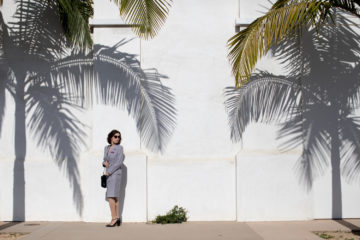
Santa Barbara

Diana Markosian in Lensculture:

The family has been an infinite well of inspiration for photographers for as long as the medium has existed. From Larry Sultan’s Pictures From Home to LaToya Ruby Frazier’s The Notion of Family, the family unit has proved a conduit for explorations of belonging, identity, strife, place, connection, injustice and more. Photographers have both worked behind the camera and stepped into the frame in order to capture the most universal of subjects, the complications and connections to those we love.

In Diana Markosian’s series Santa Barbara, a story that at first blush feels almost pulled from a movie, family—and the difficult, sometimes incomprehensible decisions made for it—are put on full display. In photographs and a film, the project deals with her family’s journey from post-Soviet Russia to America. In 1996 Markosian’s mother Svetlana, inspired by the American soap opera Santa Barbara that her family watched in Russia, placed an ad in search of a man who could help her and her children immigrate to the US. Awoken in the middle of the night, the children were informed they were going on a trip. The next day they arrived in California and their new American lives began. Markosian, in relating the story, notes how surreal this experience was to her and her family.

More here.

Why Do Women Still Make Less Than Men?

From Harvard Magazine:

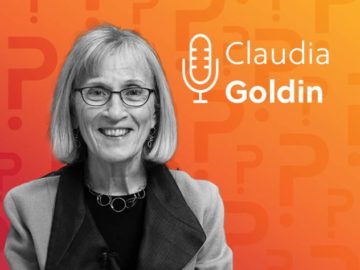
Claudia Goldin, Henry Lee professor of economics, shares the reason why working mothers still earn less and advance less often in their careers than men: time. Even with antidiscrimination laws and unbiased managers, certain professions pay employees disproportionately more for long hours and weekends, passing over women who need that time for family care. Goldin also discusses how COVID-19’s flexible work policies may help close the gender earnings gap.

A transcript from the interview (the following was prepared by a machine algorithm, and may not perfectly reflect the audio file of the interview):

Nancy Kathryn Walecki: Why now when more women graduate college than men and about 30% of working women are mothers, is it still so hard for women to advance their careers and build their families? Why are women still making 81 cents to a man’s dollar as the statistic goes? One reason for the persistent inequality might just be something we all have, but want more of: time. Welcome to the Harvard Magazine podcast, “Ask a Harvard Professor.” I’m Nancy Kathryn Walecki. Joining us for office hours today is Dr. Claudia Goldin, Henry Lee professor of economics, and the first tenured woman in Harvard’s economics department. She’s known for her work on the female labor force and income inequality, and has served as the president of the American Economic Association, and as Director of the Development of the American Economy Program at the National Bureau of Economic Research. Her new book, Career and Family: Women’s Century-Long Journey Toward Equity, looks at the lives of five generations of college-educated women to answer why true workplace equity for working mothers is still out of reach. Welcome, Dr. Goldin.

Claudia Goldin: I’m very glad to be here. And I am Claudia.

More here.

Sunday Poem

The Book of Lies

I’d like to have a word
with you. Could we be alone
for a minute? I have been lying
until now. Do you believe

I believe myself? Do you believe
yourself when you believe me? Lying
is natural. Forgive me. Could we be alone
forever? Forgive us all. The word

is my enemy. I have never been alone;
bribes, betrayals. I am lying
even now. Can you believe
That? I give you my word.

by James Tate
from
Strong Measures
Harper Collins, 1986

Saturday, December 11, 2021

Conflict Zone: The expansive feminism of Jacqueline Rose.

Cora Currier in The Nation:

I can see, but not clearly describe, the patch of concrete, the base of the tree, the few brief seconds that the man and I struggled before my head hit the pavement. I spent the next week in bed with a concussion, staring at the ceiling of my hot bedroom, forbidden the use of words: no screens, no books, no stimuli. The nonverbal blur that followed was a time that passed as a smear across my brain. It soon came to feel like a muted extension of the attack.

When Sarah Everard was murdered in England in March, I thought about my experience again. It seemed to be the very kind of random violence against women that many saw in Everard’s murder: A woman walks home alone at night; a man she doesn’t know attacks her. Countless women took to social media to talk about their fear of such attacks, the admittedly useless strategies they employed to prevent them, and their sense that, at any moment, they could be next. And yet, as Charlotte Shane wrote in Dissent, something about this outpouring felt off. “Specific harm should be the issue,” Shane wrote, but “potential harm and ambient anxiety become the focus.”

More here.

Anna Akhmatova’s “Requiem”

In the L.A. Review of Books:

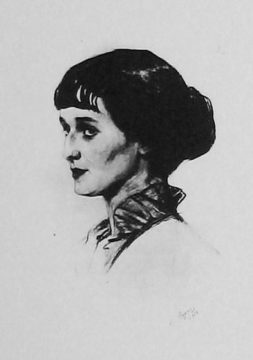
Anna Akhmatova was born in Odessa in 1889, but lived most of her life in Saint Petersburg, the city with which so much of her poetry is intimately connected. She frequented The Tower, the famous literary salon of the symbolist poet Vyacheslav Ivanov, and in 1910 she married fellow poet Nikolay Gumilyov. The couple were divorced in 1918, three years before Gumilyov was executed by the Bolsheviks.

Akhmatova achieved fame with her first collection of poems, Evening, published in 1912, and her subsequent collections Rosary and While Flock consolidated her reputation as one of Russia’s leading poets during the period preceding the October Revolution. After 1917 she took the conscious decision to remain in Russia, rather than join those of her fellow writers who were opting to go into exile in the West. Following the publication of the second edition of Anno Domini MCMXXII in 1923 she found herself increasingly subject to censorship, and in 1946 she was expelled from the Soviet Writers’ Union in the wake a notorious speech by the Communist Party cultural boss Andrey Zhdanov, in which he described her as “a cross between a nun and a whore”; but although she faced much personal hardship and a protracted poetic silence as a consequence of her decision to remain in Russia, she was also able to create Requiem, her great affirmation of solidarity with the victims of the Stalinist purges. After Stalin’s death in 1953 the restrictions on Akhmatova’s work were gradually relaxed and a selection of her poems, entitled The Course of Time, was published in 1958. She died in Moscow in 1966.

More here.

Can Big Tech Serve Democracy?

Henry Farrell and Glen Weyl in Boston Review:

Two new books about technology and the fate of democracy begin by describing the storming of the U.S. Capitol on January 6, 2021. They are right to see that fateful day as a turning point and a benchmark for debates about the course of U.S. society, and hint at important questions: Can democracy survive in its current form? What role did information technology play in encouraging a violent mob to tear through Congress? And what do we do now?

Both books see January 6 as the product of systematic misinformation and fraud, and argue that the solution is more participatory democracy. Though we agree for the most part, neither book offers a comprehensive theory of change or a particularly persuasive vision of an aspirational digital democracy. Solving Public Problems, by Beth Simone Noveck—director of Northeastern University’s Governance Lab and New Jersey’s inaugural Chief Innovation Officer—suggests that better government will produce a better public. System Error—by political theorist Rob Reich, computer scientist Mehran Sahami, and political scientist Jeremy M. Weinstein —explains how government might come to understand and perhaps constrain big tech more effectively. Each makes important contributions. System Error breaks new ground in explaining why Silicon Valley (SV) is wreaking havoc on U.S. politics and offers uniformly thoughtful reforms. Solving Public Problems, on the other hand, offers possibly the most detailed and serious treatment of how digital tools help enhance democratic governance around the world. Neither, however, answers the question implicitly posed by opening their books with a description of U.S. democracy’s failure: What happens now, after January 6?

More here.

George Orwell outside the whale

Ian McEwan in New Statesman:

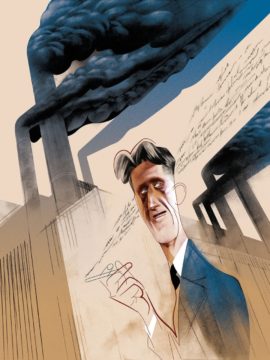
I’ll start with a place, a Paris apartment in Montparnasse, and a date, 23 December 1936, and a gift from one writer to another of his corduroy jacket which, from the point of view of the recipient, may have had a few traces of whale blubber attached to its lapels. The generous donor was the American writer Henry Miller. He thought his visitor, George Orwell, on his way to Spain to fight in the civil war, would benefit from its warmth through the Spanish winter, though he pointed out that it was not bulletproof. The present, Miller said, was his contribution to the loyalist anti-fascist cause.

The encounter between the two men (the American was almost 45, the Englishman 33) had been well smoothed in advance by Orwell’s positive review of Miller’s novel, Tropic of Cancer, which was followed by a collegiate exchange of letters. The meeting presents us with a tableau vivant and source for the heart of Orwell’s celebrated essay “Inside the Whale”, published in book form just over three years later in 1940 by Gollancz. Despite a fair degree of mutual admiration, these two writers had much to disagree about. Henry Miller, self-exiled, strenuously bohemian, a cultural pessimist, hedonist, tirelessly sexually active – or tiresomely, as second wave feminists would point out through the Seventies. He had a profound disregard for politics and political activism of any kind. As a writer, he was, by Orwell’s definition, “inside the whale”. Such political views as Miller had were naive and self-regarding and light-hearted. In a letter to Lawrence Durrell he wrote that he knew he could head off the rise of Nazism and the threat of war if he could just get five minutes alone with Adolf Hitler and make him laugh.

More here.

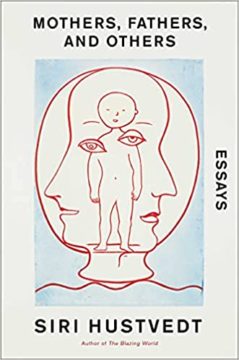
Siri Hustvedt’s Powerful Essays On Family And Art

Jessica Ferri at the LA Times:

When Hustvedt returns to the idea of what’s missing, her writing takes off. In “Both-And,” an essay on Bourgeois, she offers the concept of intercorporeality from French philosopher Maurice Merleau-Ponty: “that human relations take place between and among bodies, that we perceive and understand others in embodied ways that are not conscious.” What could be more loaded than the mother’s body, a body that is not one, but two? A body that is no longer hers alone? “The artist sees the object unfold, a thing that rises out of you, is related to you, but is not you either,” Hustvedt writes about Bourgeois’ work. But this easily applies to birth and mothering.
For all these sensitivities, Hustvedt’s most personal piece, “A Walk With My Mother,” dwarfs the others in this collection. In concert with the scientific essays, it is intensely focused on the physical.

more here.

Saturday Poem

Causes

“Questioned about why she had beaten her spastic child to death, the mother
told police, “I hit him because he kept falling off his crutches.’ “
—News Item

.
Because one’s husband is different from one’s self,
the pilot’s last words were. “Help, my God, I’m shot!”
Because the tip growth on a pine looks like Christmas tree
….. candles,
cracks appear in the plaster of old houses.

And because the man next door likes to play golf,
a war started up in some country where it is hot,
and whenever a maid waits at the bus stop with her
….. bundles,
the fear of death comes over us in vacant places.

It is all foreseen in the glassy eye on the shelf,
woven in the web of notes that sprays from a trumpet,
announced by a salvo a crackles when the fire kindles,
printed on the nature of things when a skin bruises.

And there’s never enough surprise at the killer in the self,
nor enough difference between the shooter and the shot,
nor enough melting down of stubs to make new candles
as the earth rolls over, inverting billions of houses.

by Mona Van Duyn
from
Strong Measures
Harper Collins, 1986

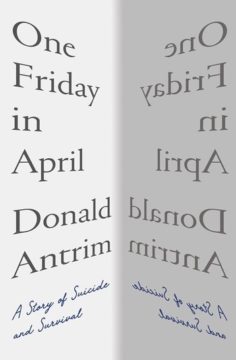
A Story Of Suicide And Survival

Daphne Merkin at Bookforum:

One Friday begins on a Friday in April 2006, when the forty-seven-year-old Antrim, having just had a spat with his girlfriend, is clinging to the fire escape of his four-story apartment building in Brooklyn, considering jumping to his death. (Although one wonders if falling from this height might have resulted in serious injury rather than death.) “I didn’t know why I had to fall from the roof,” he writes, “why that was mine to do.” He goes on to tell us that depression is a “misleading term,” that he prefers to call his depression “suicide” because he sees it “as a long illness, an illness with origins in trauma and isolation” rather than “the death, the fall from a height or the trigger pulled.” Although Antrim offers this explanation as an original take on an enigmatic condition, I found it befuddling rather than clarifying: suicide is sudden and immediate while depression is a long and often recurrent illness. There is no getting around it: the former is a decision, however impulsive and catastrophic; the latter is a passively endured condition, the result of our chemistry and psychological vulnerabilities.

more here.

The four-pronged attack on American democracy

Emily Tamkin in New Statesman:

WASHINGTON, DC – Donald Trump lost the 2020 presidential election.

Donald Trump, however, will not say this. He has spent the year since he lost insisting that he won. His supporters believe the same. According to an NBC News poll from November, 38 per cent of respondents did not believe that President Joe Biden was legitimately elected, and half of Republicans did not believe their ballots would be counted accurately the next time they went to vote. “There are always some sour grapes from the losing party after the election,” said Barry Burden, a political science professor at the University of Wisconsin-Madison. “But this has gone to a new level of disbelief.” Just as troubling are the other steps that Trump and his supporters have taken in the past year to undermine American democracy, both for his own benefit and that of the Republicans aligned to him. They are not only refusing to accept reality but are trying to change the reality of how people vote in the future. “There really has not been anything like this in modern American history,” Burden said.
Official intimidation

Over the past year, election officials in various places across the country have been threatened. A study conducted by Benenson Strategy Group found that a third of election officials expressed concern about facing harassment in the course of doing their job, and 17 per cent had already been threatened. The For the People Act, a voting rights bill passed by the House of Representatives, does contain some protections for election officials – but the bill is stalled in the Senate. Unless moderate Democrats Kyrsten Sinema and Joe Manchin agree to abolish the filibuster, it will not pass, since Republicans will not support it.

More here.

Behind the bespoke cells of immunotherapy

From Nature:

It seemed like a very promising cancer immunotherapy lead. CHO Pharma, in Taiwan, had discovered that it was possible to target solid tumours with an antibody against a cell-surface glycolipid called SSEA-4.1 This antigen is present during embryonic development, but not seen on human cells again — until they turn into cancer cells.2 The company turned to Lan Bo Chen, a recently retired Harvard pathologist, to help develop this work into an anti-cancer therapy for solid tumours. “It is highly reasonable to imagine that we can use SSEA-4, overexpressed on cancer cells, as a target for CAR-T,” says Chen, now in his role as senior technology advisor for CHO Pharma.

CAR-T therapy works by genetically engineering a person’s own T cells in such a way that they recognize and attack cancer cells. This involves creating a chimeric antigen receptor (CAR) from an antibody against a target on the cell. But CAR-T therapy was designed for blood cancers so it needs several adaptations to make it suitable for the treatment of solid tumours.3 The cells need to be directed to the site of the tumour, survive in the tumour’s local microenvironment, and act only on tumour cells, not on healthy cells nearby.

But, when Chen tried to create CAR-T cells against SSEA-4, he hit a few obstacles. First it took him a long time to get his hands on a humanized SSEA-4 antibody suitable for adaptation. When he finally had one, he still had to find a way to turn that antibody into a CAR. And then to insert the CAR into a human T cell using lentiviral transduction.

More here.

Friday, December 10, 2021

Why Stories Are Like Taking Drugs

Jonathan Gottschall in Literary Hub:

According to the English poet and philosopher Samuel Taylor Coleridge (1772-1834), enjoyment of fiction requires a “willing suspension of disbelief”—a conscious decision. We say to ourselves, “Well, I know this story about Beowulf battling Grendel is hooey, but I’m going to switch off my skepticism for a while so I can enjoy the ride.”

But that’s not how it works. We don’t will our suspension of disbelief. If the story is strong, if the teller has style and craft, our suspension of disbelief just happens to us. Think of the metaphors we commonly use to describe what stories feel like. Narrative transportation is always something don’t to us, not by us. It’s a force we’re subject to, not something we control.

We think of storytellers as metaphorical bruisers who overpower us and hold us down—they hookgriprivet, and transfix.

More here.

Revisiting the “Tsar Bomba” nuclear test

Jennifer Ouellette in Ars Technica:

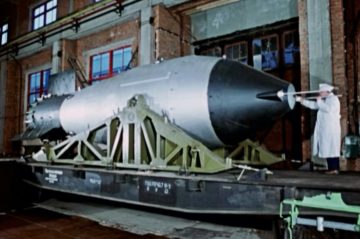
The detonation of the first nuclear bombs over Hiroshima and Nagasaki in August 1945 is seared into our collective memory, and the world has been haunted by the prospect of a devastating nuclear apocalypse ever since. Less well-known but equally significant from a nuclear arms race standpoint was the Soviet Union’s successful detonation of a hydrogen “superbomb” in the wee hours of October 30, 1961.

Dubbed “Tsar Bomba” (loosely translated, “Emperor of Bombs”), it was the size of a small school bus—it wouldn’t even fit inside a bomber and had to be slung below the belly of the plane. The 60,000-pound (27 metric tons) test bomb’s explosive yield was 50 million tons (50 megatons) of TNT, although the design had a maximum explosive yield of 100 million tons (100 megatons).

More here.

A Monthly Ritual of Selflessness Has Transformed Rwanda

Tolu Olasoji in Reasons to be Cheerful:

Jean Luc remembers how, when he was very young, his parents would leave their house in Kimihurura, a neighborhood of Kigali, once a month in a good mood. He didn’t know what they were smiling about.

“I would always eavesdrop on my parents whenever they came [back] from it,” he says. “It always seemed like something that brightened their Saturdays.”

Now 21 years old, it brightens Luc’s Saturdays, too.

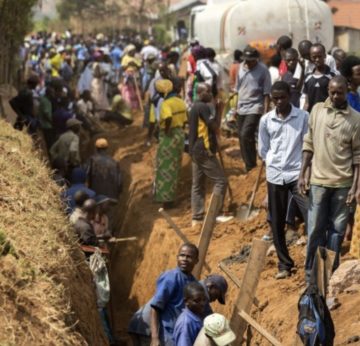
Luc, along with just about every able-bodied Rwandan aged 18 to 65, participates in the monthly activity known as “Umuganda,” a Kinyarwanda word that means “coming together in common purpose.” On the last Saturday of every month, from 8 to 11 a.m., Rwandans across the country gather together to partake in community improvement projects. In Luc’s neighborhood, this has meant trimming back bushes that attract malaria-spreading mosquitoes, and making sure roads are clear of trash and debris. “It not only ensured that we have a clean environment,” he says, “but also had a long-run positive effect on our health and physical wellbeing. And you know what they say, a healthy nation leads to a wealthy nation.”

More here.