
Category: Archives
On Maria Montessori
Rivka Galchen at Harper’s Magazine:
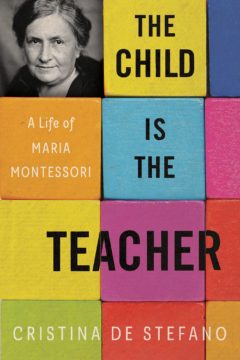 She hires the daughter of a custodian to teach kindergarten. It is 1907 in a poor neighborhood in Rome, where there has never been a kindergarten before. An agency tasked with improving neighborhoods in the city is trying to provide a place for children to go while their parents are working, and Maria Montessori has been asked to run the program. Montessori instructs the inexperienced teacher that the children should be allowed to lie on the floor or sit under the table—to do whatever they want. Observe them closely and tell me what you notice, she says. The new teacher reports back: the children are more interested in helping her sweep than in playing with the donated toys. Montessori writes this down. One day when Montessori is on her way to the classroom, she notices a peaceful baby girl with her mother in the courtyard. She invites them in and challenges the young children to be as quiet as the baby. This goes well. Montessori decides to make a ritual out of it: a period of silence for the children, one that ends when each child is called by name into the next room. This, also, the children love. The practice is adopted.
more here.
What Else Is Lost When An Object Disappears?
Sophie Haigney at The Baffler:
 The essays in Extinct often answer two questions: What was it that has disappeared and why? And then, what was the significance of this loss? Some, like Slessor’s, are lucidly personal meditations, stuffed with anecdotes and design history; others are more technical treatises on the reason a particular technology failed to take root. The editors identify six general reasons why things become extinct and categorize each object in this way. Certain objects are deemed “failed”; they simply didn’t work. Many more, though, are “superseded” by more advanced models of similar things. Some dead objects, especially commercial products, are “defunct”—these have failed to gain widespread adoption, or couldn’t be mass-produced, or have simply gone out of style. Others are “aestivated,” meaning that they disappear but are revived in a new form. Still others are classified as “visionary,” in that they never quite came into being at all. The rest are “enforced,” basically regulated into disappearance.
more here.
Wednesday Poem
Jerusalem
When I leave you I turn to stone
and when I come back I turn to stone
I name you Medusa
I name you the older sister of Sodom and Gomorrah
you the baptismal basin that burned Rome
The murdered hum their poems on the hills
and the rebels reproach the tellers of their stories
while I leave the sea behind and come back
to you, come back
by this small river that flows in your despair
I hear the reciters of the Quran and the shrouders of corpses
I hear the dust of the condolers
I am not yet thirty, but you buried me, time and again
and each time, for your sake
I emerge from the earth
So let those who sing your praises go to hell
those who sell souvenirs of your pain
all those who are standing with me, now, in the picture
I name you Medusa
I name you the older sister of Sodom and Gomorrah
you the baptismal basin that still burns
When I leave you I turn to stone
When I come back I turn to stone
by Najwan Darwish
from Poetry International, 2012
translation: 2012, Kareem James Abu-Zeid
Ageing: A fact of life that continues to fascinate
From Nature:
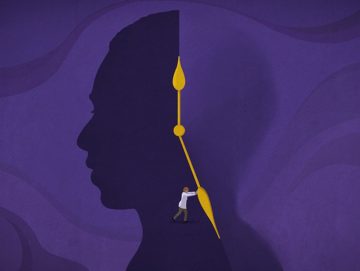 When Oscar Wilde left prison in 1897, shocked observers saw how a two-year sentence with hard labour for gross indecency had prematurely aged the Irish playwright. Shunned by London society and ostracized by his family, he died penniless in Paris three years later, aged 46. Had the scientific field of human ageing been as active then as it is now, the apparent change in Wilde’s biological age might have been of interest to researchers. Indeed, the loneliness, stress and exposure to infectious disease that he endured during his incarceration are particularly relevant today as we consider the impact of a global pandemic.
One of Wilde’s best-known literary creations is Dorian Gray, whose Faustian pact ensures that a portrait in the attic reflects the ravages of time while he remains young. Can science deliver what the devil did for Gray and stave off the effects of ageing? Some biotechnology start-ups are looking to boost autophagy, in which cells shed damaged constituents, to combat age-related disease. But when it comes to shifting someone’s biological age, researchers are divided on the extent to which epigenetic clocks — machine-learning algorithms that rely on the methylation of DNA — can effectively measure the efficacy of anti-ageing interventions. There are similar divisions around whether or not we have reached the limit of the human lifespan.
More here.
The Importance of Black Spaces in Wellness
Na’Tasha Jones in Well and Good:
 For many Americans, decisions around wellness and self care include whether they prefer taking a spin class or doing yoga, or which facilities have classes to best fit their schedules. Their pursuit of fitness and being “well” could be viewed as a casual endeavor. For Black people, however, choices around health and wellness are quite literally life and death.
Long-standing health disparities have been on glaring display during the recent coronavirus pandemic, leaving Black people particularly vulnerable. Recent data from APM Research Labs shows the rate of death for Black Americans from COVID-19 is 2.4 times higher than white people, and 2.2 times the death rate of Asians and Latinxs. This is largely due to the social determinants of health that many Black people face, including where we live and work, and the quality of health care to which we have access.
More here. (Note: At least one post throughout the month of February will be devoted to Black History Month. The theme for 2022 is Black Health and Wellness)
Philosopher David Chalmers chats with Jennifer Ouellette about his new book “Reality+”
Jennifer Ouellette in Ars Technica:
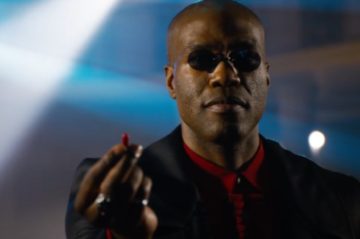 Ars Technica: You make frequent references not just to The Matrix but to other classic works in science fiction in your book. What is it about such works that resonate so strongly with philosophers?
David Chalmers: The Wachowskis do a beautiful job in The Matrix of illustrating so many deep philosophical ideas. And Stanislaw Lem is clearly a very deep philosopher who reflected on some of these scenarios very early on in the 1950s and 1960s, well before any philosophers had. I think almost every science fiction writer is a kind of philosopher because what is a science fiction story but a kind of thought experiment? What if there were machines as intelligent as humans, or what if we were living in a simulation? They go on to reason about the consequences. In a way, that’s what philosophers do, too. We think about these scenarios, and we reason about what follows. When done well, that can bring out something important about the nature of the mind or the nature of reality.
More here.
Drug-Resistant Malaria Is Emerging in Africa. Is the World Ready?
Pratik Pawar in Undark:
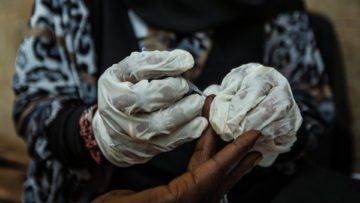
In June 2017, Betty Balikagala traveled to a hospital in Gulu District, in northern Uganda. It was the rainy season: a peak time for malaria transmission. Balikagala, a researcher at Juntendo University in Japan, was back in her home country to hunt for mutations in the parasite that causes the disease.
For about four weeks, Balikagala and her colleagues collected blood from infected patients as they were treated with a powerful cocktail of antimalarial drugs. After initial analysis, the team then shipped their samples — glass slides smeared with blood, and filter papers with blood spots — back to Japan.
In their lab at Juntendo University, they looked for traces of malaria in the blood slides, which they had prepared by drawing blood from patients every few hours. In previous years, Balikagala and her colleagues had observed the drugs efficiently clearing the infection. This time, though, the parasite lingered in some patients. “We were very surprised when we first did the parasite reading for 2017, and we noticed that there were some patients who had delayed clearance,” recalled Balikagala. “For me, it was a shock.”
More here.
Why everyone should have a personal quantum computer, with Stephen Fry
Russia Has Been Warning About Ukraine for Decades, The West Should Have Listened
Anatol Lieven in Time:
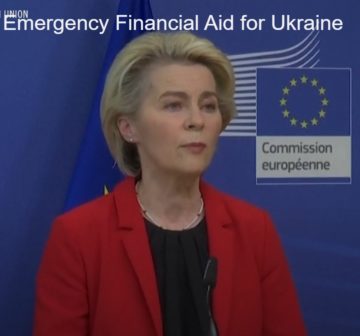 When I was a journalist for The Times (London) in Moscow in December 1992, I saw a print-out of a speech by the then Russian foreign minister, Andrei Kozyrev, warning that if the West continued to attack vital Russian interests and ignore Russian protests, there would one day be a dangerous backlash. A British journalist had scrawled on it a note to an American colleague, “Here are more of Kozyrev’s ravings.”
Andrei Kozyrev was the most liberal and pro-Western foreign minister Russia has ever had. As he stated in his speech, his anxiety about Western behavior was rooted in fear that the resulting backlash would destroy liberalism in Russia and Russian co-operation with the West. He was proved right as we see today. Yet when he expressed this fear, in entirely moderate and rational terms, he was instinctively dismissed by western observers as virtually insane.
The point about this history is that the existing crisis with Russia has origins that go far beyond Putin.
More here.
Tuesday, February 1, 2022
Huw Price reviews Cheryl Misak’s biography of Frank Ramsey
Huw Price at the Springer website:
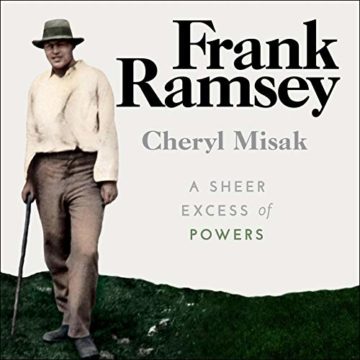 Cheryl Misak’s new book is the first intellectual biography of Frank Plumpton Ramsey, a brilliant but tragically short-lived scholar who illuminated Cambridge in the 1920s. The biography has been eagerly awaited by many of us, in several fields, who’ve built chunks of our own careers from fragments of Ramsey’s astonishing meteorite.
In my case, eagerness came with a few nerves. Ramsey has been a huge figure in my philosophical life. Might my image of him get bruised in some way? I also had a grandfatherly concern about the book itself. By happy accident, I’d helped to steer Misak’s intellectual trajectory towards this project. Like any grandfather, I was anxious for the child to shine.
More on the fate of those anxieties below. I first heard about Ramsey from the Cambridge philosopher, D. H. (Hugh) Mellor (1938–2020). In another happy accident, Mellor was once a huge influence on my intellectual trajectory. In 1975 I was an undergraduate at Australian National University (ANU), Canberra, studying philosophy as a sideline to mathematics. Mellor was visiting ANU, and sat in on some of our teaching seminars. His kind interest in my future plans helped to steer me towards a PhD in philosophy, and to Cambridge to do it (under his supervision).
More here.
Memory involves the whole body; It’s how the self defies amnesia
Ben Platts-Mills in Psyche:
 When you wake up in the morning, how do you know who you are? You might say something like: ‘Because I remember.’ A perfectly good answer, and one with a venerable history. The English philosopher John Locke, for example, considered memory to be the foundation of identity. ‘Consciousness always accompanies thinking,’ he wrote in 1694. ‘And as far as this consciousness can be extended backwards to any past Action or Thought, so far reaches the Identity of that Person.’
For most of us, the question of where identity comes from doesn’t have much bearing on day-to-day life. We don’t have to try to remember who we are; it just happens. But for the growing number of people who survive brain injury every year, it can be a different story. If you survive an accident or an illness that limits your ability to form new memories, leaving you with what’s called ‘anterograde amnesia’, you might be forced to look elsewhere for your sense of self.
More here.
A Whiff of Munich
Harold James in Project Syndicate:
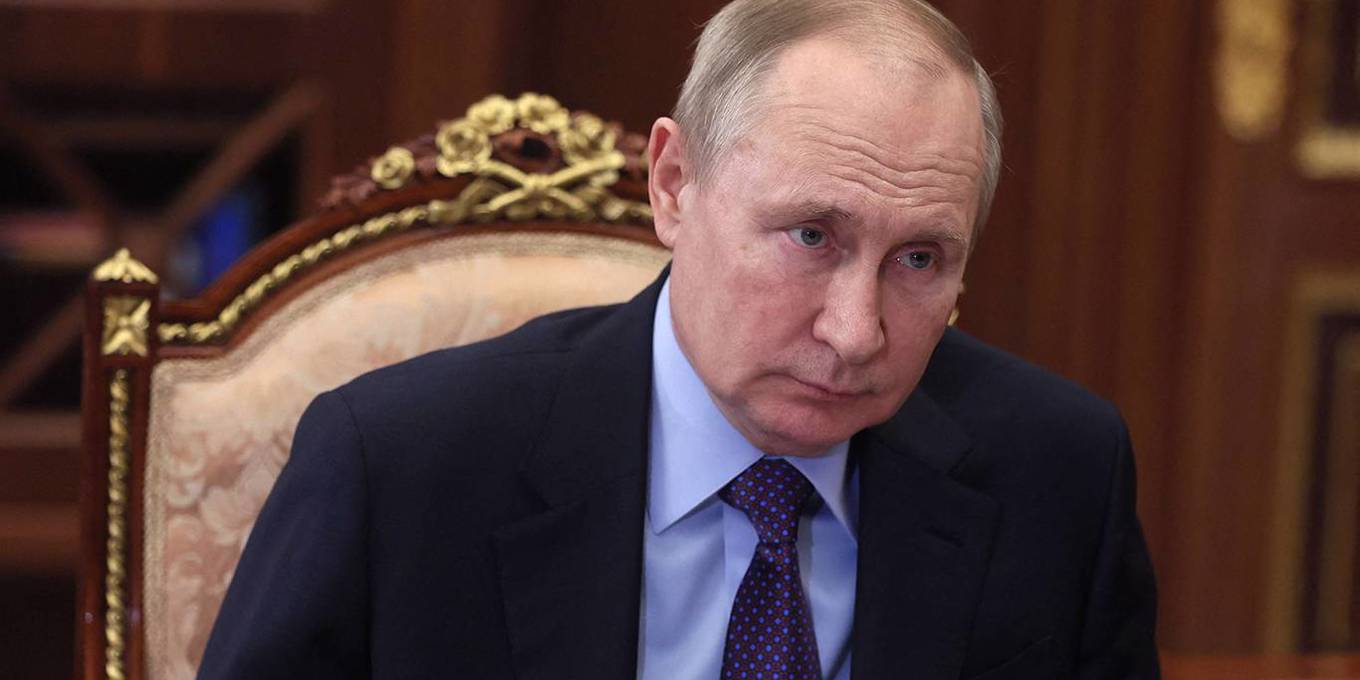 The Cold War ended 30 years ago. But since the 2007-08 financial crisis, it has not only returned but mutated into a hybrid lukewarm war. And with the United States and its European allies now struggling to manage the threat of a Russian attack on Ukraine, the specter of a hot war is looming. The 1938 appeasement of Nazi Germany has become an attractive historical analogy, since that was the moment when the post-World War I cold war mutated decisively, supposedly making a hot conflict inevitable.
Munich will forever be associated with that moment, because that is where Britain, France, and Italy ceded to Germany substantial territory in Czechoslovakia without consulting either the Czechs or the Soviet Union. This episode has been revisited repeatedly, most recently in Christian Schwochow’s brilliant new film Munich: The Edge of War, based on the novelist Robert Harris’s interesting attempt to rehabilitate British Prime Minister Neville Chamberlain’s reputation.
Now that the Biden administration has offered to hold another summit with Russian President Vladimir Putin, following weeks of abortive negotiations, are we witnessing a replay of Chamberlain’s efforts in Munich?
More here.
Is Amazon good for small businesses? A debate
Tuesday Poem
A Calling
Over my desk Georgia O’Keefe says
I have no theories to offer and then
takes refuge in the disembodied
third person singular: One works
I suppose because it is the most
interesting thing one knows to do.
O Georgia! Sashaying between
first base and shortstop as it were
drawing a list of all the things
one imagines one has to do . . .
you get the garden planted. You
take the dog to the vet. You
certainly have to do the shopping.
Syntax, like sex, is intimate.
One doesn’t lightly leap from person
to person. The painting, you said,
is like a thread that runs
through all the reasons for all the other
things that make one’s life.
O awkward invisible third person,
come out, stand up, be heard!
Poetry is like farming. It’s
a calling, it needs constancy,
the deep woods drumming of the grouse,
and long life, Like Georgia’s, who
is talking to one, talking to me,
talking to you.
by Maxine Kumin
from Nuture, Poems by Maxine Kumin
Penguin Book, Ltd, 1989
Translating Olga Tokarczuk
Jennifer Croft at Lit Hub:
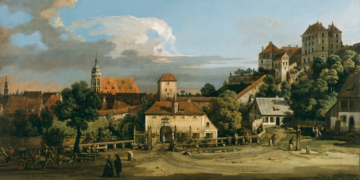 Olga Tokarczuk’s twelfth book, the novel The Books of Jacob, first published in Poland in 2014 to great acclaim and considerable controversy, kicks off in 1752 in Rohatyn, in what is now western Ukraine, and winds up in a cave near Korolówka, now eastern Poland, where a family of local Jews has hidden from the Holocaust. Between mid-18th-century Rohatyn and mid-20th-century Korolówka, Olga traverses the Habsburg and Ottoman Empires and the Polish-Lithuanian Commonwealth in search of the manifold secrets of Jacob Frank, a highly charismatic real historical figure, beloved and despised by his contemporaries, the leader of a wildly heretical Jewish sect that converted in different moments to both Catholicism and Islam.
more here.
Céline Sciamma’s Quest for a New, Feminist Grammar of Cinema
Elif Batuman at The New Yorker:
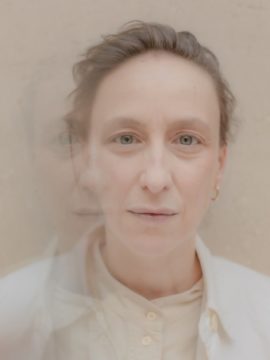 For most of November, 2020, the director Céline Sciamma didn’t have any lamps in her apartment. They were all on the set of her fifth film, “Petite Maman.” Each day, she got ready before sunrise, leaving her Paris apartment in the dark. One morning when she was running late, she rushed into her room and hit something with her foot. It hurt, a lot, but she put on her shoes and hurried to the set, where she sat around for three hours, waiting for everyone else to be ready. Suddenly, she heard a familiar, uneven step behind her: that of her maternal grandmother, Marie-Paule Chiron, who walked with a limp and who had been dead for six years. Sciamma jumped from her chair, remembering too late her injured foot. Instinctively, she reached for the closest support: a silver-topped walking stick that had belonged to Marie-Paule.
The limping woman toward whom Sciamma was limping was, in fact, the actor Margot Abascal, playing a character based on Marie-Paule and wearing the same kind of corrective shoes that she had worn.
more here.
Céline Sciamma with Tricia Tuttle
12 Black American Health and Wellness Pioneers
Timothy Frie in AFPA:
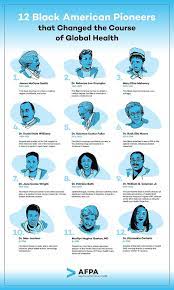 February is Black History Month in the US, a month dedicated to paying tribute to Black American history. It is also a month dedicated to raising awareness about the deeply inequitable treatment that Black communities have endured in the US, as well as the incredible contributions Black individuals and communities have made to the wellbeing of all people, despite the disadvantages that exist to this day. This article names twelve of the many Black Americans in history who have had, and continue to have, a profound impact on the health and wellness of people in the US and worldwide.
Dr. Rebecca Lee Crumpler (1831–1895)
Dr. Rebecca Lee Crumpler was the first Black American physician in the United States. She was born in Delaware but raised in Pennsylvania by her aunt, who cared for the sick using knowledge passed down to her by her ancestors. Rebecca attended the West-Newton English and Classical School, a prestigious private school in Massachusetts. Shortly after her graduation, she moved to Charlestown in Massachusetts, where she worked as a nurse by vocation from 1852 to 1860. She had a passion for caring for the ill and boldly applied to the New England Female Medical College in 1860, only ten years after it was founded.
More here. (Note: At least one post throughout the month of February will be devoted to Black History Month. The theme for 2022 is Black Health and Wellness)
We Still Can’t See American Slavery for What It Was
Jamelle Bouie in The New York Times:
 The historian Marcus Rediker opens “The Slave Ship: A Human History” with a harrowing reconstruction of the journey, for a captive, from shore to ship:
The ship grew larger and more terrifying with every vigorous stroke of the paddles. The smells grew stronger and the sounds louder — crying and wailing from one quarter and low, plaintive singing from another; the anarchic noise of children given an underbeat by hands drumming on wood; the odd comprehensible word or two wafting through: someone asking for menney, water, another laying a curse, appealing to myabecca, spirits.
An estimated 12.5 million people endured some version of this journey, captured and shipped mainly from the western coast of Africa to the Western Hemisphere during the four centuries of the trans-Atlantic slave trade. Of that number, about 10.7 million survived to reach the shores of the so-called New World.
It is thanks to decades of painstaking, difficult work that we know a great deal about the scale of human trafficking across the Atlantic Ocean and about the people aboard each ship. Much of that research is available to the public in the form of the SlaveVoyages database. A detailed repository of information on individual ships, individual voyages and even individual people, it is a groundbreaking tool for scholars of slavery, the slave trade and the Atlantic world. And it continues to grow.
More here. (Note: At least one post throughout the month of February will be devoted to Black History Month. The theme for 2022 is Black Health and Wellness)