
Category: Archives
On The Depressing Fantasy Of Minds In Simulated Worlds
David Bentley Hart at The New Atlantis:
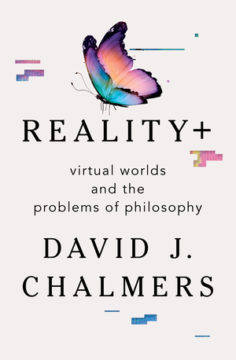 But, of course, there is no reason for believing any of this; and it seems far more likely that the process of replacing one’s neurons with computer chips would be little more than a very slow process of suicide, producing not the same behaviors as would a living mind, but only progressive derangement and stupefaction, culminating in an inert mass of diffusely galvanized circuitry. After all, any sober phenomenology of the full range of mental acts discloses a host of necessarily unified features that are almost by definition irreducible to a mere integration of diverse mechanical parts and discrete functions, and that no process of computation could reproduce: subjectivity as an indissoluble privacy; the unified and simultaneous field of apprehension belonging to that subjectivity; qualitative consciousness; intentionality and its intrinsic teleology; the indeterminate openness of the mind to novelty and even to fundamental revisions of its conceptual paradigms, which no computational algorithm could simulate; the immediate physical sense of self; the psychological sense of identity; judgments of value, such as “good” or “true” or “beautiful”; the prior and constant disposition of the mind toward these values, which seems to be the necessary motive of all movements of intellect and will toward the world; creative violations of rules that nevertheless make “sense” to us; and so on.
more here.
How the Typewriter Changed Chinese
Robert Bickers at Literary Review:
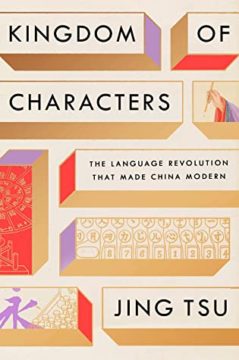 Despite its long and extensive literary heritage, and despite being the home of some of the earliest printed books, Qing-dynasty China found itself at a profound disadvantage in the new global information order that evolved in the 19th century as part of the intertwined processes of colonial expansion and globalisation. Foreign powers subordinated China through the deployment of advanced maritime technologies and weaponry. The Qing empire found itself hampered in its efforts to respond by the nature of its written language. Knowledge is power, goes the saying, but not if knowledge cannot be organised, retrieved, transmitted and reproduced.
more here.
Friday Poem
Photograph of a Lynching
is it the cut glass
of their eyes
looking up toward
the new gnarled branch
of the black man
hanging from a tree?
is it the white milk pleated
collar of the woman
smiling toward the camera,
her fingers loose around
a christian cross drooping
against her breast?
is it all of us
captured by history into an
accurate album? will we be
required to view it together
under a gathering sky?
by Lucille Clifton
from Blessing the Boats: New and Selected Poems 1988-2000
from Boa Editions, 2000
The Rebirth of the Ebony Test Kitchen, a Home for Black Cuisine
Sophia Hollander in New Yorker:
 One morning in January, 2020, a group of curators and officials from the Museum of Food and Drink headed out to the industrial edge of Queens to assess the status of their most high-profile acquisition to date: the Ebony Test Kitchen. The kitchen, originally situated on the tenth floor of the Johnson Publishing Company Building, in downtown Chicago, tested recipes for Ebony magazine’s famed “Date with a Dish” cooking column, which became a touchstone of African American cuisine. “This kitchen, it’s like—I don’t even know if calling it the Black Julia Child’s kitchen does it justice, but it is that important,” Jessica B. Harris, one of the leading scholars of Black culinary history, told me. In 2017, news emerged that the building which housed the kitchen was about to be converted into apartments. To save it, volunteer preservationists rushed in and dismantled the kitchen in a single weekend. They selected mofad as the new stewards. In February, it will finally be put on display, in an exhibition called “African/American: Making the Nation’s Table,” curated by Harris, at the Africa Center, in Harlem. “Let’s hope I keep it together,” Harris told me, as we prepared to head to the Queens warehouse. “Those walls will start shimmering and talking. I probably contributed to some of the grease on them.”
More here. (Note: At least one post throughout the month of February will be devoted to Black History Month. The theme for 2022 is Black Health and Wellness)
Does the human lifespan have a limit?
Michael Eisenstein in Nature:
 In the late eighteenth century, while in hiding from his fellow French revolutionaries, the philosopher and mathematician Nicolas de Condorcet posed a question that continues to occupy scientists to this day. “No doubt man will not become immortal,” he wrote in Sketch for a Historical Picture of the Progress of the Human Mind, “but cannot the span constantly increase between the moment he begins to live and the time when naturally, without illness or accident, he finds life a burden?”
The answer to that question remains the subject of debate. Some researchers posit that modern human lifespans are nearing a natural ceiling, whereas others see no evidence for such a limit. Arguments have often become heated, with research articles occasionally prompting angry letters to journal editors and even allegations of fraud.
More here.
If you care about animals, then the right thing to do is breed them, kill them and eat them
Nick Zangwill in Aeon:
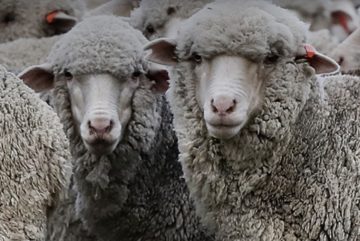 If you care about animals, you should eat them. It is not just that you may do so, but you should do so. In fact, you owe it to animals to eat them. It is your duty. Why? Because eating animals benefits them and has benefitted them for a long time. Breeding and eating animals is a very long-standing cultural institution that is a mutually beneficial relationship between human beings and animals. We bring animals into existence, care for them, rear them, and then kill and eat them. From this, we get food and other animal products, and they get life. Both sides benefit. I should say that by ‘animals’ here, I mean nonhuman animals. It is true that we are also animals, but we are also more than that, in a way that makes a difference.
It is true that the practice does not benefit an animal at the moment we eat it. The benefit to the animal on our dinner table lies in the past. Nevertheless, even at that point, it has benefitted by its destiny of being killed and eaten.
More here.
How Keri Hulme’s “The Bone People” changed the way we read now
Sarah Shaffi at the website of The Booker Prizes:
 Joanna Lumley, one of the judges the year it won, found the book ‘indefensible’. Decades later, Booker winner Bernadine Evaristo declared it ‘one of my all-time favourite books’.
In the aftermath of Hulme’s death in late December 2021, Sarah Shaffi looks back at the outsider who broke through the British establishment, and who forged a new literary lineage from Maori mythology and European tradition.
The Bone People, said Norman St John Stevas in his speech as chair of the Booker Prize judges in 1985, ‘is a highly poetic book filled with striking imagery and insights… It seems to be about child battering, but is really about love. Is it all too disturbing or is it a winner?’
Telling the stories of artist in exile Kerewin, a speechless boy named Simon, and his foster father Joe, The Bone People is a story of love and violence that reckons with the clash between Māori and European cultures.
More here.
I Hacked Into My Own Car
Democracy and the polarization trap
Robert B. Talisse in IAI News:
 The idea that polarization is the predominant ailment of American democracy looms large in political commentary. It is asserted across the partisan spectrum, taking center stage in President Biden’s Inaugural Address and in recent statements by former Presidents Bush and Carter. The diagnosis resonates with voters as well. Though pronounced in the US, polarization isn’t strictly America’s problem. The UK remains significantly divided over Brexit, and one in five French voters identifies as “extreme.” A pair of researchers has called polarization the new specter haunting Europe. Another team says it is a “global crisis.”
So, what is polarization and why is it such a problem? How can it be fixed?
More here.
Thursday, February 3, 2022
Modulations – History of Electronic Music
One Hundred Years of Ulysses
Joe Cleary at The Dublin Review of Books:
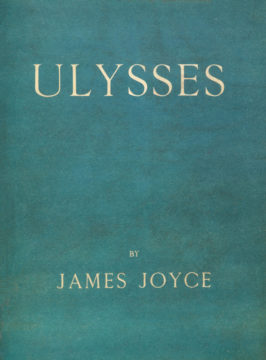 The Ulysses centenary is a momentous occasion. It is an event for celebration, but one that prompts the question of what exactly is to be celebrated. The publication of an extraordinary Irish novel? Perhaps, but what precisely is Ulysses’s relationship to the Irish novel tradition that preceded or has followed it? The publication of a work that transformed the inherited form of the novel more generally? Certainly, Ulysses revolutionised the modern novel as form but what sort of revolution did it enact and what was its later issue? How do aesthetic revolutions relate to sociopolitical revolutions? Do they, like the latter, have their radical springtimes and then become autumnally institutionalised and conservative? Or must they each be assessed on quite different terms? That Ulysses was an event nearly everyone will agree. However, can we say even now, a century later, what kind of event it really was in Irish or world literary terms? And is Ulysses really a novel at all in any case?
more here.
The Maladies Of Postwar Germany
Monica Black at Cabinet Magazine:
 In the spring of 1953, a former Nazi named Anton Melchers, who in the Third Reich had been a newspaper editor, war reporter, and—according to his brother—talented propagandist, was admitted to the university psychiatric clinic in Heidelberg. His brother, a former high-ranking SS officer, brought him there because Melchers had stopped eating. At the clinic, Melchers reported hearing voices that accused him of sexual immorality and intimated that he would be “paraded” in the streets. Melchers was also preoccupied, his brother said, with anxieties about being “rounded up and taken away” as punishment for his National Socialist past.1
Melchers was in his early fifties and had no history of mental illness. He was highly educated and held a doctorate. But after the war, he lost his job as a reporter during denazification, a series of measures the Allies took in an effort to purge the former political order.
more here.
Thursday Poem
BLK History Month
If Black History Month is not
viable then wind does not
carry the seeds and drop them
on fertile ground
rain does not
dampen the land
and encourage the seeds
to root
sun does not
warm the earth
and kiss the seedlings
and tell them plain:
You’re As Good As Anybody Else
You’ve Got A Place Here, Too
from Quilting the Black-Eyed Pea
HarperCollins Publishers Inc., 2002
HarperCollins Publishers Inc., 2002
The Women Rulers Whose Reigns Reshaped the Medieval Middle East
Katherine Pangonis in Smithsonian:
 In 1152, a curious scene unfolded outside the Tower of David in Jerusalem, beside the Jaffa Gate. The city’s king, a young man in his 20s, had assembled a regiment of siege engines that he used to hurl burning wood and slabs of stone at the citadel of his own capital. His onslaught was relentless. As contemporary chronicler William of Tyre wrote, “so incessant were the attacks that the besieged were denied any chance to rest.”
The king was Baldwin III, and his target—cowering but defiant, barricaded in the historic tower—was Jerusalem’s queen, a woman in her 50s with a will of iron: Melisende, Baldwin’s own mother.
When her son lined up his siege engines to attack her, Melisende was fighting to keep the throne she had held for over 20 years. Curious as the scene may have been—a Christian mother and son at open war over Jerusalem—the real wonder was how this conflict had not come sooner. Baldwin had been of ruling age for seven years but had so far failed to seize the throne from his mother, who had been ruling Jerusalem singlehandedly since the death of his father, King Fulk, nine years prior. Even before her husband’s death in 1143, Melisende had ruled as queen regnant of Jerusalem. Fulk never made a decision without her consent (at least, not after the early days of their joint rule).
More here.
The Matter of Black Lives
Jelani Cobb in The New Yorker:
 The phrase “black lives matter” was born in July of 2013, in a Facebook post by Alicia Garza, called “a love letter to black people.” The post was intended as an affirmation for a community distraught over George Zimmerman’s acquittal in the shooting death of seventeen-year-old Trayvon Martin, in Sanford, Florida. Garza, now thirty-five, is the special-projects director in the Oakland office of the National Domestic Workers Alliance, which represents twenty thousand caregivers and housekeepers, and lobbies for labor legislation on their behalf. She is also an advocate for queer and transgender rights and for anti-police-brutality campaigns.
Garza has a prodigious social-media presence, and on the day that the Zimmerman verdict was handed down she posted, “the sad part is, there’s a section of America who is cheering and celebrating right now. and that makes me sick to my stomach. we gotta get it together y’all.” Later, she added, “btw stop saying we are not surprised. that’s a damn shame in itself. I continue to be surprised at how little Black lives matter. And I will continue that. stop giving up on black life.” She ended with “black people. I love you. I love us. Our lives matter.”
More here. (Note: At least one post throughout the month of February will be devoted to Black History Month. The theme for 2022 is Black Health and Wellness)
The great years of Bertrand Russell: the philosopher in his own words, 1967
Chris Hall in The Guardian:
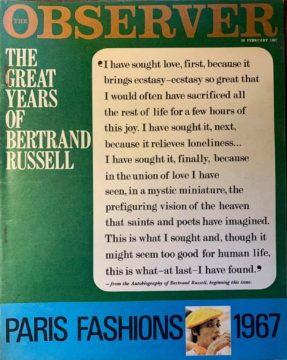 The Observer Magazine has never again featured an extract from the autobiography of a philosopher on its cover after ‘The Great Years of Bertrand Russell’, 26 February 1967.
But then Bertrand Russell was no ordinary philosopher. ‘Three passions, simple but overwhelmingly strong, have governed my life,’ he wrote. ‘The longing for love, the search for knowledge and unbearable pity for the suffering of mankind.’
Russell had his share of death to deal with – his mother, father and sister all died before he was four and his grandfather (a former prime minister) when he was six. His grandmother was the most important person to him in his childhood, although ‘by the age of 14, her intellectual limitations became trying to me, and her Puritan morality began to seem to me to be excessive’.
More here.
How 5G puts airplanes at risk – an electrical engineer explains
Prasenjit Mitra in The Conversation:
 New high-speed cellphone services have raised concerns of interference with aircraft operations, particularly as aircraft are landing at airports. The Federal Aviation Administration has assured Americans that most commercial aircraft are safe, and AT&T and Verizon have agreed to hold off on installing their new cellphone antennas near airports for six months. But the problem has not been entirely resolved.
Concerns began when the U.S. government auctioned part of the C-band spectrum to wireless carriers in 2021 for US$81 billion. The carriers are using C-band spectrum to provide 5G service at full speed, 10 times the speed of 4G networks.
The C-band spectrum is close to the frequencies used by key electronics that aircraft rely on to land safely. Here’s why that can be a problem.
More here.
What may the new James Webb telescope discover?
The end of American democracy is unimaginable
John Quiggin at Crooked Timber:
 Every few days, there’s another article pointing out the likelihood that a Democratic win[1] in the 2024 US election will be overturned, and suggesting various ways it might be prevented, none of which seem very likely to work. The best hope would seem to be a crushing Democratic victory in the 2022 midterms, which doesn’t look likely right now[2]
What I haven’t seen is anyone discussing what the US would be like after a successful Trumpist (or other Republican) coup. The closest approaches I’ve seen are “looking backwards” pieces, written from an imagined distant future when democracy or something like it have been restored.
I decided to attempt the task myself and found it very hard going. The resulting piece is over the fold. I tried a few outlets for it, and no one was interested in publishing it. So, I’m putting it out here, with all its faults.
More here.