Rebecca Solnit Is Not Giving Up Hope

John Nichols in The Nation:

Rebecca Solnit, the great essayist of this time, gave us a fresh understanding of George Orwell with her brilliant 2021 book Orwell’s Roses (Viking). But as with all things Solnit, Orwell’s Roses is about a good deal more than its nominal subject: the flowers that the author of Animal Farm and 1984 planted in the garden of a rented cottage in the English village of Wallington. I spoke with Solnit about the need for bread and roses—especially in perilous times. —John Nichols

JN: Why Orwell? Why now?

RS: The book kind of ambushed me. Although I’d known the essay where he described planting those roses well, I’d never thought about what it meant that our great prophet of totalitarianism, the man famous for facing unpleasant facts, was planting roses. It let me talk about all these things that I wanted to talk about—essentially about the left, about how we lead our lives, about what it looks like to lead a sustainable life.

It was only after I met the rose bushes and started reading Orwell’s domestic diaries and letters that I realized that I, like most people, had a misapprehension of him as this grim, pessimistic figure, and that he took immense pleasure in a lot of everyday things, and that’s what kept him going.

More here.

How mRNA and DNA vaccines could soon treat cancers, HIV, autoimmune disorders and genetic diseases

Deborah Fuller in The Conversation:

How can a vaccine treat cancers or chronic infectious diseases?
T cell responses are very important for identifying cells infected with chronic diseases and aberrant cancer cells. They also play a big role in eliminating these cells from the body.

When a cell becomes cancerous, it starts producing neoantigens. In normal cases, the immune system detects these neoantigens, recognizes that something’s wrong with the cell and eliminates it. The reason some people get tumors is that their immune system isn’t quite capable of eliminating the tumor cells, so the cells propagate.

With an mRNA or DNA vaccine, the goal is to make your body better able to recognize the very specific neoantigens the cancer cell has produced. If your immune system can recognize and see those better, it will attack the cancer cells and eliminate them from the body.

More here.

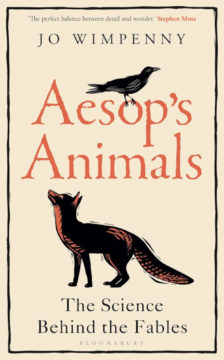
The Science Behind Aesop’s Menagerie

Dan Falk in Undark:

Several chapters into “Aesop’s Animals: The Science Behind the Fables,” zoologist and science writer Jo Wimpenny explains that, as a very young girl, she sometimes wanted to be a dog. (In a footnote she credits growing up in Wales for encouraging her “to think outside the box.”) This childhood fantasy, as the reader can readily imagine, involved crawling along the ground on all fours. But that only gets one part-way toward doghood, as the grown-up Wimpenny would come to realize.

For starters, we humans rely primarily on our senses of sight and hearing, but for dogs, it’s smell that reigns supreme; as she explains, a dog’s sense of smell is somewhere between 10,000 and 100,000 times better than our own. Dogs “can also wiggle their nostrils independently, helping them to pinpoint the direction of a smell,” and there’s some evidence that the left and right nostrils serve slightly different purposes, with the right tuned to “novel and potentially threatening smells,” and the left responding to “familiar, non-aversive smells (such as food) and scent from other species (such as human sweat for tracking purposes).” Who knew?

More here.

Across the Muslim World, Islamism is Going out of Vogue

Imran Said in Quillette:

Though the Taliban has once again taken power in Afghanistan, they have come back at a rather inopportune time. Across the Muslim world, many seem to be souring on Islamists, defined as those who derive legitimacy from Islam and advocate for modern states to be governed along Islamic precepts, both economically and judicially. Over the last few years, Islamist governments have fallen out of power across the Middle East and Africa, haemorrhaged support in Turkey, and failed to make headway in Southeast Asia.
Islamism was once seen as an unstoppable force throughout most of the Muslim world, its proponents representing the most organized and influential voices in opposition to the often corrupt and incompetent secular leadership of Muslim countries. In more authoritarian states, mosques regularly served as one of the few “safe spaces” for citizens to vent their disenchantment about the state of society, ensuring the institutions of Islam a prominent place in the larger anti-statist opposition. Many Islamist groups further amass popular support by filling the gap left behind by woefully inadequate welfare systems and, in turn, providing their own social services, including schools and hospitals.

More here.

Sunday Poem

Repent

A visual delight,
the killer whale.
Two-tone black and white
from snout to tail.
Worth hunting deep at sea.

And when we’ve captured two or three
we pen them in a little jail
and teach them tricks
to do for fishy snacks
for paying multitudes who fill

the stands and scream to see
these mammals leap in synchrony,
who cruise a hundred miles a day
when free
beneath the bounding main.

Occasionally from the strain
they turn upon the rubber-suited crew
who labor so to train
them to cavort on cue,
and even maim a few.

Stu-
pidity, said
Immanuel Kant
is caused by a wicked
heart. Repent

by Maxine Kumin
from
Nurture; Poems by Maxine Kumin
Viking Penguin Inc., 1989

Weed’s Last Taboo: Pregnancy

Jenni Avins in New Yorker:

Modern motherhood is a marvel and a minefield. An obstacle course of risk-reward calculations for which we will be judged. And pregnancy serves a sort of boot camp, with every decision feeling more monumental than the last, as a legion of friends, family, caregivers, influencers, and experts (real and imagined) readily dispense opinions on all of it. Sushi. Unpasteurized cheese. Cold cuts. Cardio. Retinol. Highlights. Gardening. Wine.
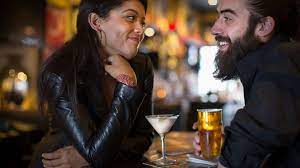
Weed?

It was Tara’s midwife who suggested it, actually. When Tara, a 31-year-old Los Angeles–based psychotherapist whose name isn’t really Tara, became pregnant, she could not stop vomiting. She thought some of her nausea was psychological — it was a mid-pandemic unplanned pregnancy — and some probably not. Her mom had suffered similarly throughout pregnancy. She had tried vitamin B6 and Unisom (a popular combination for treating nausea), acupuncture, IV drips, and ginger candies. Nothing worked.

More here.

Why people aren’t as picky in love as they think

Bryan Lufkin in BBC:

Finding a life partner is considered a major milestone – one that requires deliberation and careful assessment. We want someone whose long-term plans match our own: someone to whom we’re attracted, someone with whom we feel comfortable sharing our home, finances and, maybe, children. This person is our life partner, after all – naturally, we assume we’ll take care with the decision.
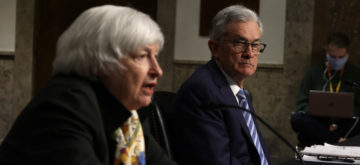
But it turns out we may be less selective about whom we spend our lives with than we think. Research shows hidden biases mean we’ll give people a chance, even if they don’t quite meet our criteria.  And when we do pick a partner, we’re driven by a psychological tendency called “progression bias” to stay in the relationship, rather than end it.

In other words, we’re hard-wired to be in a romantic relationship, say psychologists, despite trends among young people to shun marriage in favour of a calculated approach to singlehood. Yet, even as the combination of evolutionary instincts and societal pressures steer us towards the coupled life, being aware of our progression bias could help us understand why we pick the partners we do – and why we stay with them.

More here.

Saturday, January 29, 2022

Is There an Alternative? The Macroeconomics of the Biden Administration

 (Photo by Alex Wong/Getty Images)

Tim Barker and J.W. Mason in Dissent:

Tim Barker: Why didn’t the 2008 crisis lead to the kind of changes that we’re seeing in 2020 and 2021?

J.W. Mason: The financial crisis was such a great time to be thinking about economics. It felt like we were on the verge of a new Keynesian revolution: someone would come galloping in with a new general theory, or maybe the old General Theory, and upend the economics profession. A few years later, it seemed like that was a fantasy, at least as far as the economics profession was concerned; we went back to the status quo very quickly. But perhaps the changes just took longer than we expected. A lot of conversations today are shaped by the Great Recession and its aftermath. There’s a very clear consensus, not just among people like us but in the broader economic policy world, that the response to the crisis of 2008 and 2009 was completely inadequate. If you talk to younger staff people on Capitol Hill, you’ll hear that the 2009 stimulus was much too small, that there was too much faith in the Fed, that we need to be much more ambitious today. The Obama administration’s premature turn away from stimulus and toward austerity is one of the great macroeconomic policy failures of our time, and I think that’s understood today in a way that it was not at the time. So maybe the lessons did get learned, just more slowly than we might have liked.

More here.

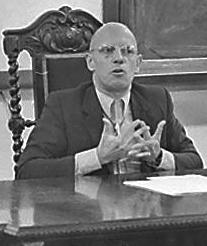
Foucault’s Mistake

Alain Supiot in the New Left Review:

If we trace the branches of the law back to its trunk, we always come to the question that informs them all: that of the preservation of human life. The covid pandemic has reminded us of this, since the measures taken to deal with it have affected every country, domestic as well as international law, public as well as private or social law. Some commentators have seen this as illustrating the sway of biopower, which, according to Foucault, characterizes the modern age. Without much concern for consistency, the same commentators have often noted the ‘medieval’ character of the covid lockdowns and quarantine measures, to which political leaders had recourse many centuries before the supposed epiphany of ‘biopower’.

For Foucault, biopower refers to the passage, from the nineteenth century onwards, from a right of sovereignty—consisting in ‘making people die’ or ‘letting them live’—to ‘an exactly opposite power . . . of “making people live” and “letting them die”’. But long before the idea of a sovereign secular power had crystallized in the sixteenth century, princes or cities were adopting legal provisions aimed at ‘making live’ rather than ‘letting live’—not only to deal with epidemics, but more broadly to preserve the health of their populations. Herodotus, for example, marvels at the following rule in force among the Babylonians in the fifth century bc:

Having no use for physicians, they carry the sick into the marketplace; then those who have been afflicted themselves by the same ill as the sick man’s, or seen others in like case, come near and advise him about his disease and comfort him, telling him by what means they have themselves recovered of it or seen others so recover. None may pass by the sick man without speaking and asking what is his sickness.

More here.

“Justice at the Necessary Scale”

An Interview with Olúfẹ́mi Táíwò in The Drift:
You use the concept of reparations in your work. Why is it the right way to think about climate change? 

This concept comes from the long history of activism for reparations. For centuries, people around the world who were enslaved, displaced, abused, exploited, and owned by the people and organizations at the top of the global social order have pushed for reparations. And many have put forth a vision of reparations that wasn’t just about transferring dollars from the wrongdoers to the wronged. It was also about a broader transformative vision for eliminating the kind of social system that would exploit people in the first place and building the kind of social system that was just and characterized by self-determination for everybody who lives in it. And that is the vision that we should have in the struggle for climate justice, because that is a vision of justice at the necessary scale.

In many ways, what is at least seemingly new about the climate crisis is that it cuts so cleanly and so extensively across the imaginary lines we’ve drawn on maps that supposedly divide us from each other. In a lot of ways, the ongoing central problems of climate politics have been about how to apportion responsibility and action across these imaginary lines, which capital has never had to respect, but people supposedly have. There’s not a lot of precedent for a self-consciously planetary-scale politics, but we find, at least, useful tools for developing them in the history of reparations activism.

More here.

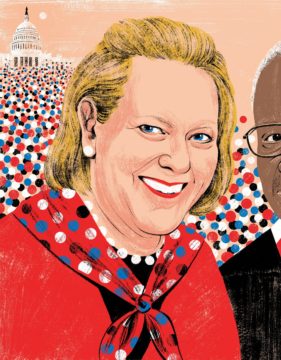
Is Ginni Thomas a Threat to the Supreme Court?

Jane Mayer in The New Yorker:

In December, Chief Justice John Roberts released his year-end report on the federal judiciary. According to a recent Gallup poll, the Supreme Court has its lowest public-approval rating in history—in part because it is viewed as being overly politicized. President Joe Biden recently established a bipartisan commission to consider reforms to the Court, and members of Congress have introduced legislation that would require Justices to adhere to the same types of ethics standards as other judges. Roberts’s report, however, defiantly warned everyone to back off. “The Judiciary’s power to manage its internal affairs insulates courts from inappropriate political influence,” he wrote. His statement followed a series of defensive speeches from members of the Court’s conservative wing, which now holds a super-majority of 6–3. Last fall, Justice Clarence Thomas, in an address at Notre Dame, accused the media of spreading the false notion that the Justices are merely politicians in robes. Such criticism, he said, “makes it sound as though you are just always going right to your personal preference,” adding, “They think you become like a politician!”

The claim that the Justices’ opinions are politically neutral is becoming increasingly hard to accept, especially from Thomas, whose wife, Virginia (Ginni) Thomas, is a vocal right-wing activist. She has declared that America is in existential danger because of the “deep state” and the “fascist left,” which includes “transsexual fascists.” Thomas, a lawyer who runs a small political-lobbying firm, Liberty Consulting, has become a prominent member of various hard-line groups. Her political activism has caused controversy for years. For the most part, it has been dismissed as the harmless action of an independent spouse. But now the Court appears likely to secure victories for her allies in a number of highly polarizing cases—on abortion, affirmative action, and gun rights.

More here.

Bacon In Moscow

Rachel Cooke at The Guardian:

In July 1986, James Birch, a young London gallerist with vague designs on global domination, set off for the Soviet Union. It was his first visit and he had no idea what to expect. Mikhail Gorbachev had then been general secretary of the Communist party for one year: perestroika and glasnost were in the air (or, at any rate, in the British newspapers). But still, Moscow was a world apart. On the advice of his travelling companion, a “cultural entrepreneur” whose carpet business often took him to the USSR, Birch carried among his luggage a packet of chocolate digestives, just in case he found himself short of food, and cartons of Camel cigarettes, to be used as payment to all the drivers he would have to flag for a lift, there being virtually no taxis in the city.

more here.

Crush

Kathryn Davis in The Paris Review:

We’re in a room on the ground floor of a hotel, the bed facing a wall of curtained windows that in turn faces the street. It is nighttime. Rain is coming down, steadily, reflectively, a stream of passersby visible through the curtains, which are sheer. Everyone is moving in the same direction, bent slightly forward and holding an umbrella, from left to right, the good direction, from past to future, the opposite of where Death leads the knight and the squire and the monk and the smith and the mute in their final dance against the backdrop of time in Ingmar Bergman’s The Seventh Seal. The umbrella is the canopy of the heavens; the rain is never going to let up. We can see the passersby but they can’t see us, though Eric has turned a light on above his side of the bed.
I was obsessed with The Seventh Seal my senior year in high school; I was obsessed with the vision it presented of a handsome knight playing a game of chess with Death. Death’s face was unexpectedly round and white, the blackness of his eyes and their sparkling avidity as terrifying as the sound of his name in Swedish. Döden. There could be no doubt of the fact that death at the end of it elevated life—an otherwise lackluster affair in which human beings were obliged to eat and mate and have jobs and engage in pointless conversation—into a realm worthy of passionate attachment.

More here.

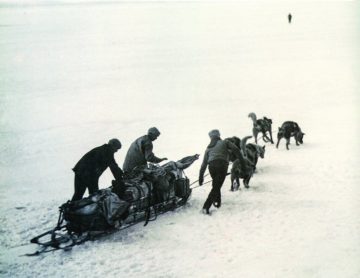
Shackleton: The Biography

Lloyd Spencer Davis at the NYT:

Here is a test. Scott, Shackleton, Mawson, Amundsen — who comes next? As surely as “10” follows the pattern 2, 4, 6, 8, by almost any measure “Fiennes” is the name that should come after the other four synonymous with Antarctic exploration. To give him his full moniker, Sir Ranulph Twisleton-Wykeham-Fiennes has probably man-hauled sledges farther, endured more blizzards and lost more fingertips to frostbite than the rest of them put together.

So when Fiennes produces a book about Ernest Shackleton, it should get our attention: It suggests an insider’s look into a very select club.

more here.

Saturday Poem

Bilingual/Bilingue

My father liked them separate, one there,
one here (allá y aquí), as if aware

that words might cut in two his daughter’s heart
(el corazón) and lock the alien part

to what he was—his memory, his name
(su nombre)—with a key he could not claim.

“English outside this door, Spanish inside,”
he said, “y basta.” But who can divide

the world, the word (mundo y palabra) from
any child? I knew how to be dumb

and stubborn (testaruda); late, in bed,
I hoarded secret syllables I read

until my tongue (mi lengua) learned to run
where his stumbled. And still the heart was one.

I like to think he knew that, even when,
proud (orgulloso) of his daughter’s pen,

he stood outside mis versos, half in fear
of words he loved but wanted not to hear.

by Rhina P. Espaillat
from
Poetry Out Loud
The Poetry Foundation, 2005