
Category: Archives
No Stone Unturned
Farah Abdessamad at berfrois:
 Like German author Judith Schalansky, I like paying attention to maps. They are time-stamps, relics and quantifiable measure, and, generally, works of art. Unlike Schalansky though, who wrote an entire Pocket Atlas of Remote Islands (2010) about fifty islands she has “not visited and never will”, I gravitate towards rock more than sand – a cinematic universe of desaturated hues, greyscale, dimmed light and eroded matter to match the incongruity of life itself.
Things that are collapsing attract me more than a fantasised mythology of immortal coral, sea and tacky sunscreen. They reflect a necessity for nature and humans to peacefully coexist, testifying that even extravagant dreams of megastructures are bound to dissolve with time. Stones are humbling. When I stand in front of ruins, I mourn shattered hubris – with a tinge of schadenfreude sometimes. “Paradise may be beautiful, but it’s not interesting”, Schalansky wrote. It’s an elusive statement that lacks originality, but it’s one with which I agree to some extent, ruminating about what paradise truly means and entails.
more here.
The Right to Leave
Stephanie DeGooyer at Lapham’s Quarterly:
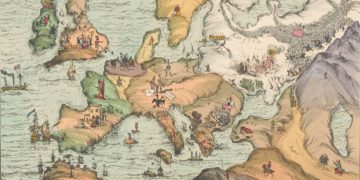 In 1816 an American lawyer named J.F. Dumoulin wrote Thomas Jefferson a letter to thank him for his hospitality during a recent visit to the former president’s Monticello plantation. As a token of gratitude, Dumoulin enclosed a treatise he had written about naturalization and expatriation. The essay denounced Britain for holding fast to the feudal doctrine of perpetual allegiance, which denied individuals the right to change their nationality. In his reply Jefferson praised Dumoulin, whose opinions on emigration closely matched his own. Why would any man, he wrote, “feel any obligation to die by disease or famine in one country, rather than go to another where he can live?” Every person has just as much “right to live on the outside of an artificial geographical line as he has to live within it.”
With hindsight, historical ideas often appear commonsensical or even passé. Twenty-first-century students look back on the suffrage movement as merely the imperfect beginning of progressive agitation for women’s rights.
more here.
Sounds Wild and Broken – a moving paean to Earth’s fraying soundtrack
Tim Adams in The Guardian:
 Lockdown was, among other things, a sudden collective experiment in volume control. Sound waves from the regular rush-hour thrum of cities usually penetrate more than a kilometre below the Earth’s surface. When Covid-19 forced humans inside, seismologists noticed the muzak of their subterranean instruments was quieted. The ancient rock of our planet came closer to the silence that it had known for nearly all of the first 4bn years of its existence. And the relative stillness was felt on the surface, too. People noticed voices from beyond the human world a little more readily, and those voices felt less need to shout to be heard. Scientists in San Francisco discovered that the city’s sparrows reverted to softer and lower pitched songs of a kind not heard since the invention of the freeway.
Biology professor David George Haskell’s often wonderful book is all about listening to those kinds of lost frequencies. It is a sort of rigorous scientific update on that 1960s imperative to “tune in and turn on”: a reminder that the narrow aural spectrum on which most of us operate, and the ways in which human life is led, blocks out the planet’s great, orchestral richness. Haskell’s previous acclaimed book, The Forest Unseen, was a thrillingly curious investigation of the life of one square metre of ancient Tennessee woodland. This new volume gives you the experience of closing your eyes in such a space and having your senses flooded with the background cacophony.
More here.
New generation of cancer-preventing vaccines could wipe out tumors before they form
Jocelyn Kaiser in Science:
 Vaccines to prevent certain types of cancer already exist. They target viruses: hepatitis B virus, which can trigger liver cancer, and human papillomavirus, which causes cervical and some other cancers. But most cancers are not caused by viruses. The Lynch vaccine trial will be one of the first clinical tests of a vaccine to prevent nonviral cancers.
The idea is to deliver into the body bits of proteins, or antigens, from cancer cells to stimulate the immune system to attack any incipient tumors. The concept isn’t new, and it has faced skepticism. A decade ago, a Nature editorial dismissed a prominent breast cancer advocacy group’s goal of developing a preventive vaccine by 2020 as “misguided,” in part because of the genetic complexity of tumors. The editorial called the goal an “objective that science cannot yet deliver.” But now, a few teams—including one funded by the same advocacy group, the National Breast Cancer Coalition (NBCC)—are poised to test preventive vaccines, in some cases in healthy people at high genetic risk for breast and other cancers. Their efforts have been propelled by new insights into the genetic changes in early cancers, along with the recognition that because even nascent tumors can suppress the immune system, the vaccines should work best in healthy people who have never had cancer.
More here.
Friday Poem
Playing the Chances
Let me, in fancy, enter the womb again
take that precipitant plunge into life
one particular sperm, one particular egg
one chance, one blind collision—
Let me be that minute explosion
of life creating itself,
let me know womb and water and warmth
and dark and swimming and growing
and infant born.
Let me become—cell by cell, division by
division, moving moving becoming more
inexorable growing destined for the
mountain shaking birthing day.
From one spasmodic incident
from minute speck of egg and sperm
with urgency to grow
and here am I
still becoming me—growing
still becoming me dying
passing life on through me
O let me in fancy enter the womb again
and for an instant taste life emergent
coming through playing the chances.
by Betty Lockwood
from The Matriarch’s Song
publisher Peter E. Randall
Portsmouth, NH, 2001
Thursday, April 28, 2022
The Night Inspection: Vladimir Nabokov at 123
Maxim D. Shrayer in the Los Angeles Review of Books:
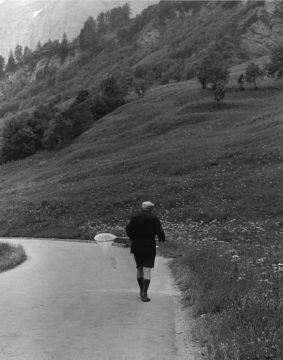 On the night of April 22, the Composer doesn’t sleep …
Insolent insomnia, he will say to his wife the following morning at breakfast. Kornfleks and kofe with kreem. The neck and jowls of an athlete, the aquiline nose, and the lips of an old camel. A few years ago he could still play a strong game of lawn tennis. Now strictly indoor games. And a jacket with black and white squares. The Composer will let the jacket drop, and then will jot down the word “Petrarch” on an index card of the sort the French call Fiches Bristol.
As soon as Véra has fallen asleep in her bedroom, the Composer starts the preparations.
More here.
What Is a Neutrino? The Missing Key to Modern Physics Could Be a Ghost Particle
Jackson Ryan at CNET:
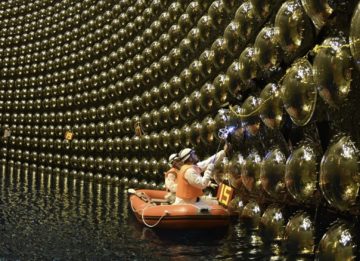 Though theorized in the 1930s and first detected in the 1950s, neutrinos maintain a mysterious aura, and are often dubbed “ghost particles” — they’re not haunting or dangerous, but they just zip through the Earth without us even noticing them. Oh, “and it’s a cool name,” according to astrophysicist Clancy James at Curtin University in Western Australia.
In recent years, ghost particles have been making headlines for all sorts of reasons and not just because they have a cool name. That Antarctic collision was traced to a black hole that shredded a star, for instance, and other neutrinos seem to come via the sun. In early 2022, physicists were able to directly pin down the approximate mass of a neutrino — a discovery that could help uncover new physics or break the rules of the Standard Model.
More here.
Has Neoliberalism Really Come to an End?
Daniel Steinmetz-Jenkins in The Nation:
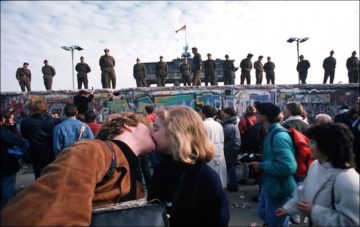 The term “neoliberalism” is often used to condemn an array of economic policies associated with such ideas as deregulation, trickle-down economics, austerity, free markets, free trade, and free enterprise. As a political movement, neoliberalism is seen as experiencing its breakthrough 40 years ago with the election into office of Ronald Reagan and Margaret Thatcher. And since the 2007–08 financial crisis, an explosion of academic work and political activism has been devoted to explaining how neoliberalism is fundamentally to blame for the massive growth in inequality.
Yet Gary Gerstle—in his new book, The Rise and Fall of the Neoliberal Order: America and the World in the Free Market Era—argues that this understanding of neoliberalism struggles to explain why it has exerted such a profound influence on both the left and the right. Gerstle—a professor of American history at the University of Cambridge—thinks neoliberalism should be understood as a worldview that promises liberation by reconciling economic “deregulation with personal freedoms, open borders with cosmopolitanism, and globalization with the promise of increased prosperity for all.”
Such a vision. as Gerstle relates, was able to attract such strange bedfellows as Steve Jobs and Barry Goldwater, Ralph Nader and Ronald Reagan, and Bill Clinton and Newt Gingrich.
More here.
Bill Gates: We Can Make COVID-19 the Last Pandemic
More here.
Now, Let Us Talk Peace
Jeremy Corbyn in Counterpunch:
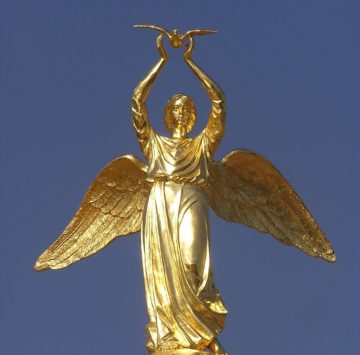 With Russian shells raining down on Ukrainian cities, an uneasy ceasefire in Yemen, the attack on Palestinians at prayer in Jerusalem and many other conflicts around the world, it might seem to some to be inappropriate to talk about peace.
When a war is going on, though, it is absolutely the time to talk about peace. How else can we prevent even further loss of life or yet more millions forced into refuge somewhere else in the world? It is welcome that at last the United Nations has taken an initiative with the welcome request by Secretary-General António Guterres for face-to-face meetings with Russian President Vladimir Putin and Ukrainian President Volodymyr Zelenskyy.
There must be an immediate ceasefire in Ukraine followed by a Russian troop withdrawal and agreement between Russia and Ukraine on future security arrangements.
All wars end in a negotiation of some sort—so why not now?
More here.
The Origins of Romanticism
Meet Eva Frank: The First Jewish Female Messiah
Shira Telushkin at JSTOR:
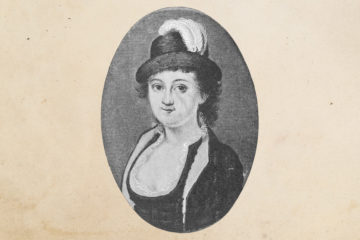 Eva Frank was born in 1756, in modern-day Ukraine, to Jacob and Hannah Frank, along with their existing children. Jacob had been raised in a family staunchly committed to the radical teachings of Shabtai Tzvi, the Jewish messianic claimant who died in 1676 after ultimately converting to Islam, and whose widely embraced prophecies and antinomian preaching—which specifically called for overturning Jewish law—nearly upended European Jewry. Around 1751, five years before Eva’s birth, Jacob proclaimed that he was Shabtai Tzvi’s successor on Earth. Building on Jewish mystical teachings and Shabtai Tzvi’s legacy, he fashioned himself as the Messiah on earth who had come to teach a new way of religious life that would bring the Messianic era. He quickly attracted thousands of followers, known as “Frankists”, and reportedly took the antinomian embrace of holy subversion even further than Shabtai Tzvi, hosting intricate rituals that overthrew the taboos of incest, menstruation, and adultery, often with the aid of sacred objects, including Torah scrolls. Though there is ongoing debate about the extent of such rituals in practice, as opposed to simply wild rumors, scholars Cristina Ciucu and Regan Kramer argue in their article published in Clio. Women, Gender, History that such ideology was markedly more extreme in Frankist practice than that of prior leaders and took a specific focus on the display of feminine sensuality.
more here.
Barneys Fantasia
Adrienne Raphel at The Paris Review:
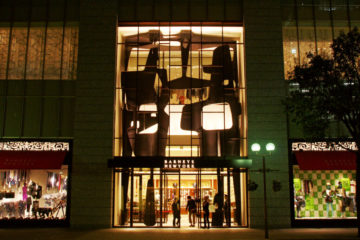
Department-store windows are a spectacle. When you look in the window, you don’t see into the storefront itself: you see a fashion-fantasia aquarium depicting a scene, like a diorama in a natural-history museum. Barneys’s longtime creative director, Simon Doonan, who joined the company as a window dresser in 1986, made the store’s windows iconically rebellious, a punk bizarrerie. Doonan put industrial tape on a nude statue of Madonna, spammed a rigorously minimalist Bottega Veneta mannequin display with dozens of Mr. Potato Head dolls, and dreamed up Dominatrix Margaret Thatcher.
Doonan’s flair marked him as the heir apparent to one of the pioneering show-window dressers of the early 1900s: L. Frank Baum. Emerald City, the glittering jewel of Baum’s Oz, is nothing if not a grand department store, one with shopwindows that are simply too dazzling for Dorothy’s unjaded sight to bear.
more here.
Birdsong, Quantum Computing, Omicron’s Mutations, and More
Laura Helmuth in Scientific American:
 Science is all about expanding the realm of human perception. Sometimes that means making the invisible visible, like when Galileo turned a telescope toward Jupiter, discovered moons around another planet and changed our literal worldview. We now know that flowers, as beautiful as they are to us, are communicating with birds and bees using ultraviolet patterns we can’t see and that elephants can feel vibrations travel through the ground from miles away.
People have been observing birds singing and calling since there were people. Birds vocalize to attract mates, defend territory, find one another, and more. Many birds’ songs sound musical to us, with distinct notes that are repeated in pleasing patterns at a steady speed—melody, rhythm and tempo, basically. But as Adam Fishbein and other bird researchers have discovered recently, what sounds so entrancing to us isn’t that meaningful to them. Birds don’t seem to listen to the melody so much as to fine details within each note that humans can’t detect.
More here.
Thursday Poem
Alberto Caeiro —IX
I’m a keeper of sheep.
The sheep are my thoughts
And each thought a sensation.
I think with my eyes and my ears
And with my hands and feet
And with my nose and mouth.
To think a flower is to see and smell it,
And to eat a fruit is to know its meaning.
That is why on a hot day
When I enjoy it so much I feel sad,
And I lie down in the grass
And close my warm eyes,
Then I feel my whole body lying down in reality,
I know the truth, and I am happy.
by Fernando Pessoa
from A Little Larger Than the Entire Universe
Penguin Classics, 1998
translation: Richard Zenith
Wednesday, April 27, 2022
Songs for Invertebrates: Auto-Tune, Rhythm, and the Innateness of Music
Justin E. H. Smith in his Substack newsletter, The Hinternet:
 My gym in the heart of the 19th arrondissement is inhabited by a goodly mix of young Tunisian beefcakes admiring themselves and one another in the full-wall mirrors; older barrel-shaped strongmen, often with moustaches and faded anchor tattoos on their forearms, as if straight off the carnival circuit circa 1910, where you might see them wearing skimpy leopard-spotted togas and lifting those ball-shaped barbells from the cartoons; and a scattering of scrawny ageing bourgeois who are quite plainly there on the stern recommendation of their doctors.
I fear I belong to this latter category. I gained an embarrassing amount of weight during the first lockdown, and overcompensated by losing it all, and much more, with a strict diet I started in early 2021 (zero flour, zero sugar, etc.). Without an accompanying exercise regime, my muscles atrophied, and by the end of that year I found myself dreading even the task of opening doors. My shoulders were so weak that the mere weight of my arms hanging from them caused tremendous pain. Get back to the gym! the physical therapist said, and so I did.
More here.
Sean Carroll’s Mindscape Podcast: Frans de Waal on Culture and Gender in Primates
Sean Carroll in Preposterous Universe:

Humans are related to all other species here on Earth, but some are closer relatives than others. Primates, a group that includes apes, monkeys, lemurs, and others besides ourselves, are our closest relatives, and they exhibit a wide variety of behaviors that we can easily recognize. Frans de Waal is a leading primatologist and ethologist who has long studied cognition and collective behaviors in chimps, bonobos, and other species. His work has established the presence of politics, morality, and empathy in primates. His new book is Different: Gender Through the Eyes of a Primatologist.
More here.
How Substack Might Replace The New York Times
Tomas Pueyo in Uncharted Territories:
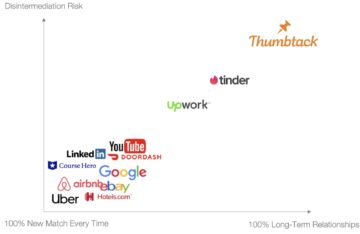 The New York Times is obsessed with Substack. A few months ago, it published Why We’re Freaking Out About Substack. Recently, they published Substack’s Growth Spurt Brings Growing Pains.
They’re right to be obsessed. Substack might replace them.
Today I’ll explain why that might happen. And since the lessons are applicable to all creator economy companies, we will also get a glimpse of the future of video, audio, streaming, and other creator economy verticals.
To do all of that, we need to start with yet another competitor to Substack and The New York Times: Medium.
More here.