
Mary Elizabeth Williams in Salon:
 Creativity is an essential element of the human condition. Yet unlike other elements of our humanity, there’s a perception that creativity seems to leave us as we age. Children, wrapped up in their imaginary play worlds and projects, are notoriously unhindered in their creativity. But adults are far less adept at conjuring the fantastical and bizarre imagination that their childhood selves had easy access to. Many adults long for those playful youthful days, when conjuring up a grand scene, on paper or on the playground, was as natural as breathing.
To write his new book on creativity, author Matt Richtel turned to a diverse group of individuals who exemplify the essence of the word — director Judd Apatow, entrepreneur Mike Lee, musician Rhiannon Giddens, Nobel prize laureate Dr. James Allison. He listened to their stories about what sparks them and how they’ve attained their achievements. And the good news is, you and I don’t have to be like any of them.
More here.
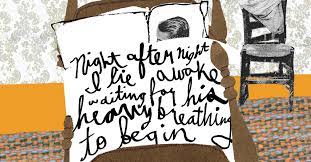 Edna St. Vincent Millay (1892-1950) was once the most famous poet in America. Her collections sold tens of thousands of copies, and her readings filled theaters from New York to Texas. She was the female voice of the Jazz Age, the New Woman incarnate whose passionate and iconoclastic verse earned her a devoted following. Her 1920 poem “First Fig” became an anthem for a generation tired of Victorian mores:
 Mona Ali in Phenomenal World:
 Gunnar O Babcock in Aeon:
 Gary Younge in The Nation:
 Adam Tooze over at his substack Chartbook:
 A
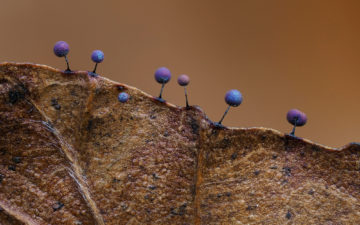
A 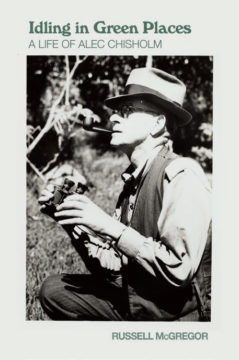 Natural history is deeply rooted in, and benefits from, connections between the personal and the scientific. There is a blog called ‘
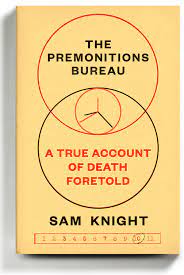 Gabriel García Márquez would not sleep in a house if someone had died in it. Colette was passionate about dowsing. James Merrill had his Ouija board. Ted Hughes taught Sylvia Plath to read horoscopes. Robert Graves believed in ghosts. If Edmund Wilson had a dream about you, he’d call you to mull it over.
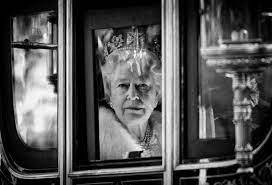 The Queen is the only royal who actually matters or does anything. That’s not fair, of course, but the monarchy is unfairness personified and glorified, long to reign over us. Naturally, the rest of the Royal Family—the heirs; the spares; Princess Michael of Kent, whose father was in the S.S. and whom Diana nicknamed the Führer; Princess Anne, Charles’s younger sister, who’s known to feed the chickens in a ballgown and Wellington boots after a night at the palace—are all busy. They have numberless engagements and causes, which fill their identical, repeating years, but they exist only as heralds for the magical authority of the Crown, which resides in the Queen and nobody else. “They are high-born scaffolding,” as Tina Brown, a former editor of The New Yorker, writes in “
 Let’s start with something everyone agrees on: the world’s fertility rate has declined. Whether you’re in a low-, middle-, or high-income country, with few exceptions the “total fertility rate”—the number of children per woman—
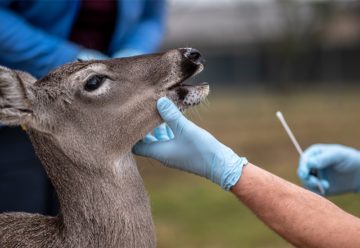 Researchers have worked with hunters for decades as part of regular wildlife surveillance to manage deer populations and track the spread of infectious diseases, such as chronic wasting disease and bovine tuberculosis. But these days, the scientists are also looking for the virus that causes COVID-19 in humans.
 I have no special love for the SAT. Aside from the fact that my test came back with a big, red, “NO HARVARD FOR YOU, DUMMY” stamped on it, it always seemed a bit arbitrary. After all: Why should my eligibility for college depend on knowing words like “nefarious” and “egregious”? That seems…there must be a better word for this…crappy. We know that SAT scores correlate with household income, and evidence suggests that studying