
Invocation
Architect of icebergs, snowflakes,
crystals, rainbows, sand grains, dust motes, atoms.
Mason whose tools are glaciers, rain, rivers, ocean.
Chemist who made blood
of seawater, bone of minerals in stone, milk
of love. Whatever
You are, I know this,
Spinner, You are everywhere, in All The Ever-
Changing Above, whirling around us.
Yes, in the loose strands,
in the rough weave of the common
cloth threaded with our DNA on hubbed, spoked
Spinning Wheel that is this world, solar system, galaxy,
universe.
Help us to see ourselves in all creation,
and all creation in ourselves, ourselves in one another.
Remind those of us who like connections
made with similes, metaphors, symbols
all of us are, everything is
already connected.
Remind us as oceans go, so go we. As the air goes, so go we.
As other life forms on Earth go, so go we.
As our planet goes, so go we. Great Poet,
who inspired In The Beginning was The Word . . . ,
edit our thought so our ethics are our politics,
and our actions the afterlives of our words.
by Everett Hoagland
from: Ghost Fishing: An Eco-Justice Poetry Anthology
(University of Georgia Press, 2018). Used with permission.
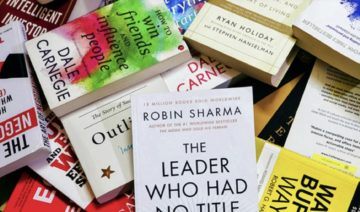 When the New York Times reviewed Charles Duhigg’s 2012 book The Power of Habit, it defined a new kind of guide to the self. Duhigg’s book was “not a self-help book conveying one author’s homespun remedies, but a serious look at the science of habit formation and change.” No longer would self-improvement be the stuff of drugstore book racks. Now it would be rooted in science and make serious claims as a manual for life. The Science of Habit popularized a great deal of cutting-edge research on behavior change, but its scientific framework also made a pitch for the attention of highly educated, tech-savvy young members of the professional class.
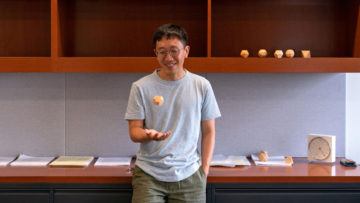 June Huh often finds himself lost. Every afternoon, he takes a long walk around Princeton University, where he’s a professor in the mathematics department. On this particular day in mid-May, he’s making his way through the woods around the nearby Institute for Advanced Study — “Just so you know,” he says as he considers a fork in the path ahead, “I don’t know where we are” — pausing every so often to point out the subtle movements of wildlife hiding beneath leaves or behind trees. Among the animals he spots over the next two hours of wandering are a pair of frogs, a red-crested bird, a turtle the size of a thimble, and a quick-footed fox, each given its own quiet moment of observation.
 Right now, it feels as though American politics is like a simple puzzle consisting of five pieces. While each piece of the puzzle has been widely discussed, it is easy to miss how they all fit together. But once you put the pieces together, the picture that emerges is very bleak.
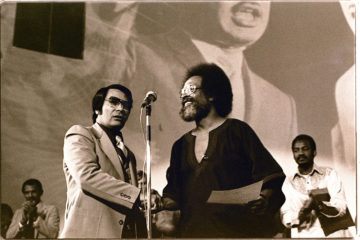 Jim Jones’s shadow looms large over the popular memory of Jonestown. Almost every prominent published account of the formation of Peoples Temple and the tragedy in Guyana is told through close examination of his life, often with a profound degree of sympathy. Jeff Guinn’s extensive history The Road to Jonestown chronicles Jones’s life from childhood to suicide. Raven, published in 1982 by Tim Reiterman, who was present during the Jonestown massacre, takes on a more prurient, almost fatalist tone, as if history were doomed to produce a person like Jim Jones. In true-crime podcasts, there’s no shortage of takes on what happened, but most of them revolve around the man, the myth, the legend. Narcissism, drugs, sex, abuse, manipulation, all under a veneer of altruism and nominally socialist ideals. His likeness—iconic sunglasses and sideburns—is almost cartoonish in its simplicity.
 collaborator: What is the nature of your consciousness/sentience?
 When you read a sentence like this one, your past experience tells you that it Is written by a thinking, feeling human. And, in this case, there is indeed a human typing these words: (Hi, there!) But these days, some sentences that appear remarkably humanlike are actually generated by artificial intelligence systems trained on massive amounts of human text. People are so accustomed to assuming that fluent language comes from a thinking, feeling human that evidence to the contrary can be difficult to wrap your head around. How are people likely to navigate this relatively uncharted territory? Because of a persistent tendency to associate fluent expression with fluent thought, it is natural – but potentially misleading – to think that if an AI model can express itself fluently, that means it thinks and feels just like humans do.
 The “Torso of Adèle” is among the smallest and most sensual of Auguste Rodin’s partial figures. She has neither head nor legs; her body reclines with its elbows raised and one arm flung across her neck, her back arching into the air. The eye seeks the point that balances her movement. Skimming her breasts, her ribs, her navel, it comes to rest on her iliac crest, the bone that wings its way across the hip. “From there, from Ilion, from her crest, Odysseus departed on his return to Ithaca after the war,” thinks the narrator of “
 With the US Supreme Court’s recent decision to overturn Roe v. Wade, the decades-long dialogue des sourds concerning the moral status of foetuses has attained new heights of futility. Some who regret the decision have adapted the “trust the science” piety lately honed in an epidemiological context to return to what they take to be a settled embryological fact: that there is no good scientific basis for the presumption that an early-term foetus is a suitable candidate for moral personhood, since its level of neurophysiological development is insufficient to warrant any attribution to it of a capacity to feel pain. This presupposes however that personhood is won by candidates for it through an investigation of their physical constitution, and that it can be directly “read off of” the arrangement of their parts and the capacities known to depend on that arrangement.
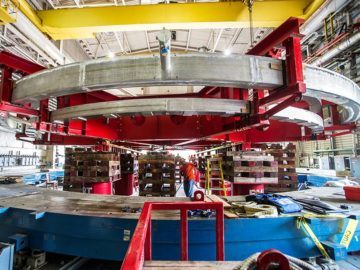 Last year, an experiment suggested that the elementary particle had inexplicably strong magnetism, possibly breaking a decades-long streak of victories for the leading theory of particle physics, known as the standard model. Now, revised calculations by several groups suggest that the theory’s prediction of muon magnetism might not be too far away from the experimental measurements after all.
 The misleadingly presented climate pledges coming out of Davos are but one act in a much larger, intricately choreographed ballet of baloney about carbon removal. The Intergovernmental Panel on Climate Change, for instance, has proposed several climate scenarios that could potentially limit global warming to the target of 1.5 degree Celsius, but every one of them assumes that vast amounts of carbon — between
  Every woman should have the legal right safely to terminate a pregnancy that she does not wish to continue, at least until the very late stage of pregnancy when the fetus may be sufficiently developed to feel pain. That has been my firm view since I began thinking about the topic as an undergraduate in the 1960s. None of the extensive reading, writing, and debating I have subsequently done on the topic has given me sufficient reason to change my mind.
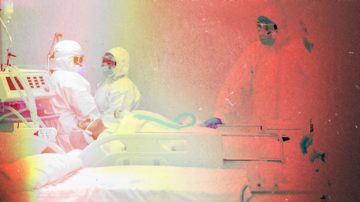 When drafting legislation, vocabulary counts for everything. Opposing viewpoints were passionately aired over seemingly minute details. Within this group, there were two sides: One believes that death is best described as permanent, and the other believes death is irreversible. The distinction is subtle, but critical. Fans of the latter definition argue that describing death as “permanent” doesn’t go far enough—death is only permanent if no medical action is taken, but irreversible means that nothing can be done. A North Dakota doctor by the name of Christopher DeCock, who opted for the bridge of the original Starship Enterprise as his background, used another fantasy tale to make his fandom of Team Irreversible known. “This isn’t Princess Bride, where you’re mostly dead,” he says, paraphrasing Billy Crystal’s comedic relief healer Miracle Max from the 1987 classic. “Either you’re dead or you’re not dead.”
 It may be time