
Bryan VanDyke at The Millions:
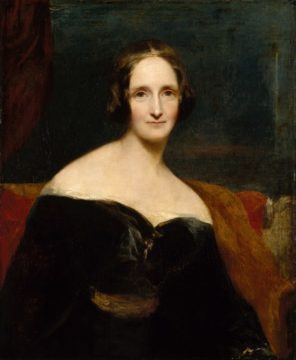 In the foreword to the 1947 edition of Mary Shelley’s collected journals, editor Frederick L. Jones complains that many of Mary’s entries are too short, too self-aware. She’s cautious, impersonal. As if it’s somehow unfair that Mary kept back some of herself, rather than filling page after page with the guileless trust that no one else would ever read them. Because clearly she knew otherwise.
Mary Shelley was the daughter of two famous writers, each with cult-like followings. As a child, she watched her father William Godwin regularly receive guests at their home who ran the gamut from the wooly Samuel Coleridge to the wily Aaron Burr (“This family truly loves me,” Burr wrote of the Godwins in a letter). As a young adult, she reread on an annual basis her mother Mary Wollenstonecraft’s famous tract on the natural rights of women; Wollenstonecraft died less than two weeks after Mary was born. Mary would have been all too acutely aware of how powerful—and dangerous—words were; it’s no wonder she chose to record her thoughts only with great care.
more here.
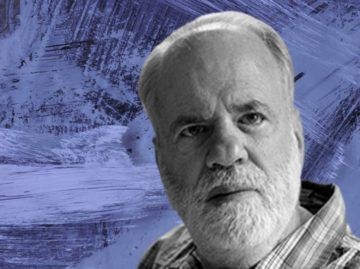 The stereotype of a philosopher is an old man with a long beard. Saul Kripke made world-leading contributions to philosophy and logic as a teenager. It was the starting-point for his most distinctive later work, which gave philosophers a new framework to think in.
 Sarah’s story is familiar in a country where more than 40% of adults and a fifth of children have obesity. At school, she was bullied for her weight and, starting in her teens, dreaded getting weighed by doctors because they were always critical. At age 26, she had bariatric surgery—yet after dropping 80 pounds, her weight returned. Year after year passed with cycles of strict dieting and trials of various anti-obesity medications. “The weight always came back,” says Sarah, who asks that her real name not be used.
 The race to commercialize the Internet is over, and advertising is the big winner. This is excellent news if you are an executive or major shareholder of one of the handful of companies that dominate the
  I
I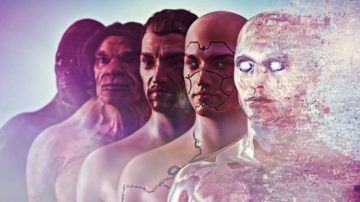 Will our descendants be cyborgs with hi-tech machine implants, regrowable limbs and cameras for eyes like something out of a science fiction novel? Might humans morph into a hybrid species of biological and artificial beings? Or could we become smaller or taller, thinner or fatter, or even with different facial features and skin colour?
 In 1972, the American artist Lee Bontecou, who died this week at age 91, showed a series of plastic flowers and vacuum-formed fish and sea creatures in New York. She felt she got bad reviews and left the city, settling in rural Pennsylvania, where, with her artist husband, she raised a child (“Having a baby was the most wonderful piece of sculpture I ever made,” she later said). For 20 years she commuted to Brooklyn College to teach, but her low-to-no profile turned her into a kind of ghost artist.
 Enough about the past. We are about to step into Qatar’s balmy winter, average 70 to 79 degrees Fahrenheit, with high humidity to be dispersed by serious AC in the outdoor stadiums. Of the more than two hundred national teams that set out on this journey four years ago, only thirty-two remain, eight groups of four, the top two in each group to move on to the knockout stage. The games will run for almost a month, culminating in a final on December 18.. As is almost always the case, Brazil is favored to win, followed by Argentina, France, England, and Spain, and you never rule out Germany. All these countries have lifted the trophy before, and wouldn’t it be great if someone else crashed the party? After all, Croatia (population 3.8 million) made it to the finals the last time out, and the ageless midfield genius Luka Modrić still runs their show. There is always Kevin De Bruyne’s Belgium (population 11.5 million) or, for a real long shot, Africa’s best hope, Senegal.
 In his 1625 essay “Of Truth,” the English writer and politician Francis Bacon—who, a few years earlier, had been deposed from his place as Lord Chancellor of England for corruption—commented on this passage: “What is truth? said jesting Pilate, and would not stay for an answer.” The hint here is that Pilate turns away from Jesus after asking his question because he is afraid it might be answered. And Pilate may not be the only one who has such feelings.
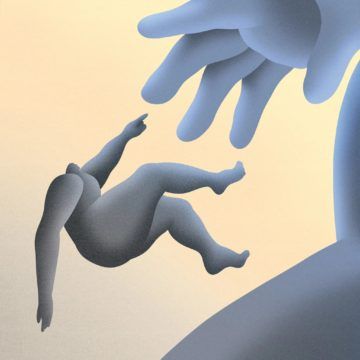 A select group of the world’s top researchers studying obesity
  What happened in South Korea offers proof that fundamental transformations of living standards are possible in a few decades. South Korea’s experience, and similar growth trajectories in Taiwan and Singapore, have often been referred to as “economic miracles.” But what if South Korea’s economic growth wasn’t something mysterious or unpredictable, but rather something that we could comprehend and, most importantly, replicate? At current rates of growth, living standards in the poorest countries in the world will eventually catch up to the United States — in about 700 years.
 Colorado-based Prometheus Materials has developed masonry blocks from a
  T
T On the first page of his 2015 blockbuster book,
  Delegates at the COP27 climate summit in Sharm El Sheikh, Egypt, have agreed to create a global