
Reya Farber in The Conversation:
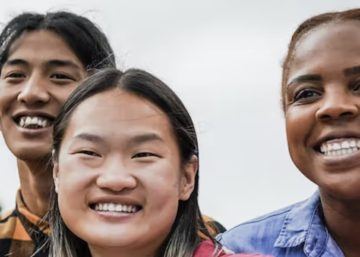 Trans people’s right to exist has been challenged throughout time and across the world in multiple ways. Worldwide, trans people face disparities across many areas, including access to health care, legal support and economic security. Governments, global organizations and the legacies of colonialism also enact high levels of violence and stigma against them.
At the same time, 95% of global health-related organizations do not recognize or mention the needs of gender-diverse people in their work, resulting in the “near-universal exclusion” of trans people from health practices and policies. There is also a lack of holistic trans-inclusive research around the world. For instance, searching for the word “transgender” on the website for the Institute for Health Metrics and Evaluation, the global health metrics giant of the Bill and Melinda Gates Foundation that collaborates with the World Health Organization to improve global health data, currently returns zero results.
More here.
 It has been more than two decades since the issue of “loss and damage” was first raised at a UN climate summit.
 Tim Michels, a wealthy sixty-year-old businessman, was the Republican nominee for governor of Wisconsin. During the primary, when asked whether the 2020 Presidential election had been stolen, Michels said, “Maybe.” A few months later, he said that, if he became governor, Republicans would “never lose an election in Wisconsin again.” Given the context, it was hard to know whether that was normal political braggadocio or a statement of intent. Donald Trump came to Wisconsin to campaign for Michels, who made election integrity, as he put it, a big part of his pitch. He proposed to eliminate the nonpartisan agency that oversees the state’s elections and replace it with a new entity whose composition and mission was left a little hazy.
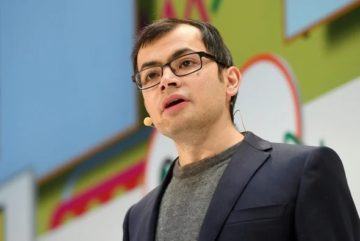 There’s an age-old adage in biology: structure determines function. In order to understand the function of the myriad proteins that perform vital jobs in a healthy body—or malfunction in a diseased one—scientists have to first determine these proteins’ molecular structure. But this is no easy feat: protein molecules consist of long, twisty chains of up to thousands of amino acids, chemical compounds that can interact with one another in many ways to take on an enormous number of possible three-dimensional shapes. Figuring out a single protein’s structure, or solving the “protein-folding problem,” can take years of finicky experiments.
 Since 1994 midterms have mattered, not just as protest votes, but as elections that have frequently determined congressional control. In the last eight midterms, control of the House has changed hands either four or five times (depending on the final 2022 result), while it’s only been twice in the Senate. Midterms have become a true political thermostat, and the result has often been divided government for the last two years of a Presidential term. Consequently, the typical second half of a Presidency is now legislative gridlock, occasional cross-party compromise, stacks of Executive Orders, and a sharp uptick in Presidential overseas trips to get away from the unpleasantness in DC.
 Why do people voluntarily hand over authority to a government? Under what conditions should they do so? These questions are both timeless and extremely timely, as modern democratic governments struggle with stability and legitimacy. They also bring questions from moral and political philosophy into conversations with empirically-minded social science. Margaret Levi is a leading political scientist who has focused on political economy and the nature of trust in government and other institutions. We talk about what democracy means, its current state, and how we can make it better.
 “Young people are definitely shaping outcomes here at COP27,” Sophia Kianni says. Swedish campaigner Greta Thunberg has skipped the Sharm el-Sheikh meeting, calling it a forum for
  One of the many times
  Fresh from a
  I’ve always loved Edith Wharton’s writing, but The Custom of the Country is my favorite, and I think her funniest and most sly. As I’ve worked on adapting it into a screenplay, I’ve found it interesting to hear some men say that Undine is so unlikable, while my women friends love her and are fascinated by her and what she’ll do next. We’ve all seen her before, the way she walks into the room, her focus on men, and her ease with their gaze. We admire and are annoyed by her. While I’ve often worked on stories with more sympathetic characters, it’s been so fun to dive into Undine’s world and pursuits.
 With Paul Klee, the bad year was 1930, “when he started using thick black outlines,” Clem said. Picasso was clear until 1918, after which “he never did a good painting.” T. S. Eliot, the publication year of
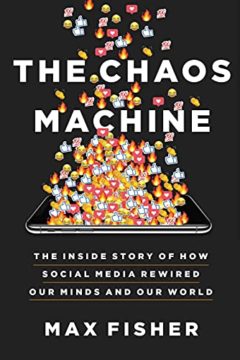 So the race for attention has shaped the products and these products have shaped what we see. This has created nothing less than ‘a wholly new era in the human experience’. Fisher’s point is that wiring platforms to grab attention has had a series of vast and ultimately ruinous consequences for the world we live in. For what the machines learned was that across an array of cultures and societies, more extreme content wins more engagement. The charge is not simply that YouTube and Facebook have allowed polarising, extremist, conspiracist, hateful material to persist on their platforms; it is also that they have actively pushed people’s attention towards it. Their products haven’t just reflected reality for us all but actually created it.
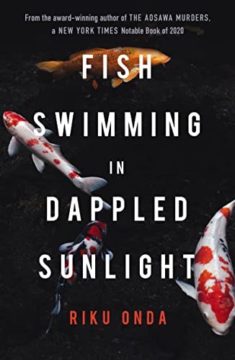 Why do Americans read so few books in translation? Well, compared with the German or Japanese markets, which see about ten times as many books in translation published in any given year, not a lot of work in translation gets published. Crime fiction might be one notable exception to this since English readers have an unquenchable appetite for them. While Onda writes all types of fiction, from genre to literary, it is her mysteries that are getting picked up. First was New York Times 2020 Notable Book, The Aosawa Murders, and this year it is her Fish Swimming in Dappled Sunlight.