
Who Would Be a God?
“Oh, I would be a god”
—Lenny Everson
—A Debate in Poetry(with Lenny Everson).
Kitchener: Passion Among the Cacti Press, 2004.
Who would be a God?—Such juggling!
Scheduling rivers to run backwards
or a crack to lengthen and widen
boiling up black smokers beneath the sea.
And what to do about Popo Chang’s petunias
soccer-balled by red-necked boys,
or Antarctica melting,
while ants wobble a giant breadcrumb
toward their hungry mountain of sand?
The bluest skies have ignited with suicide drones.
Within the next sixty seconds,
how many thousand more
babies—which genes? what gender?—should be conceived?
Churches, synagogues, mosques, gutters, or temples,
the centuries’ dizzying Babel deafens.
Infinities of invisible sprockets!
From orbits to neutrons, keep all spinning
across string theory’s ten dimensions.
What of that fat firecracker, chaos?
Forever its sizzle is so tempting
to shatter every well-oiled cam and pinion
in any present and possible universe.
Isn’t mere mortal fussing enough of a headache
—to dig from clean laundry two navy socks that match
and remember not to sprinkle the cactus
except every fifteenth day,
let alone halt wars, seed famines,
and recharge a global economy?
Each body is, after all, a whole cosmos
revolving joints in their sockets,
dodging those rogue asteroids
cancer, Parkinson’s, pneumonia,
not to mention woofing and warping
around space-time’s white hole,
the soul.
Too much!
God only knows.
Susan Ioannou
from Ygdrasil, December 2003
 Indeed, the
 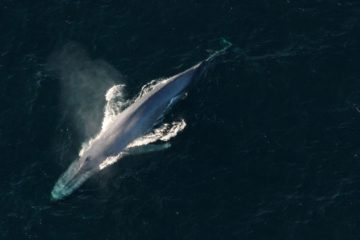 The blue, fin, bowhead, gray, humpback, right and sperm whales are the largest animals alive today. In fact, the blue whale is the largest-known creature ever on Earth, topping even the biggest of the dinosaurs.
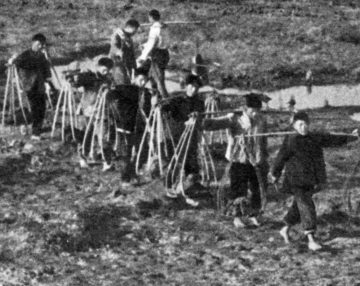 In late 1968, the train and bus stations of Chinese cities filled with sobbing adolescents and frightened parents. The authorities had decreed that teenagers – deployed by
 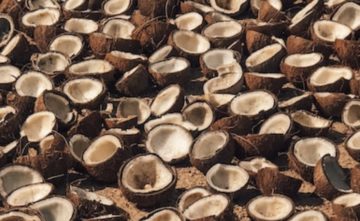 If the coconut symbolizes the natural bounty of the tropical zone in many people’s minds, it is often used to “explain” the human poverty frequently found in the zone. A common assumption in rich countries is that poor countries are poor because their people do not work hard. And given that most, if not all, poor countries are in the tropics, they often attribute the lack of work ethic of the people in poor countries to the easy living that they supposedly get thanks to the bounty of the tropics. In the tropics, it is said, food grows everywhere (bananas, coconuts, mangoes—the usual imagery goes), while the high temperature means that people don’t need sturdy shelter or much clothing.

 WASHINGTON — It’s not a pretty sight when pols lose power. They wilt, they crumple, they cling to the vestiges, they mourn their vanished entourage and perks. How can their day in the sun be over? One minute they’re running the world and the next, they’re in the room where it doesn’t happen.
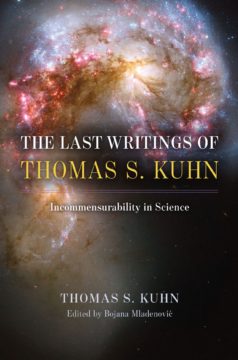 Paul Dicken in LA Review of Books:
 Merve Emre in The New Yorker:
 Justin Vassallo in Phenomenal World:
 Alyssa Battistoni in Sidecar:
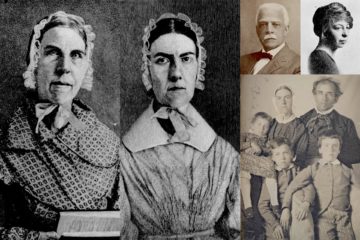 Born at the turn of the 19th century, the Grimke sisters, Angelina and Sarah, left their slaveholding family in Charleston, S.C., as young adults and made new lives for themselves as abolitionists in the North. In 1838, Angelina became the first woman to speak before a legislative body in the United States when she addressed the Massachusetts Legislature and called for an immediate end to slavery. In the same speech, she made a passionate case for women’s rights, insisting that women belonged at the center of major political debates. “Are we aliens because we are women?” she asked. “Are we bereft of citizenship because we are the mothers, wives and daughters of a mighty people?”
 This is not a thing anymore.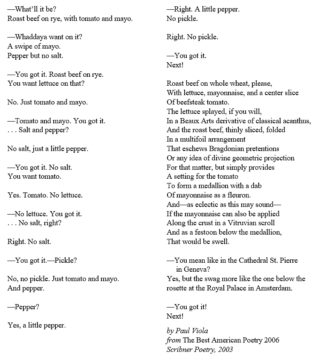
 B
B IN THE FEW TIMES
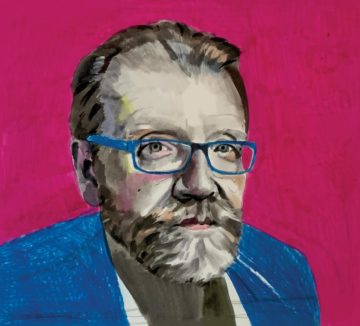 Early on in “Sea Oak,” a short story from Pastoralia, the second of five collections by George Saunders, the characters watch a TV show called How My Child Died Violently. The show is hosted by “a six-foot-five blond,” Saunders writes, “who’s always giving the parents shoulder rubs and telling them they’ve been sainted by pain.” The episode they’re watching features a 10-year-old who killed a 5-year-old for refusing to join his gang.