
One Art
The art of losing isn’t hard to master;
so many things seem filled with the intent
to be lost that their loss is no disaster.
Lose something every day. Accept the fluster
of lost door keys, the hour badly spent.
The art of losing isn’t hard to master.
Then practice losing farther, losing faster:
places, and names, and where it was you meant
to travel. None of these will bring disaster.
I lost my mother’s watch. And look! my last, or
next-to-last, of three loved houses went.
The art of losing isn’t hard to master.
I lost two cities, lovely ones. And, vaster,
some realms I owned, two rivers, a continent.
I miss them, but it wasn’t a disaster.
—Even losing you (the joking voice, a gesture
I love) I shan’t have lied. It’s evident
the art of losing’s not too hard to master
though it may look like (Write it!) like disaster.
by Elizabeth Bishop
from One Art
Farrar Straus Giroux,1994
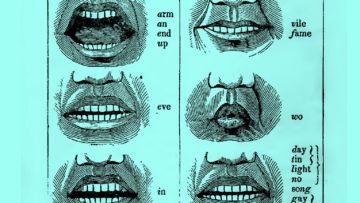 In a small apartment downtown, a group of people has gathered. There’s maybe a hundred of them, men and women, and they’re not exactly sure why they’ve gathered. Then, suddenly, a sound like the rushing of a violent wind comes down from the heavens and fills the whole house. Helpless, they watch as tongues of fire descend from the clouds, and then these tongues begin to move toward them, before finally coming to sit on their own tongues. The people try to speak with each other, to communicate their astonishment or terror or ecstasy, but each one is speaking in tongues, speaking in languages they’ve never spoken before or since. And then, sometime later, everyone involved is spectacularly martyred.
 In 2011, Ahmed Hamdy
 In her great new book, titled Inside Siglo XXI: Locked Up in Mexico’s Largest Detention Center, author and journalist Belén Fernández writes about this underdiscussed part of the U.S. border from the on-the-ground perspective of the Tapachula immigration prison, where she was detained. In the book, and in the below interview, Belén describes how she ended up behind bars and what she witnessed and experienced, including the friendships and solidarity she had with other detainees. As she writes, “There may not be human rights in Siglo XXI, but there’s lots of humanity.” Belén has this unique ability to write in a personal, detailed, and heart-wrenching way that is often also bitingly hilarious. She also has a penchant for coupling deep geopolitical analysis of state power, particularly that of the United States, with its absurdity, often in the same sentence.
 The timing of Anjuli Fatima Raza Kolb’s
  Emily Dickinson:
 You are reading a Jewish take on artificial intelligence. Normally I would not start a piece with a sentence like that, but I want to confuse the bots that are being asked to replicate my style, especially the bots I work on. It used to be that we’d gather our writings in a library, then everything went online. Then it got searchable and people collaborated anonymously to create Wikipedia entries. With what is called “AI” circa 2023 we now use programs to mash up what we write with massive statistical tables. The next word Jaron Lanier is most likely to place in this sentence is calabash. Now you can ask a bot to write like me.
 Nara Roberta Silva in The Baffler:
 Julie Michelle Klinger in Boston Review:
 Lynn Parramore over at INET:
 N
N One of the takeaways of “Rikers: An Oral History,” a new book by the journalists Graham Rayman and Reuven Blau, is the shock inmates feel upon entering this run-down and lawless prison for the first time. It’s not just the sense of peril, the reek of toilets and cramped quarters, and the nullity of the concept of presumption of innocence — it’s an awareness, as one interviewee puts it, that “nobody cared and nobody was watching.”
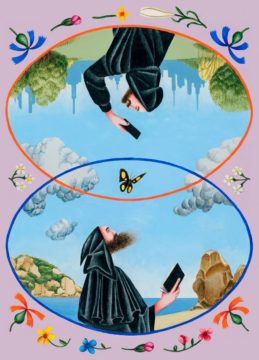 Who was the monkiest monk of them all? One candidate is Simeon Stylites, who lived alone atop a pillar near Aleppo for at least thirty-five years. Another is Macarius of Alexandria, who pursued his spiritual disciplines for twenty days straight without sleeping. He was perhaps outdone by Caluppa, who never stopped praying, even when snakes filled his cave, slithering under his feet and falling from the ceiling. And then there’s Pachomius, who not only managed to maintain his focus on God while living with other monks but also ignored the demons that paraded about his room like soldiers, rattled his walls like an earthquake, and then, in a last-ditch effort to distract him, turned into scantily clad women. Not that women were only distractions. They, too, could have formidable attention spans—like the virgin Sarah, who lived next to a river for sixty years without ever looking at it.