
Hasan Ali in The Nation:
 For centuries, intersex people—those who possess both male and female sexual organs—and those assigned male at birth who have subsequently identified as women have left their homes and joined third-gender communities, where they have been able to express their femininity without fear of persecution. These societies are organized around a guru-chela (master-disciple) system of kinship and have their own rules, rituals, and dispute resolution mechanisms. In Pakistan, the terms used to describe people who belong to these communities are varied and sometimes used interchangeably. Most common among them are the words hijra and khawaja sira, two historically distinct groups who are conflated in the modern day.
More here.
 As with weeds in a garden, it is a
  My stories come to me as clichés. A cliché is a cliché because it’s worthwhile. Otherwise, it would have been discarded. A good cliché can never be overwritten; it’s still mysterious. The concepts of beauty and ugliness are mysterious to me. Many people write about them. In mulling over them, I try to get underneath them and see what they mean, understand the impact they have on what people do. I also write about love and death.
 There are few human impulses more primal than the desire for explanations. We have expectations concerning what happens, and when what we experience differs from those expectations, we want to know the reason why. There are obvious philosophy questions here: What is an explanation? Do explanations bottom out, or go forever? But there are also psychology questions: What precisely is it that we seek when we demand an explanation? What makes us satisfied with one? Tania Lombrozo is a psychologist who is also conversant with the philosophical side of things. She offers some pretty convincing explanations for why we value explanation so highly.
 If the last few years tell us anything, it is that we are well beyond Peak Progress. The decades since the turn of the millennium have seen two international financial crises, terrorist attacks, a return of great-power politics, a brutal and potentially catastrophic war in eastern Europe, a global pandemic, and (at the time of writing) rocketing inflation.
 Unlike other naturalists, who had studied preserved specimens, Jeanne realized that she could only discover the true origin of the shell if she observed living creatures. To bypass the evolution-mounted obstacle of their extreme shyness, she designed and constructed one of the world’s first offshore research stations — a system of immense cages she anchored off the coast of Sicily, complete with observation windows through which she could study the argonauts undisturbed. Every day, she prepared food for them, rowed her boat to the cages in her long skirts, and knelt at the platform, observing for hours on end.
 Carl Stalling’s scores didn’t just teach kids about Beethoven and Mozart and Wagner, they quoted vastly influential songs from his own lifetime that have now vanished down the memory hole, and that inclusion forces conversations about those songs. Parents may differ on whether that’s a good thing, but I think it is. I can avoid Speedy Gonzales, but other forms of bigotry sneak up on me. I don’t relish explaining to my son why he can occasionally catch me absent-mindedly whistling Stephen Foster’s “Shortnin’ Bread” but will never, ever hear me sing the lyrics. If we don’t talk about that, though, I risk letting the attitudes of the past seem incomprehensible and stupid to him, which weakens his resistance to their contemporary descendants. A full appreciation of old cartoons prevents us from reducing their authors to caricature. Stalling loved catchy, racist old minstrel tunes; he’s also single-handedly responsible for the preservation of terrific songs like Raymond Scott’s classic “
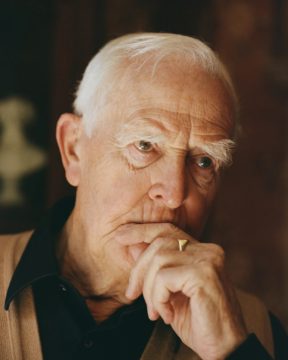 The summer I finished writing my dissertation, the C.I.A. tried to recruit me—as a spy. The call came in the middle of the afternoon, as I was working on a chapter about Tolstoy and midwifery. An older woman with an eerily friendly voice started going over what the training for a job in clandestine affairs would entail. I stifled a laugh. I didn’t know what was harder to believe: that anyone thought I could keep a secret or that a degree in Russian literature would qualify me to parachute out of a plane. Was I interested in learning more? O.K., I said, mostly out of nosiness, or at least that’s what I told myself. They would be in touch, she said.
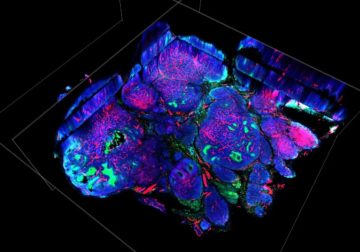
 A rapidly firing laser can divert lightning strikes, scientists have shown for the first time in real-world experiments
 Every great national prose, in just about any tongue, reaches its high meridian only by way of a prolonged and constant negotiation of just this tension between beauty and sublimity—between the decorative and the august, or between the splendid and the lucid. And this comes only at the end of long epochs of development. To be able to balance expressiveness and reticence, or to know when to cast that balance away, requires tact and ingenuity and taste on the part of writers; but it also requires a language of sufficient maturity. This is why prose of any consequence invariably arrives far later in a culture’s history than does great poetry. Poetry entered the world almost as early as words did; it is the first flowering of language’s intrinsic magic—its powers of invocation and apostrophe, of making the absent present and the present mysterious, of opening one mind to another. It comes most naturally to languages in their first dawn, when something elemental—something somehow pre-linguistic and not quite conscious—is still audible in them. Prose, however, evolves only when that force has been subdued by centuries upon centuries of refinement, after unconscious enchantment has been largely mastered by conscious artistry, and when the language has acquired a vocabulary of sufficient richness and a syntax of sufficient subtlety, and has fully discovered its native cadences.
 Escape behavior offers useful insight into the brain’s inner workings because it engages nervous system networks that originated in the early days of evolution. “From the moment there was life, there were species predating on each other and therefore strong evolutionary pressure for evolving behaviors to avoid predators,” says neuroscientist Tiago Branco of University College London.
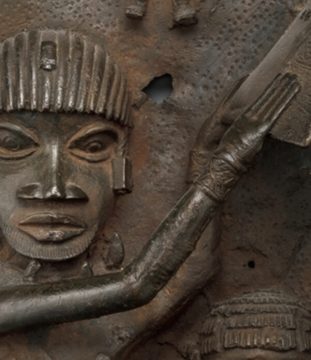 We should expunge, forever, the epithet ‘precolonial’ or any of its cognates from all aspects of the study of Africa and its phenomena. We should banish title phrases, names and characterisations of reality and ideas containing the word.
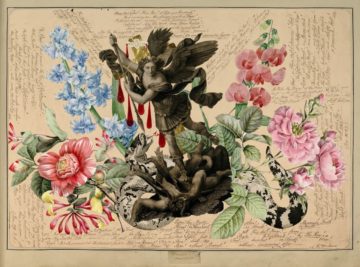 The game is rigged. It is rigged like capitalism is rigged. There is no puppet master, no conspiracy, only a field where advantages, to begin with, are distributed unequally. You can beat the long odds, but you have long odds to beat; a team of scholars has been working for almost 10 years to detail exactly how the rigging works. Juliana Spahr and Stephanie Young, later joined by Claire Grossman, began by noticing that poetry readings they regularly attended were held in “mainly white rooms.” They wanted to know why. To find out, they would need to widen their purview. The wider they went, the hungrier they became to understand who gets to succeed as a writer in the United States today. They wanted to reveal the system, to see all of it.
 I
I