
John Fechtel in the Hedgehog Review:
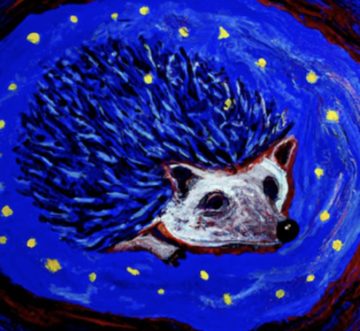 Even if it uses a fantastically complicated machine playing games with image combinations, any model is only the sum of what it is trained on. In the case of DALL·E 2, the model is trained on a comprehensive corpus of humanity’s collected visual output. Some hopeful proponents call it a kind of imaginative mirror: something that can reflect our own mental image back to us. We could think about our own visual imaginations in terms of models, too. They are trained on some smaller and less complete set of humankind’s vision. There is a potential gap, though, between our imagination and the computer’s “dreams about electric sheep.” Can this model cross that gap?
Spend any time tapping prompts into a generated art engine and you will inevitably discover a sense of the uncanny in the image responses. The nearest analogue I can think of is the slightly unsettling sense you have when someone isn’t quite looking you in the eye, an almost-but-not-quite connection of understanding that feels as if it’s running two or three parallel tracks to the left.
More here.
 Maize is arguably the single most important crop in the world and is rivalled only by soybeans in terms of versatility. That said, it is, along with sugar cane and palm oil, among the most controversial crops, proving particularly so to critics of industrial agriculture. Although maize is usually associated with the Western world, it has played a prominent role in Asia for a long time, and, in recent decades, its importance in Asia has soared. For better or worse, or more likely for better and worse, its role in Asia seems to be following the Western script.
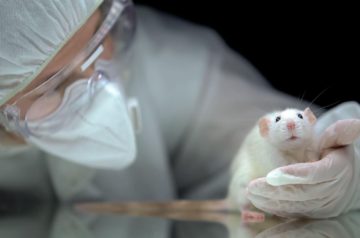 New medicines need not be tested in animals to receive U.S. Food and Drug Administration (FDA) approval, according to legislation signed by President Joe Biden in late December 2022. The change—long sought by animal welfare organizations—could signal a major shift away from animal use after more than 80 years of drug safety regulation.
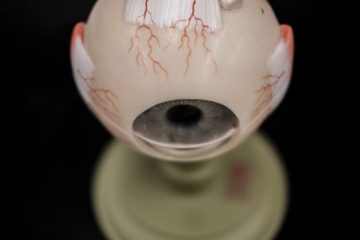 The next revolution in medicine just might come from a new lab technique that makes neurons sensitive to light. The technique, called
 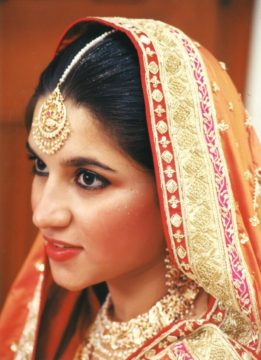 This story is a love story, though its main character is not a person but a thing. The telephone, in this story, determines the possible and the impossible. Back in the 1990s, there were two telephones in my house in Karachi. The downstairs phone was a pale gray rotary model, which was placed on an end table in our formal sitting room. A phone call was still an occasion for the elders in our house, especially for my grandparents, who had known life without it. Each call cost money, and since every expenditure was closely monitored in our home, so, too, was the use of the telephone. When you did make a call, you would sit on the edge of the armchair, so as not to create an imprint or a sweat stain on the good furniture, and carefully dial each digit. Anyone walking by the glass door of the sitting room was entitled to ask who was on the other end of the line. Unlike now, one phone belonged to a whole household. Unlike now, it had to be shared.
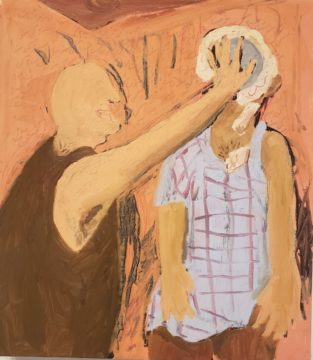 For the first eight years of her life as an artist, Tala Madani, who was born in Tehran, painted only men, and not to their credit. “Caked,” in 2005, shows a brawny, nearly featureless oaf in a black undershirt smashing a cake in another oaf’s face. Next came a series of small paintings of men with plants growing out of their crotch—one of them tends to his foliage with a watering can. In 2011, she painted several men whose testicles hung from their chin, and a man in spirited conversation with his vital organs, which have been removed and placed in a comfortable chair. A series of 2015 paintings present men whose colossal, fire-hose penises take on lives of their own. None of these images suggest animosity toward the male species. The harmless dopes in Madani’s early work gave way to middle-aged, potbellied, bearded losers, whose weird plights make us laugh. Madani is that rarity in art, a wildly imaginative innovator with a gift for caricature and visual satire, and her first great subject was the absurdity of machismo. “I do think machismo is healthy and alive everywhere, and I was having fun upending it,” she told me last summer, when we began a number of conversations. “You know, you want it to grow bigger, so why not water it?”
 Here’s an example of “covert arrogance,” from Jersey Breaks: when I was twenty years old, I applied to a foundation for money I was hoping to live on for the year after I graduated from college.
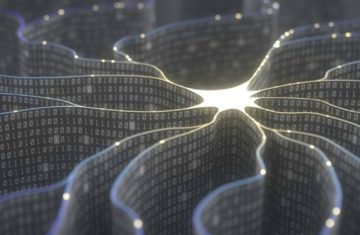 If we define consciousness along the lines of Thomas Nagel as the inner feel of existence, the fact that for some beings “there is something it is like to be them”, is it outlandish to believe that Artificial Intelligence, given what it is today, can ever be conscious?
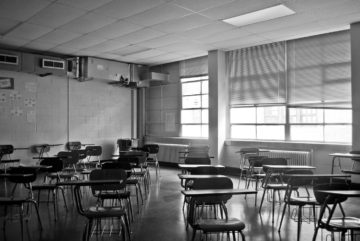 In his new book, The Walls around Opportunity, Gary Orfield—a leading scholar of civil rights in education—shows that what did work was straightforward legal and budgetary coercion. School districts would no longer be able to file desegregation plans and go home with an A for effort. Civil rights lawyers no longer had to sue each segregated school district one at a time; legislation authorized class-action lawsuits and the withholding of federal funds from any entity that failed to produce measurable progress toward desegregation. Perhaps in part because the United States was a nation created, expanded, and maintained through the use of force, it was force, legal and fiscal, that finally got results—at least for a brief historical moment.
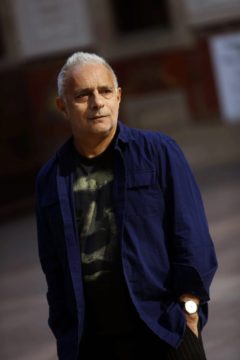 Just after Christmas, the writer Hanif Kureishi was taking a long walk in Rome, where he and his wife, Isabella D’Amico, were spending the holiday, when he suddenly collapsed onto the sidewalk. It is unclear why — perhaps he fainted, said his son Carlo Kureishi, or perhaps he suffered an epileptic fit — but he fell awkwardly, twisting his neck and grievously injuring the top of his spine. When Kureishi regained his senses, he was lying in a pool of blood, unable to move his arms or his legs. “It occurred to me that there was no coordination between what was left of my mind and what remained of my body,”
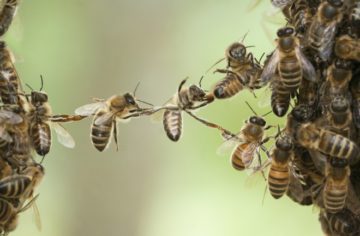 Human beings — with our big brains, technology and mastery of language — like to describe ourselves as the most intelligent species. After all, we’re capable of reaching space, prolonging our lives and understanding the world around us. Over time, however, our understanding of intelligence has gotten a little more complicated.
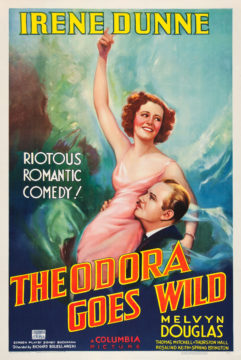 Indeed, Theodora goes wild but never silly, cutting loose but never losing control. And if in her contained exuberance Irene Dunne stands apart from her classic screwball sisters, she is, I think, the actress who best embodies what we truly find most alluring in the genre, what I see as its real beating heart: the way these films’ protagonists break free of the straitened existences they’ve either been trapped in or trapped themselves in (or both). Yes, often with the assistance of a playful playboy, helpfully crazed heiress, alluring cardsharp, or even, sure, Katherine “Sugarpuss” O’Shea, but also, and more important, because they themselves need to and do the work to break free.
 As Bruno Latour confided to Le Monde earlier this year in one of his final interviews,
  First, let’s be clear about what “usage” means. It isn’t grammar, though the two are related and often treated together in such page-turners as
 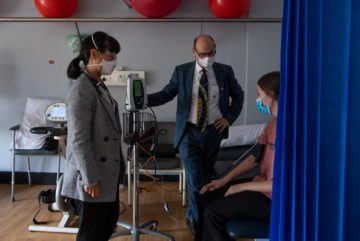 Health experts are calling for a rethink of Australia’s COVID-19 approach after a new study showed one in 10 people will end up with “long COVID”.