
Poem in Which the Speaker Manages to Get a Quick Question in Edgewise as a List of Instructions is Dictated Regarding How Her Poems Ought to Be Written Via a Megaphone Located Above Her Headboard
We want you to write a poem in interest-free monthly installments.
A poem that is open 24 hours a day. A poem that includes wi-fi.
A poem made to be posted on Instagram.
A poem wearing cruelty-free make-up.
We want, naturally, a poem with no conservatives, a poem
low in saturated fat. A lactose-free, gluten-free, decaffeinated poem.
———————- —So, do you want a poem, or a soy venti chai latte?
We want a little word-making machine.
a music box without the ballerina
a remote control toy with batteries included.
The Noumenon Poem.
The Homeric Poem in Present Pluperfect.
The Phenomenal Bullet Poem.
The Multidisciplinary Poem, Incorporated.
themostpoeticwithoutbeingcatharticpoemeverwritten.com
We want an acrobatic, polyglot poem, a poem
with a T-shirt that reads [there is no poem b]
A poem that can be sung out loud. That pays its own way.
A poem without an expiration date. In other words, we want
a poem that counts backward from ninety-nine to zero
as instructed by an anesthesiologist. In other words, we want
a poem that will not wake up during surgery.
by Sara Uribe
from: Antígone González
© Translation: 2016, Tanya Huntington, J.D. Pluecker
Les Figues Press, , 2016
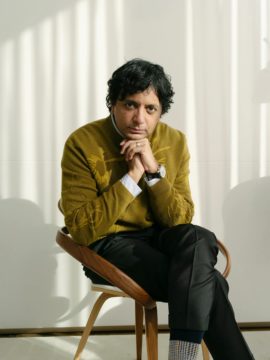 In M. Night Shyamalan’s new movie, “Knock at the Cabin,” a couple vacationing in rural Pennsylvania with their adopted daughter realize that they are not alone. A group of travellers is watching them from the trees and encroaching on the property. The films of Shyamalan are filled with such uninvited house guests. The big twist in “The Sixth Sense” (1999)—the one that turned its director into the most reliable American brand name in narrative trickery since
 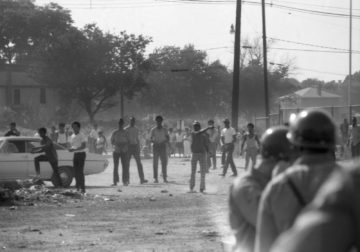 Black resistance took different forms, from Black residents pelting police with bricks and bottles to Black snipers shooting at police, with the purpose of driving them out of their communities. Black snipers, in particular, fulfilled political fantasies that demonized all forms of Black resistance as pathological and deserving of violent pacification. From 1967 to 1974, the number of police killed in the line of duty jumped from seventy-six to a hundred and thirty-two, the highest annual figure ever. But those totals were dwarfed by the number of young Black men killed by the police in the same period. Hinton reports that, between 1968 and 1974, “Black people were the victims of one in four police killings,” resulting in nearly a hundred Black men under twenty-five dying at the hands of police in each of those years. By comparison, today only one in ten people killed by police is Black, according to the Centers for Disease Control. (Hinton cites this figure but notes that it may represent underreporting.)
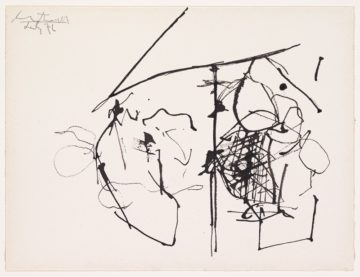 As I worked on this publication, I came to cherish Motherwell’s drawings more and more. Although they are the drawings of a painter, and drawing is not the medium he is principally known for, it is here, in his drawings, that we see his mind at work most clearly and most vividly. In his drawings, we can see the quintessence of depth and breadth of his work, from the abstracted figures of the 1940s to his purely automatist Lyric Suite (1965) and spare geometric “Open” series of the 1960s, to his luminous graphic responses to James Joyce during the 1980s. Although his drawings are related to—and sometimes provided the seeds for—his paintings, he revered drawing as a unique practice of its own, which had its own character and involved particular demands. For Motherwell, the medium was “the only thing in human existence that has precisely the same range of sensed feeling as people themselves do. And it is only when you think of the medium as having the same potential as another human being, that you begin to see the nature of the artist’s involvement.”
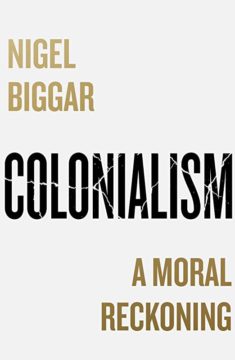 Nigel Biggar retired a few months ago from the Regius Professorship of Moral and Pastoral Theology at Oxford. He is a notable figure in the world of moral philosophy, not only because of his distinguished academic career as an ethicist but also because of his persistent refusal to observe the conventional pieties which characterise so much that is written in his field.
 A: I don’t even have cable anymore.
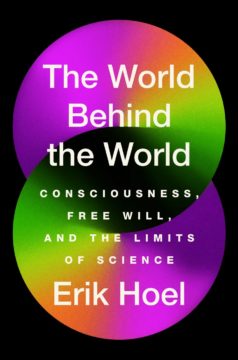 For most of 2022 I was quietly working on my second book,
 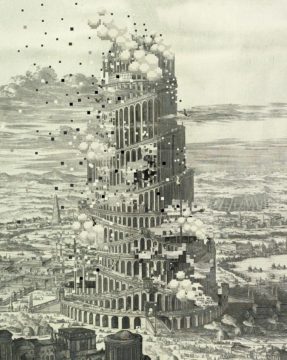 The story of Babel is the best metaphor I’ve found for making sense of the momentous sociological, cultural, and epistemological changes that occurred in many nations in the early 2010s, which gave us the chaos, fragmentation, and outrage that began to set in by the mid-2010s. There are many causes of the transformation, but I believe that the largest single cause was the rapid conversion,
 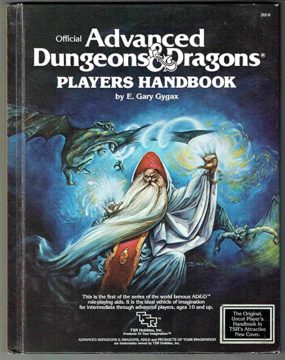 D&D gets its appetite for rules from wargames, which have been around for thousands of years. The modern war game began in the late eighteenth century, when a certain Helwig, the Master of Pages to the German Duke of Brunswick, invented something called “War Chess”: instead of rooks and knights and pawns it featured cavalry, artillery and infantry; instead of castling it had rules for entrenchment and pontoons. The Prussians adapted Helwig’s game to train their officers; the French learned the value of wargames the hard way in 1870. In 1913, when the Prussians were again rattling their sabers, the British writer H. G. Wells came up with a game called Little Wars, which was played on a tabletop, with miniature lead or tin soldiers. Then, in 1958, a fellow named Charles Roberts founded the Avalon Hill game company, and published a board game based on the battle of Gettysburg. Gettysburg and its successors were wildly popular; all over America, college students and other maladjusted types began to recreate, in their dorms and basements and family rooms, the great battles of history.
 If there were a point to life, the point would be pleasure. I knew a man, an Italian communist, who liked to say, raising a glass of champagne and nibbling a blini with caviar, “Nothing’s too good for the working class.” Kafka’s Hunger Artist explains to the overseer at the end of the story he’s not a saint, nor is he devoted to art or sacrifice. He’s just a picky eater. “I have to fast. I can’t help it … I couldn’t find the food I liked. If I had found it, believe me, I should have made no fuss and stuffed myself like you or anyone else.”
 Over the last few decades, an idea called the critical brain hypothesis has been helping neuroscientists understand how the human brain operates as an information-processing powerhouse. It posits that the brain is always teetering between two phases, or modes, of activity: a random phase, where it is mostly inactive, and an ordered phase, where it is overactive and on the verge of a seizure. The hypothesis predicts that between these phases, at a sweet spot known as the critical point, the brain has a perfect balance of variety and structure and can produce the most complex and information-rich activity patterns. This state allows the brain to optimize multiple information processing tasks, from carrying out computations to transmitting and storing information, all at the same time.
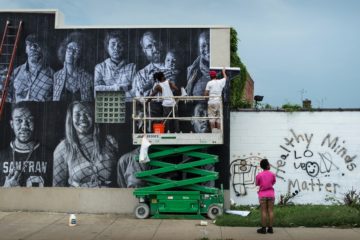 In the fall of 2015, college campuses were engulfed by fires ignited in the streets of Ferguson, Missouri. This is not to say that college students had until then been quiet in the face of police violence against black Americans. Throughout the previous year, it had often been college students who hit the streets, blocked traffic, occupied the halls of justice and malls of America, disrupted political campaign rallies, and risked arrest to protest the torture and suffocation of Eric Garner, the abuse and death of Sandra Bland, the executions of Tamir Rice, Ezell Ford, Tanisha Anderson, Walter Scott, Tony Robinson, Freddie Gray, ad infinitum.
 At first glance, the world of Peanuts was a highly legible one, populated by clearly labeled types. And yet the labels kept leading into uncertainty. Snoopy, for example, was “a beagle.” He also read War and Peace and owned a typewriter. Lucy was a “fussbudget”: she was one always, in some essential way. But what was it about her that was “fussbudget”? Was there a fussbudgetness in all her words and actions or only in some of them? With Pig-Pen, it was somehow even more fundamental. Pig-Pen was dirty
  Google researchers have made an AI that can generate minutes-long musical pieces from text prompts, and can even transform a whistled or hummed melody into other instruments, similar to how