Late hour
by Ashutosh Jogalekar The fall turned colors faster than ever before. The streets never saw any activity. The whole gambit of Prometheus hinged on a mere coin flip. Richard Albrook gingerly closed his book and took a look around. The café was almost deserted, college students and startup founders struggling to meet last minute deadlines,…
Victor Weisskopf and the joy of scientific insight
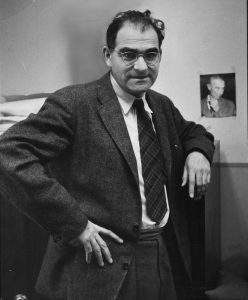
by Ashutosh Jogalekar Victor Weisskopf (Viki to his friends) emigrated to the United States in the 1930s as part of the windfall of Jewish European emigre physicists which the country inherited thanks to Adolf Hitler. In many ways Weisskopf’s story was typical of his generation’s: born to well-to-do parents in Vienna at the turn of…
On Nobel Prizes, diversity and tool-driven scientific revolutions
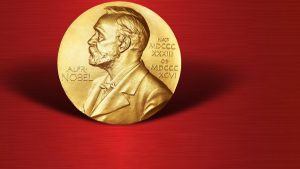
by Ashutosh Jogalekar The Nobel Prizes in science will be announced this week. For more than a century the prizes have recognized high achievement in physics, chemistry and medicine. Some scientists crave the prizes so much that they get obsessed with them. A prominent, world-famous chemist once had lunch with my graduate school advisor. After…
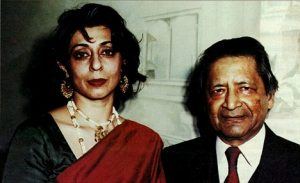
A meeting with V. S. Naipaul
AI and emergence: An essential meld?
by Ashutosh Jogalekar One of my favorite quotes about artificial intelligence is often attributed to pioneering computer scientists Hans Moravec and Marvin Minsky. To paraphrase: “The most important thing we have learned from three decades of AI research is that the hard things are easy and the easy things are hard”. In other words, we…
The wisdom of John Wheeler and Oliver Sacks
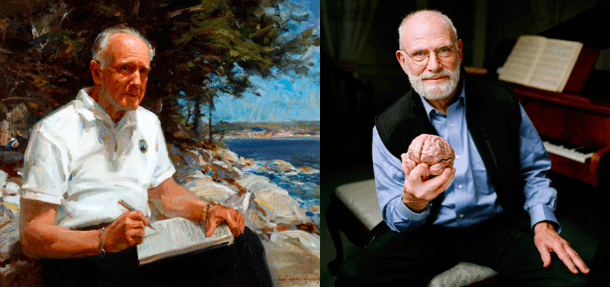
by Ashutosh Jogalekar A rare and happy coincidence today: The birthdays of both John Archibald Wheeler and Oliver Sacks. Wheeler was one of the most prominent physicists of the twentieth century. Sacks was one of the most prominent medical writers of his time. Both of them were great explorers, the first of the universe beyond…
Science and faith in a ceremonial cave
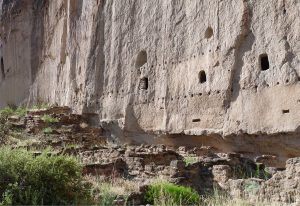
by Ashutosh Jogalekar The hour was late, but it was still hot. Frijoles Canyon loomed to my right, showcasing its surfeit of stratigraphic tuff and igneous ash layerings and ponderosa pines. I was about a hundred and fifty feet up on the mountain face in a reconstructed cave with a ceremonial kiva or well. The…
The birth of a new theory: Richard Feynman and his adversaries
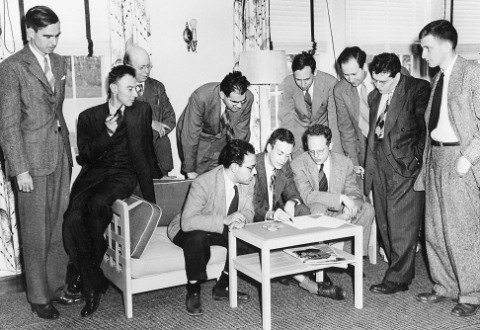
by Ashutosh Jogalekar A new theory seldom comes into the world like a fully formed, beautiful infant, ready to be coddled and embraced by its parents, grandparents and relatives. Rather, most new theories make their mark kicking and screaming while their fathers and grandfathers try to disown, ignore or sometimes even hurt them before accepting…
Secrets of the Old One
by Ashutosh Jogalekar In 1968, James Watson published “The Double Helix”, a personal account of the history of the race to discover the structure of DNA. The book was controversial and bracingly honest, a glimpse into the working style and personalities of great scientists like Francis Crick, Lawrence Bragg, Rosalind Franklin and Linus Pauling, warts…
Dreams of a technocrat
by Ashutosh Jogalekar Technocrats have had a mixed record in guiding major policies of the United States government. Perhaps the most famous technocrat of the postwar years was Robert McNamara, the longest serving secretary of defense who worked for both John Kennedy and Lyndon Johnson. Before joining Kennedy’s cabinet McNamara was the president of Ford…
Bridging the gaps: Einstein on education
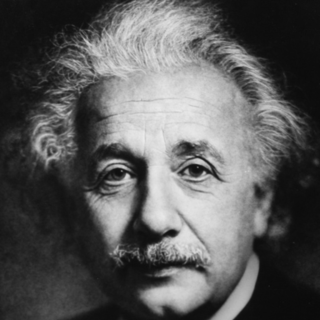
by Ashutosh Jogalekar The crossing of disciplinary boundaries in science has brought with it a peculiar and ironic contradiction. On one hand, fields like computational biology, medical informatics and nuclear astrophysics have encouraged cross-pollination between disciplines and required the biologist to learn programming, the computer scientist to learn biology and the doctor to know statistics.…
The road to scientific character: The proof is in the product
by Ashutosh Jogalekar A few years ago, historian of science Steven Shapin had a review of Steven Gimbel's capsule biography of Einstein. The biography itself is quite readable, but Shapin also holds forth with some of his more general thoughts on the art of scientific biography and the treatment of famous scientific figures. He mulls…
Big Data is shackling mankind’s sense of creative wonder
by Ashutosh Jogalekar Primitive science began when mankind looked upward at the sky and downward at the earth and asked why. Modern science began when Galileo and Kepler and Newton answered these questions using the language of mathematics and started codifying them into general scientific laws. Since then scientific discovery has been constantly driven by…
The Odyssey of J. Robert Oppenheimer
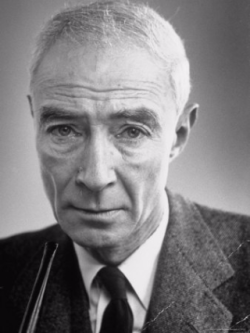
by Ashutosh Jogalekar The day you were born, the world died. Died in glitter and grist, in skeletons and slogans. Scenic Riverside Drive which bequeathed you to us. Sparkling New York lent us its sordid dreams To trample underfoot, like so many lost souls. You were born of a merchant; Of loathsome success, Of a…
Heisenberg on Helgoland
by Ashutosh Jogalekar The sun was setting on a cloudless sky, the gulls screeching in the distance. The air was bracing and clear. Land rose from the blue ocean, a vague apparition on the horizon. He breathed the elixir of pure evening air in and heaved a sigh of relief. This would help the godforsaken…
Black Holes and the Curse of Beauty: When Revolutionary Physicists Turn Conservative
by Ashutosh Jogalekar On September 1, 1939, the leading journal of physics in the United States, Physical Review, carried two remarkable papers. One was by a young professor of physics at Princeton University named John Wheeler and his mentor Niels Bohr. The other was by a young postdoctoral fellow at the University of California, Berkeley,…
If you believe Western Civilization is oppressive, you will ensure it is oppressive
by Ashutosh Jogalekar Philosopher John Locke's spirited defense of the natural rights of man should apply to all men and women, not just one's favorite factions. When the British left India in 1947, they left a complicated legacy behind. On one hand, Indians had suffered tremendously under oppressive British rule for more than 250 years.…
The primacy of doubt in an age of illusory certainty
by Ashutosh Jogalekar We live in a fractured age when many seem to be convinced that their beliefs are right, and that they can never agree with the other side on anything to any degree. Science has always been the best antidote against this bias, because while political truths are highly subjective and subject to…
Why technology won’t save biology
by Ashutosh Jogalekar Carl Woese’s integrated view of biology should help temper the application of technology to biological understanding There seems to be no end to biology’s explosive progress. Genomes can now be read, edited and rewritten with unprecedented scope, individual neurons can now be studied in both space and time, the dynamics of the…