
by Martin Butler
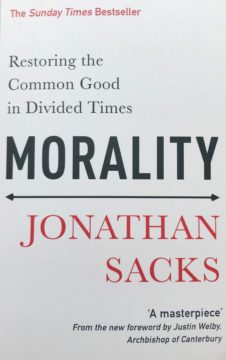
Bemoaning the ills of individualism is nothing new. Jonathan Sack’s bestseller, “Morality, Restoring the Common Good in Divided Times”(2020) provides us with one of the more comprehensive accounts of how we lost community and why we need it back. Justin Welby sums it up well in the foreword: “His message is simple enough: ours is an age in which there is too much ‘I’ and not enough ‘We’. Sacks himself puts the point succinctly when he says: “The revolutionary shift from “We” to “I” means that everything that once consecrated the moral bonds binding us to one another – faith, creed, culture, custom and convention – no longer does … leaving us vulnerable and alone.”
The book is divided into five parts, the first four giving a detailed account of how the shift from ‘We’ to ‘I’ took place and the fifth, entitled ’The Way Forward’, providing some suggestions as to how we might return to a more ‘We’-based society. The breadth and depth of knowledge Sacks displays is impressive, and he draws on a vast range of philosophers and numerous psychological and sociological studies to make his case, which is both detailed yet accessible to the general reader. Sacks divides society into three domains, the state, the economy and the moral system, and it is in this third domain that he claims an ‘unprecedented experiment’ has taken place in the western world, the long-term consequences of which – the divisive politics of recent years, populism, the epidemic of anxiety and depression, increasing inequality, “the assault on free speech taking place on university campuses in Britain and America” and more – we are now living with. He identifies three phases. Read more »


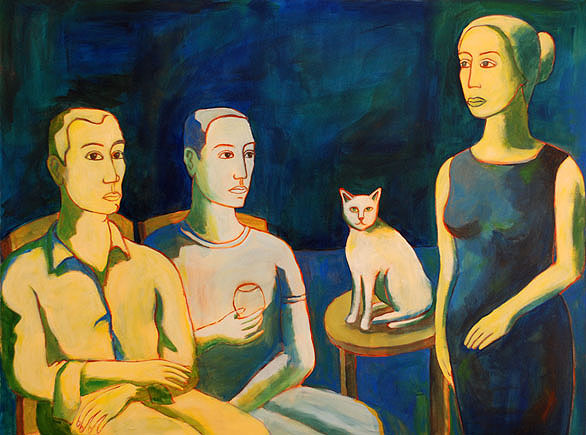 Moeen Faruqi. Chamber Dialogue, 2016.
 The state of Israel is on the brink of deliquescence. A corrupt multi-indicted prime minister has handed the reins of government to extremist (read: blood-thirsty) right-wing (read: populist imperialist) religious (read: obscurantist) coalition parties whose alliance is based on a net refusal to heed the Israeli Supreme Court and a pact to instil a theocratic regime where there has been, since the state’s creation in 1948, a democracy. Both these goals are to be achieved by changing the law, giving parliament (the Israeli knesset) the right to dictate the terms of justice to the courts of justice. It is a situation the philosopher Plato had staged at the start of his Republic, back in the 4th century BC.
 School Boards across the country have become radicalized, energized, weaponized. They have become the new political battleground where extremist right-wing ideologues test the political waters. The plan is to infiltrate the schools, use them as the megaphone to broadcast the GOP’s agenda, with lots of soapboxing and grandstanding thrown in.
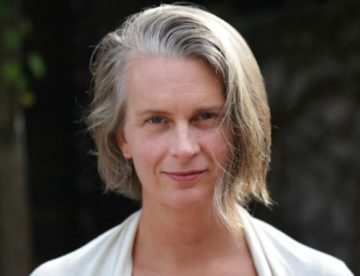
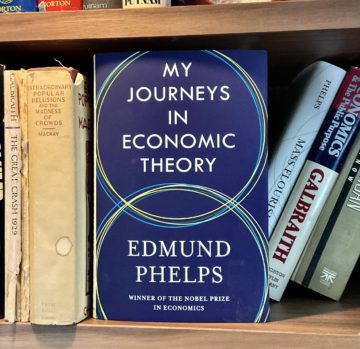 On page 184 of Edmund Phelps’ new book, My Journeys In Economic Theory, he tells the story of a lunch party with friends, at which, presumably after the plates were cleared (but not the glasses), the then 80-something-year-old 2006 Nobel Prize winner in Economics belted out “Garden Grow.”
 Last month I saw the Whitney exhibit “no existe un mundo poshuracán: Puerto Rican Art in the Wake of Hurricane Maria.” As you might remember, Maria was a Category 4 storm that hit Puerto Rico September 20, 2017. According to Harvard University’s T.H. Chan School of Public Health, 4,645 Puerto Ricans died as a result of the storm, but according to the Puerto Rican government, only 64 died. The Whitney’s museum label stated that the smaller number “not only insulted the populace with its miscalculation but also undercounted at-risk sectors that experienced increased deaths from accidents, cardiac conditions, diabetes, suicide, and even leptospirosis—a usually rare, potentially deadly, yet preventable bacterial infection spread by rats that grew prevalent in the months following the storm due to contaminated water.” A year after the hurricane, an impromptu installation of over 3,000 pairs of shoes was placed in front of Puerto Rican government buildings to memorialize the actual number of dead..
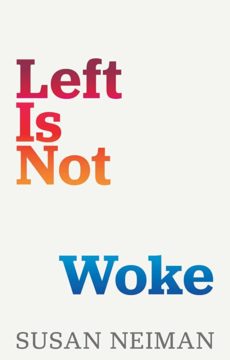 At the core of Susan Neiman’s new book Left is not Woke, which is an attempt to sever what she sees as reactionary intellectual tendencies from admirable progressive goals, is the idea that for progressive values to be sustainable, their roots in the philosophy of the European Enlightenment need to be recognized and nourished. “If we continue to misconstrue the Enlightenment”, she says, “we can hardly appeal to its resources.”
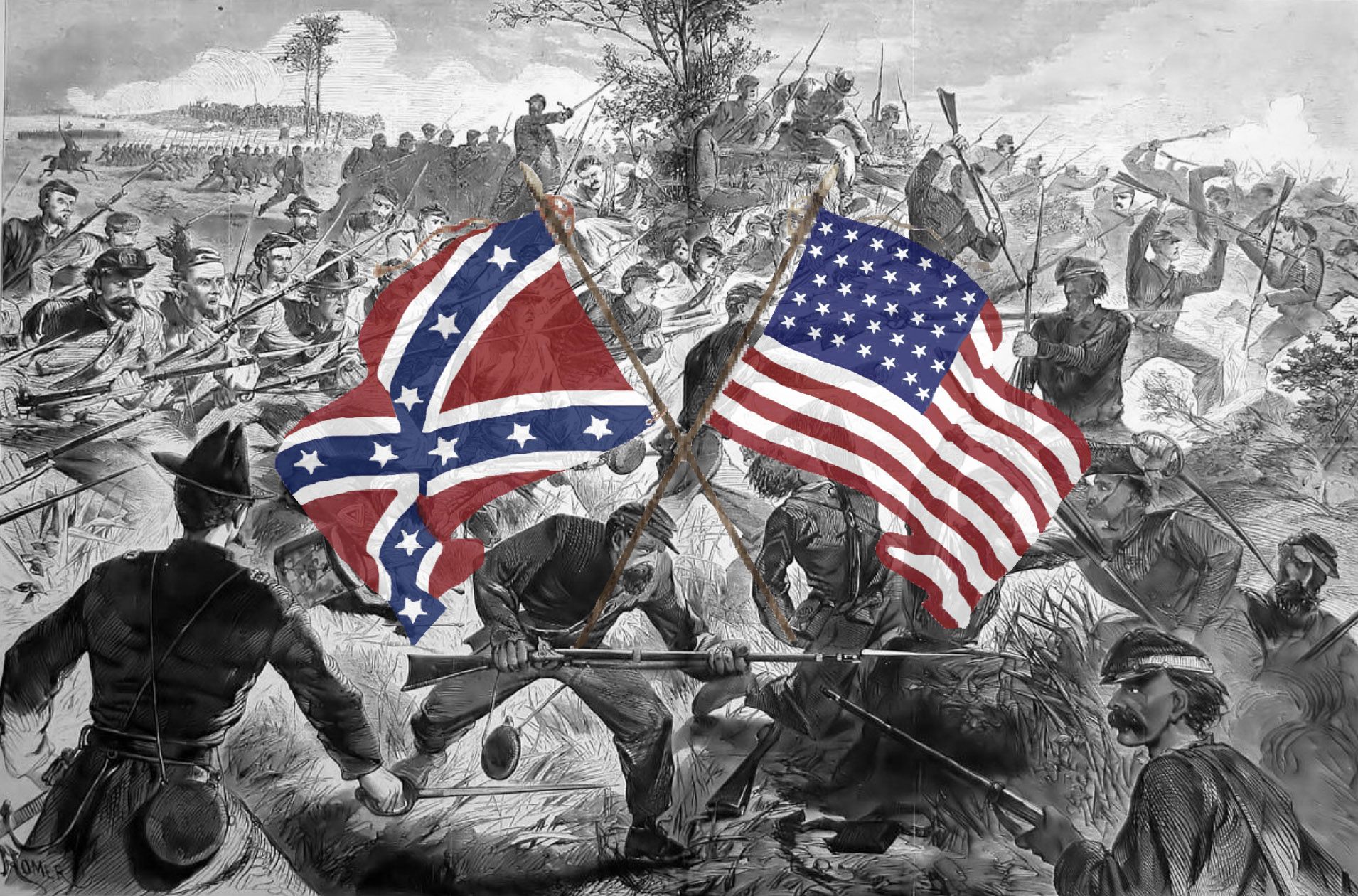 I first heard “The Blundering Generation” in the 1990s when I was taking a course on Civil War history. As my professor explained, the early 20th century saw a new cohort of historians who no longer personally remembered the war and debated anew the nature of its origins. They were trying to move past the earlier, caustic interpretations of Northerners and Southerners who openly blamed each other, the former decrying the Southern “slaveocracy” and the latter bemoaning the “war of Northern aggression.” So instead, these thinkers at the vanguard of historical study decided to blame everyone. Or no one.
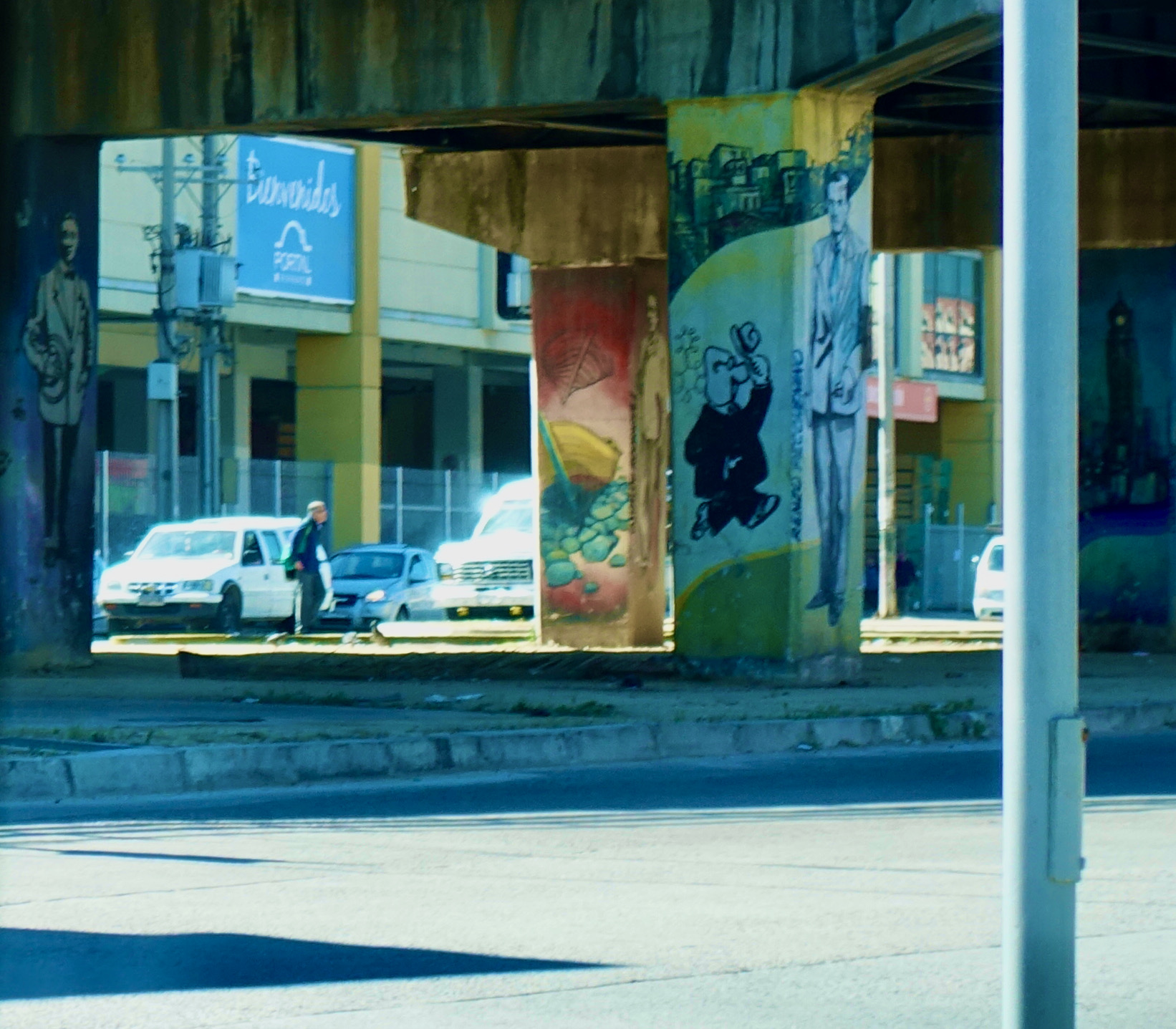 Sughra Raza. Santiago Street Color, Chile, November 2017.
 Spanning just shy of a thousand years, al-Andalus or Muslim Spain (711-1492), has a riveting history. To picture the Andalus is to imagine a world that gratifies at once the intellect, the spirit and all the senses; it has drawn critical scholars, poets and musicians alike. Barring cycles of turbulence, it is remembered as an intellectual utopia, a time of unsurpassed plentitude and civilizational advancements, and most significantly, as “la Convivencia” or peaceful coexistence of the three Abrahamic faiths brought together as a milieu. Al-Andalus was a syncretic culture shaped by influences from three continents— Africa, Asia and Europe – under Muslim rule. This civilization came to be known as a golden age for setting standards across all human endeavors, a bridge between Eastern and Western learning, sciences and the fine arts, between the public and private, native and foreign, sacred and secular— a phenomenon hitherto unknown in antiquity. The decline and eventual collapse of al-Andalus is no less of a legend; it is a history of in-fighting and brutal intolerance perpetrated throughout the three centuries of the Spanish Inquisition (1478-1834) with ramifications to witness in our own times. The stark contrast between the Convivencia and the Inquisition makes al-Andalus a poignant story of reversals.
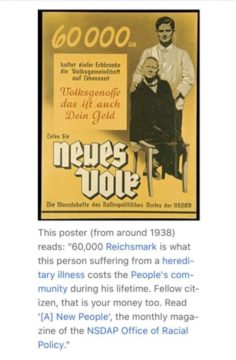 Some people are arguing that the removal of mask mandates in hospitals is a form of eugenics. Tamara Taggart, President of Down Syndrome BC, said on “