by Ethan Seavey
Exile is on my mind and there’s a large full moon above my head I cannot see through the clouds.
I am part of a family of three exiles who are doing it again, recovering after exile, and working hard to stay together. Our shared communities have dropped us for the third time and it feels like I finally recognize the pattern we’ve always fallen into :
1) Find a community that embraces us because it excludes others; and 2) get rejected when we grow to learn that we have become the others.
When I came out as gay in 2015 my family stopped going to Church, specifically the one where we had been attending weekly (with few exceptions) for somewhere around a decade.
It was a personal decision for each one of us. It was an effort to support me. It was also a social decision. While this Church was more progressive than others, it was still a Catholic Church. It seemed to me that priests were required to spend a Sunday sermon every year talking about how being gay is a sin; sometimes hiding it behind the idea that being gay was not a sin so long as you never acted on it.
Many people within that Church remained close friends. They’d ask why we’d stopped attending and I was the reason. It didn’t distance most of our friends, but I remember my younger sibling was forbidden from spending time with one of their friends outside of the friend’s home, because the friend’s mom saw me as a bad influence. Read more »
 Two popular books released this year have breathed new life into the ancient debate over whether we have free will.
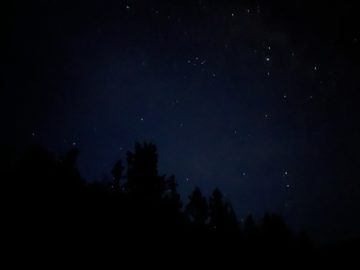 We all naturally take an interest in the night sky. Just last week, my fiancee and I attended an event put on by the Astronomical Society of New Haven. Without a cloud in the sky, near-freezing temperatures, and a new moon, the conditions were ideal for looking through telescopes the size of cannons. To see anything, you had to stand in line, in the cold, for your opportunity to look at something for a minute.
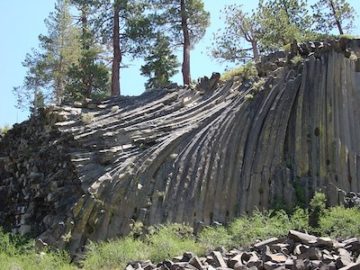
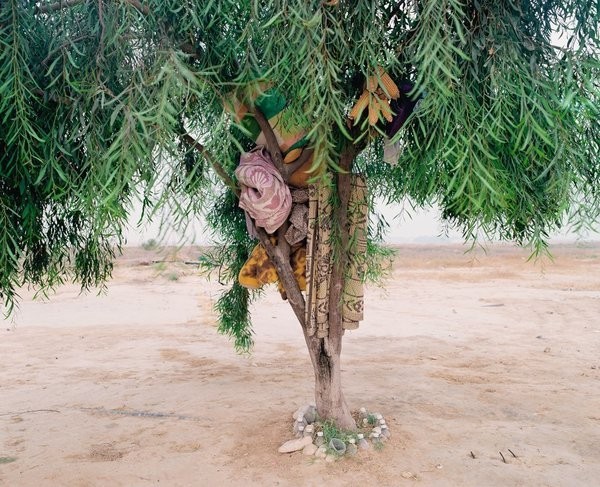 Ron Amir. Bisharah and Anwar’s Tree, 2015. From the exhibition titled Doing Time in Holot.
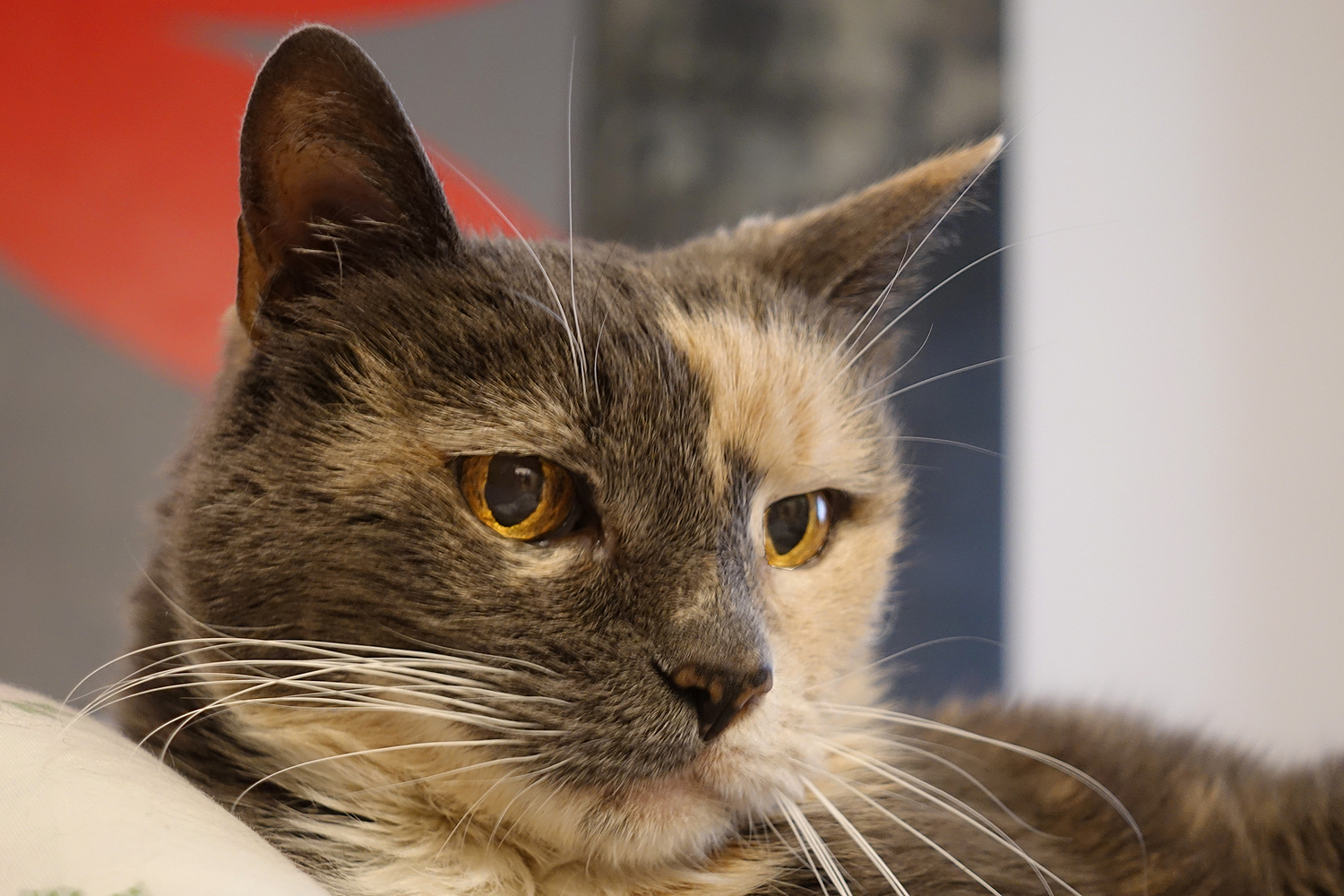
 You’ve always dreamed of foreign travel and you’re aware that there’s a long history of people doing it, and benefiting from it. But you live under a regime that closed the borders a couple of generations ago, at the same time criminalizing the act of researching potential destinations. (Many countries were dangerous, they said, and some tourists were coming home with tie-dyed shirts and peculiar ideas.) To protect the vulnerable, a War on Travel was announced. In the years since, you have grown up with little more than rumors of other cultures, climates, cuisines.
  Artificial intelligence – AI – is hot right now, and its hottest part may be fear of the risks it poses. Discussion of these risks has grown exponentially in recent months, much of it centered around the threat of existential risk, i.e., the risk that AI would, in the foreseeable future, supersede humanity, leading to the extinction or enslavement of humans. This apocalyptic, science fiction-like notion has had a committed constituency for a long time – epitomized in the work of researchers like


 The narrator of Alberto Moravia’s 1960 novel Boredom is constantly defining what it means to be bored. At one point, he says “Boredom is the lack of a relationship with external things” (16). He gives an example of this by explaining how boredom led to him surviving the Italian Civil War at the end of World War II. When he is called to return to his army position after the Armistice of Cassibile, he does not report to duty, as he is bored: “It was boredom, and boredom alone—that is, the impossibility of establishing contact of any kind between myself and the proclamation, between myself and my uniform, between myself and the Fascists…which saved me” (16).
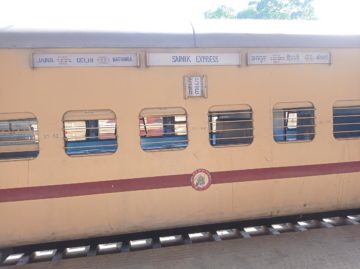 The only light in the second-class train compartment came from the moonlight, which filtered through the rusty iron grill of the window. The sun had set hours earlier, a fiery red ball swallowed whole by the famished Rajasthani countryside. I sat at the window on the bottom berth of my compartment of the Sainak Express, headed from Jaipur to Delhi.