by Lisa Lieberman
In the memoir he was writing at the time he died, my friend Avresh described returning to the Czechoslovakian town of Sevlush, his birthplace, in the winter of 1946. He'd left some fifteen years earlier to attend a Jewish gymnasium in a larger city, stayed on to study engineering at the university and never looked back. This was his mother's wish for him: that he enter the great, free, secular world, liberate himself from the narrowness of his tradition. Escape.
When the Germans occupied Czechoslovakia in 1939, Avresh joined the Communist resistance. Captured and tortured by the Gestapo but inexplicably released, he made his way to the Soviet Union, expecting to be welcomed with open arms, a comrade in the fight against Nazism. Instead he was arrested at the border and charged with espionage—the fate of most Jewish refugees from Eastern Europe. 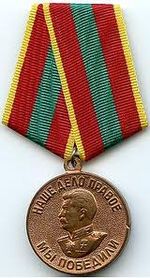
by the time he was discharged, he'd earned four medals for his service on the Eastern front. His favorite featured a picture of Stalin.
So it was as a decorated officer in a Russian army uniform that he returned to his town after the war. All the Jews were gone, rounded up and deported to Auschwitz. A Slovak family was living in his childhood home and not a trace of Avresh's own family remained. Looking for answers, he went to the neighborhood synagogue and peered in the door. The sanctuary, the balcony, the corridors and stairways were cluttered with belongings: furniture, pots and pans, bedding, books, knickknacks and photographs. A policeman stood watch over the household goods of the departed Jews of Sevlush. Town officials had collected the Jews' possessions and stored them in the synagogue to prevent looting. No Jews had returned to claim their things. Was there something he wanted from the collection, the policeman asked, some memento?
Avresh said he took nothing when he left Sevlush, but this is not strictly true. He carried no objects away from the synagogue, no material belongings, pointedly refusing the money the officials offered as “rent” on his family's house. What he took, along with the burden of guilt he carried—”I share the usual remorse of most Holocaust survivors lamenting why they are alive and why they did not try harder to save their perished family,” he wrote in his memoir—what he took, I would say, was a sense of spiritual belonging, the token that remained of his Jewish inheritance.