by Dwight Furrow
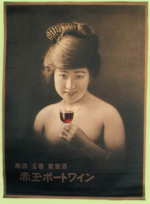
Valentine's Day is fast approaching; it's time to think about which wine will precisely calibrate the proper mood. But why wine? Why not a nice craft beer or a glass of orange juice? Why is wine the beverage that signals romance?
I would imagine wine and romance have been linked since our ancestors first discovered the benefits of moderate inebriation. The loss of inhibition and gain in confidence make wine a natural ally in games of seduction. But the relaxing of inhibitions is not the only benefit that wine confers on the amorous. Romance requires illusion. We fall in love with an idealized version of the beloved, believing he/she has all the virtues we admire and none of the negative traits we shun. Evolution has designed us to drop the skepticism when presented with the promise of procreation.
The Roman poet Ovid, in his 17 A.D. work “The Art of Love” says of wine that, “It warms the blood, adds luster to the eyes, and wine and love have ever been allies”. Given the paltry proportion of “beautiful people” to ordinary shlubs, adding “luster to the eyes” may be the most significant contribution wine has made to human existence. But, in fact, scientists have demonstrated this effect with beer as well—it has come to be known as “beer goggles”. Inebriation cannot explain the connection between wine and romance since any alcohol would suffice—yet, a can of “bud” just doesn't have the same meaning as a bottle of Dom Perignon. There must be something else about wine that connects it to romance.
Is there something inherently and uniquely amorous about fermented grape juice? In fact the history of wine as an aphrodisiac is as lengthy as that of food. It gets a less-than-enthusiastic mention in the Talmud and a much more enthusiastic discussion in the Roman historian Pliny's 1st Century Natural History, where he recommends wine be mixed with the muzzle and feet of a lizard or the right testicle of a donkey to cure a reluctant libido. Are you feeling the romance yet?