by Tom Jacobs
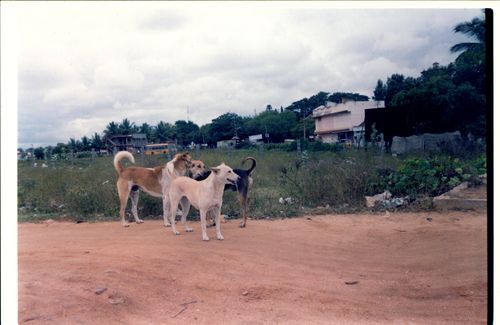
We may be in the Universe as dogs and cats are in our libraries, seeing the books and hearing the conversation, but having no inkling of the meaning of it all.
—William James (1908)

This question has haunted my mind in some way or other for many years, and although the writer was interested in a vaguely conservative way about whether we should be reading dangerous thinkers of resistance and rebellion like Foucault or the Marquis de Sade (or, less topically, whether Prometheus should have stolen that fire, or Adam and Eve have eaten that apple), I found that his opening line got me interested not so much in what we maybe would be better off not knowing, like how to build an atomic bomb, but rather in considering how it comes to pass that we come to know the sorts of things and animals and ideas that exist at the very edges of conceptual understanding. This would be the space between the “known unknowns” and the “unknown unknowns.”
Clearly there are things that we don't understand just because we don't have a vocabulary or language to understand them. The universe itself might be one of them. As Richard Rorty so compellingly claimed, sounding not unlike Fox Mulder: “The world is out there, but descriptions of it are not.” This is not a simple idea at all, and while I don't want to suggest that we don't know what we are talking about just because we have to use language (or music or art or whatever) to describe the world in some meaningful way, what I'm interested in is how we regard those things that make us aware, even if only in the most inchoate of ways, that our representations of things are fundamentally inadequate and maybe even misleading.
I am utterly fascinated by the notion that there are some things that can't be seen because we don't have the language or means or the technology to render them visible and coherent. One of Thomas Kuhn's most compelling claims in “The Historical Structure of Scientific Discovery” has to do with what he calls the “violation of expectation”—the moment when an anomaly asserts itself and is perceived in however muddled a manner. Kuhn's discussion of this moment of violation reverberates in all kinds of ways, and although he is interested in how we understand what it means to “discover” something, it makes me wonder about how many things in this world escape our attention because we are in some sense looking at things wrongly.