by Akim Reinhardt
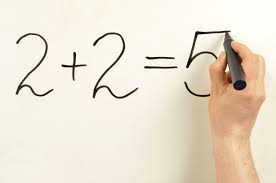
Hello. My name is Akim Reinhardt, I was very, very wrong, and now it's time for me to pay for my mistakes.
The good news is, when I pay, you just might be the one to collect. My loss can be your windfall.
The catch? You'll have to publicly debase yourself almost as much I am about to do right now.
Sigh.
How did it come to this? You and I publicly shaming ourselves on the internet, each of us desperately hoping to salvage a little bit of joy as the world burns around us?
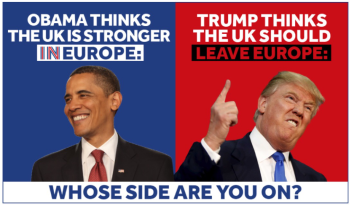
It's all because of that goddamned Donald Trump.
Trump is about to claim the Republican presidential nomination, and a whole lotta pundits got that one wrong. Legions of professional gabbers, from every corner of the political spectrum, badly missed the mark, assuring you that he'd never be the GOP candidate.
Despite their wishful thinking dressed up in high falutin' gibberish, it's happening anyway; Trump is poised to become leader of the pachyderm pack. And so a lot of the yakkers had to make amends.
Dana Milbank of the Washington Post literally ate his words. Pass the salt and pepper.
Nate Cohn of the New York Times and David Byler of Real Clear Politics each created a laundry list of everything they got wrong, which like most analysts, was quite a lot.
Perhaps the oddest mea culpa came from polling wunderkind Nate Silver, who explained away his spectacular failure by saying that he had acted like a barbaric “pundit” instead of staying true to the “scientific method.” Rather than relying on statistical modeling to figure out if Trump would win, Silver says he just made “educated guesses.”
Since Silver never really explains why he traded in true reason for such wild tomfoolery, I'm just gonna assume he went on a months-long bender.
Normally, it would be very easy for me to look down my nose at these losers. After all, I'm not a statistician or a professional talking head. I'm a historian. And if there's one thing studying history has taught me, it's that trying to predict the future is pure folly.
What were these dullards thinking? Guess the future? Good luck with those crystal ball shennanigans. Studying history has shown me, time and time again, that the future is unknowable. The past is a mystery and the future is an illusion. So allow me to haughtily point a sanctimonious finger at these morons.
Except for one thing. It turns out that I'm one of those morons. I, too, am a loser.
I spouted off like all the others, publicly assuring people that Trump would not win the nomination, offering up historically informed ramblings as evidence. And just like the rest of them, I was wrong, wrong, wrong.
It was a fool's errand, of course. So why did I do it?
Read more »