by Dave Maier
As someone who lived through the surreal drug-war dystopia of the 1980s, I have always assumed that the collected forces behind it (right-wing authoritarianism, progressive nanny-statism, the law enforcement, private-prison, and Big Pharma lobbies, general aversion to other races and/or dirty f’ing hippies, inertia and lack of imagination, etc.) would render it a permanent fixture of our political landscape, at least in the USA. So even after two states re-legalized marijuana in 2012 (and two more since), I didn’t pay much attention. It simply remained inconceivable to me that it would go beyond that.
Nowadays, however, one hears frequently that re-legalization of marijuana and perhaps even all “illicit” drugs is inevitable and in fact will happen sooner rather than later. The thought is that young people (i.e. new voters) are strongly in favor of re-legalization and only older people (i.e. those preparing to shuffle off this mortal coil and thus off the voting rolls) are strongly against – and even the latter are discovering, perhaps to their surprise, the apparently wondrous utility (if anecdote be any guide) of medical cannabis. The latest nationwide polls on the issue show Americans favoring the end of marijuana prohibition by wide margins (58-39, 56-36, numbers like that), suggesting a cultural shift as momentous and sudden (at least to those not paying attention, such as myself) as that which has led to today’s widespread acceptance of same-sex marriage.
So I thought I better get up to speed and hit the books. I don’t have a tightly argued, persuasive essay for you, and I am still only halfway through a fairly tall stack of relevant literature, but I can at least pass on some recommendations and share some speculation over the next couple of columns.
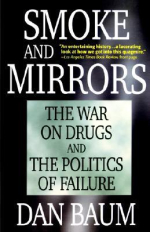
A recurrent theme in Baum’s story, as he notes in his introduction, is that “[t]he War on Drugs is about a lot of things, but only rarely is it really about drugs.” Notoriously high on President Nixon’s paranoid list of enemies were “the blacks” and “the hippies”, and by fomenting drug war he saw a way to attack both at once. When his hand-picked Presidential Commission on Marijuana (a.k.a. the Shafer Commission) failed to provide the desired denunciations of drug use (Nixon had demanded “a goddamn strong statement about marijuana … one that just tears the ass out of them”), Nixon simply ignored it. In any case Congress had already passed the 1970 Controlled Substances Act, which still determines government policy in this area to this day. The drug war – or at least its modern phase – had begun.