by Libby Bishop
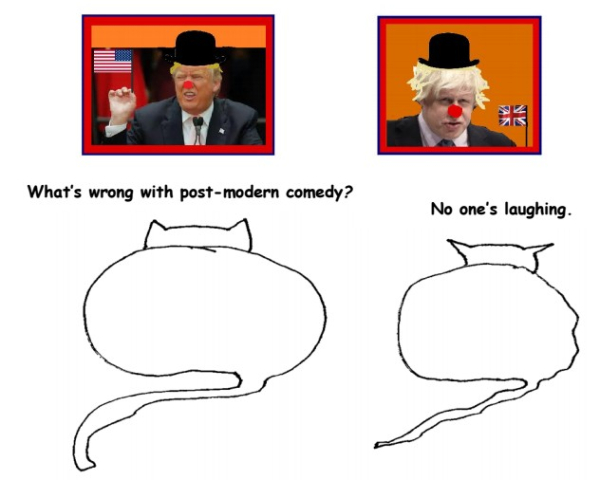
 Happy Fourth of July. This is the United States holiday that celebrates the American colonies throwing off the shackles of undemocratic rule by a controlling European power and purports to honour freedom. I am an American, living in the now-less-United Kingdom, where, on the 23rd of June, 37% of the electorate voted to free itself from the European Union, or so it believes. It is impossible to say that the result was about a single issue, be it immigration, xenophobia, European Union bureaucracy, or anti-elitism. But there is no doubt that the Leave campaign promised freedom. The campaign fanned fears that Britain was being controlled by Brussels, and voting Leave would free Great Britain to be Great again. Nigel Farage, one of the leaders of the Leave movement, even called the 23rd of June Britain's Independence Day. In the referendum, the issues were framed in simplistic and binary terms: in or out, controlled or free.
This idea of sovereign freedom is a potent elixir. Its synonyms connote positive associations such as liberty and emancipation, whereas most words that describe limitations on freedom are negative: restriction, dependence, weakness, subjection, suppression, slavery, and as in the referendum, controlled. I have come to question this bipolar perspective of free versus controlled. Indeed, rather than being opposites, I claim that freedom and control co-exist, indeed, that authentic freedom can exist only in finely honed tension with control.
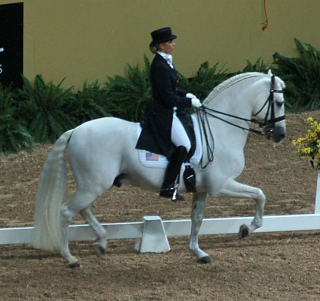
In my experience, freedom with control occurs across widely diverse disciplines and practices: horseback riding, music and political economy. I have ridden horses for over fifty years, starting as a horse-crazy girl, riding in jumping competitions in my teens, and as an adult, practicing dressage. Dressage, the French word for “training”, is a method of training a horse in obedience and precision of movement. It is about evoking a particular way of moving—forward, energetic, but always balanced, calm, and responsive. Yet as is so often the case, translation cannot convey the full meaning of the original word. Training implies basic fitness and obedience to commands, but dressage is concerned with training to higher levels of ability, akin to training a dog to be a guide for a blind person. Henry Wynmalen says, “…dressage is the art of improving one's horse beyond the stage of plain usefulness” (p. 4).*
Read more »