by Holly A. Case
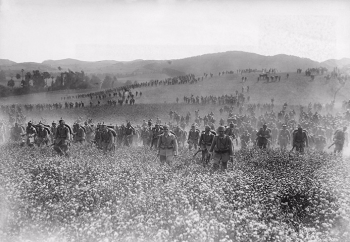
It was from Isabel Hull that I learned what tu quoque means, and how important it is to know. Hull is a professor of German history at Cornell, where I have also taught. Once I invited her to a class to talk about the British blockade of Germany during the First World War. She explained how the Germans had made war by invading neutral Belgium in 1914, knowing full well they were breaking international law. The title of her latest book, A Scrap of Paper (2014), alludes to the phrase that the German chancellor used to describe the international agreement governing Belgium's neutrality: it meant that little to him.
Hull described to my class the blockade's origins, what the Germans had thought and done, what the British were thinking, how they reached the decision to initiate the blockade, and what its likely impact was. But one concept stood out and remained a topic for discussion for the rest of the semester, even finding its way onto the final exam: it was the Latin phrase tu quoque. A literal translation of the phrase is “you also.” Tu quoque is a rhetorical strategy whereby, instead of arguing directly against the claim of your opponent, you challenge their right to make an argument by charging them with hypocrisy. For example: the British government asserts that Germany violated international law by invading neutral Belgium and persecuting its inhabitants. The German government retorts that the British government itself is in breach of international law for having subsequently initiated a naval blockade against Germany, cutting off not only its supply of raw materials, but also (potentially) food to civilians.
The tu quoque is as old as the hills. Cicero used it to win a case in the trial of the exile Ligarius: “You are accusing one who has a case, as I say, better than your own.” The Nazis were especially adept at deploying it. In 1942, the Nazi propaganda minister Joseph Goebbels confided to his diary: “The question of Jewish persecution in Europe is being given top news priority by the English and the Americans…We won't even discuss this theme publicly, but instead I gave orders to start an atrocity campaign against the English on their treatment of Colonials.” There have been countless examples of tu quoque since. The Soviets countered American claims of human rights abuses with the phrase “And you are lynching negroes,” which has its own entry on Wikipedia. Some Turkish scholars have used tu quoque to argue against claims that the Ottoman Empire instigated a genocide against the Armenians in 1915: “No nation is innocent. [T]hough the West has always accused the rest of the world of not being civilized enough, no other nations can be compared with the Germans, French, or Americans if we are talking about racism, fascism, and genocide.”
In logic, the tu quoque is considered a fallacy, because it does not actually controvert the original statement. If anything, it confirms the moral valence of wrongdoing, declaring: Yes, I have done wrong, but so have you.