by Thomas R. Wells
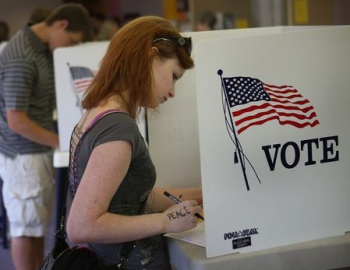
One defense of vote counting is just that it works. Politics is about managing conflicts of interest and ideological disagreements in a way that is seen to be legitimate. Because everyone (except Trump of course) accepts the rules of the electoral game in advance as a way of deciding the fundamental political question ‘Who's in charge here?', we have a moral responsibility to accept the results however much we dislike them. And a liberal democracy ensures the right of the minority to keep their own opinions and try again in a few years (again, something Trump's ‘lock her up' promises seem to undermine – but that's enough about him now). In this way, electoral democracy allows us to disagree about particular issues while retaining our overall commitment to a political regime, the rules of the game. Unlike say China, we can be against our government without being against our country.
Still, if it isn't the decision process but its acceptance that matters, rock, paper, scissors could work just as well.
Two other arguments are advanced for the peculiar institution of adding up votes. First, that it is instrumentally effective because of the wisdom of crowds, and second that universal suffrage is intrinsically valuable – a matter of respecting the equal dignity of all citizens. These contradict each other and our present institutions. Depending which we value most, we should either introduce a ‘driving-test' to screen out incompetent voters or we should convert the act of voting from a liberty right to a duty.