by Michael Liss
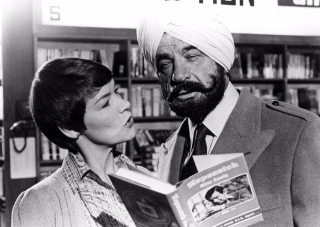 We all have our "desert island" videos. Send me with a couple of John Ford Westerns, perhaps Fort Apache and My Darling Clementine. Download to my notebook the first Godfather and the first Star Wars, and add something serious like The Sorrow and the Pity, Z, or the original Tinker Tailor Soldier Spy. Make me laugh with The Philadelphia Story or Young Frankenstein or The Producers. Do that, and I can play quietly by myself for a while without disturbing the adults.
Yet, I belong to a secret order, The Society of Hopscotch Fanatics, and would insist on having that movie in my go bag. It's got everything: The CIA, FBI, MI-6, the Russians. Chases in trucks, cars, and airplanes. Gadgets. Appealing women with foreign accents. Exotic disguises. Even some gun-play. And music—fantastic music. It's the kind of film you could watch 20 times (or more, but who's counting?) and you would still be finding things to make you smile.
The storyline is fairly simple. A CIA field agent (Miles Kendig), who, admittedly, is a bit of an antique, is pushed into a desk job by his boss, the quintessentially boorish (and short) Meyerson. Kendig doesn't want to be benched. He shreds his file (literally, as there are apparently no electronic copies in the late 1970's) and walks out. He decides to write a book, Hopscotch, documenting some of the Agency's less glorious moments (and featuring Meyerson) and begins sending juicy chapters to interested, and sometimes horrified, readers. Kendig goes off in search of a publisher and to reunite with Isobel, his old girlfriend. Meyerson goes off (with murderous intent) in search of Kendig, dragging Kendig's protégé, Joe Cutter, and a couple of hapless CIA guys, along for the ride. We have stops in Savannah, London, Bermuda and Salzburg, plus various border-crossings and other points East and West, and do some serious damage to reputations, houses, and ears.
The cast is terrific. Walter Matthau is Kendig, and while he may seem anything but the suave international spy, he's far smarter than anyone chasing him. Beneath that Oscar Madison exterior is someone quite creative with electronic and mechanical equipment, firecrackers, and paperclips.
Glenda Jackson plays Isobel, now retired from the Agency to "marry some old Nazi" who has since departed this mortal coil, leaving her with a very useful "Von" in her last name, an Austrian passport, and sufficient means to join forces with Kendig. This is the second movie the pair co-starred in, and the very offbeat, very adult chemistry they share is not unlike a good glass of wine…complex, but cuts grease. One could say it takes a great actress to make a sex symbol out of Matthau, but she likes the guy, for all his exasperating behavior. If Glenda Jackson likes you, you must be OK.
Rounding out the featured spies, Ned Beatty is Meyerson. He's thoroughly execrable, but doesn't turn the character into a cartoon. Sam Waterston sets intellectual women's hearts aflutter as Cutter (even Eleanor Roosevelt would have liked him), and Herbert Lom is a sly Yaskov, the KGB agent (you will love his omnipresent Boris Badanov hat, trench coat and mustache).
The film has some extraordinary assets beyond its leads.
Read more »