by Misha Lepetic
"It is not humiliating to be unhappy."
~ Camus
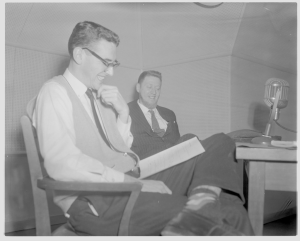
Any fan will remember exactly where they were when they first heard one of Joe Frank's broadcasts. For me, it was back in high school, in 1980s central New Jersey. One of my friends was Nadim, a burly Pakistani guy who lived in the tonier part of my neighborhood. Nadim always tramped around in big black combat boots and teased out his long hair with liberal amounts of hairspray to signal his devotion to The Cure. He also played guitar in a few bands, and was the first person to pass me a joint. His parents were wealthy enough that they gave him a red Trans Am for some birthday or other, and we would cruise down the farm lanes of central Jersey late at night, smoking, listening to Joy Division, The Smiths, Bauhaus, Hüsker Dü or Big Black, and remonstrating against life as only teenagers could.
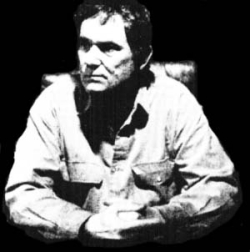
On one of these bone cruises I was fiddling with the radio when I came across a husky, grieving voice intoning over a short loop of a Jewish cantor singing. Frank's voice is unforgettable in its immediacy. He spoke so closely into the microphone that you could feel the humidity of his breath. Although he had many guests on his shows (both intentional and unintentional) his was the only voice that sounded as if it were coming from inside your head. On the occasion of discovering him, it's difficult to remember what he was talking about; his surrealist's take on life was obscured further by the fact that we'd just parachuted into the middle of one of his stories, and immediately, in the words of Conrad at the start of Heart Of Darkness, "we knew we were fated…to hear about one of Marlow's inconclusive experiences." But while Marlow's listeners were mildly irritated at being a captive audience, Nadim and I were hooked. We kept driving, and Joe Frank kept talking. It felt as if we'd made a pact with the radio.