Monday Poem

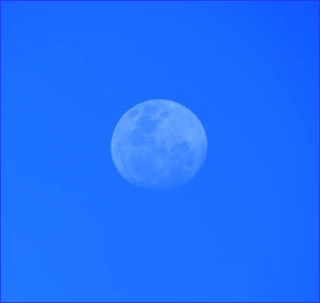
Pale moon

Astronomer

—for Owen
.
I unclip the latches of your seat
lift and pull you from the car
into full light, into the light of the thing
which dimples the gauze of space
and holds you in that cup
like a ball in a ring of roulette

in my arms you turn,
and from the cuff of your coat,
shoot your finger east at the pale face
of second-hand light hung in blue
and bay “Moon!”
the way I cry “Improbable!”

but you are two and I am
much closer to the gate of
utter space
.

Jim Culleny
3/2/18

Now’s Your Chance To Become Fully Film Literate: Check Out The Ingmar Bergman Retrospective Running In Many Cities During His 100th Birthday

by Evert Cilliers aka Adam Ash

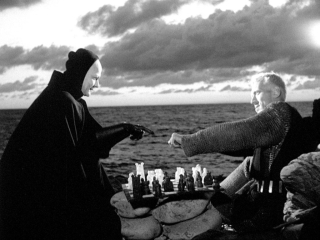
The-seventh-seal-chess-scene-1108x0-c-defaultI'm currently living in an Ingmar Bergman dreamland of cinematic ecstasy, because I'm watching 43 of his films in a retrospective at Manhattan's premier arthouse, Film Forum. Bergman would've been 100 this year, and this retrospective will be shown in some other cities in America and the world.

Bergman is one of my all-time heroes, along with Nelson Mandela, Bob Dylan, John Lennon, J.M. Coetzee, Matisse, Anselm Kiefer and not many others.

Here is my take on my all-time favorite film-maker (other just-below-Bergman favorites include Visconti, Dreyer, Billy Wilder, Orson Welles, Renoir, Tarkovsky, Ozu and Bela Tarr).

And if you live anywhere in or near Manhattan, go see Bergman's movies playing at Film Forum now (more about the nine not-to-be-missed ones later).

1. ALL-TIME GREATEST FILMMAKER

People say Bergman's films were bleak. What they should really be saying is that all other films are sentimental.

One might go further: Bergman was an artist; all other filmmakers are boulevardiers.

Let's not pull our punches here: in writing we have Shakespeare, in music we have Beethoven, in painting we have Picasso, and in film we have Bergman. Unlike any other filmmaker, he belongs in the pantheon of humankind's greatest artists.

I count myself lucky: Bergman made his films in my lifetime. I could live my life waiting for the next Bergman film, like I spent my teens and twenties waiting for the next Beatles album. I am happy to have been alive when these two giant entities were doing their work, experiencing the same good fortune of those lucky Londoners who went to see Shakespeare when he was doing his work, those Germans who heard Beethoven and Mozart at the time they were creating their music, and those Parisians who went to Picasso's shows while he was painting away in their hometown.

I have Woody Allen on my side: "There's no question in my mind that Bergman is the greatest of all filmmakers. No one else even comes close. His accomplishment is that immense. He is the only movie director to ever probe the human psyche on such a profound level. He's the first director to dramatize metaphysical issues. His body of work compares to Proust's cycle of novels or even the plays of Shakespeare."

Read more »

A look under the hood and behind the curtain through the insane musical genius that is Mnozil Brass

by Bill Benzon

I don’t know just when it was, but let’s say it was half a dozen years ago. I’m on an email list for trumpet players and someone had sent a message suggesting we check out the Mnozil Brass. Strange name, I thought, but I found some clips on YouTube and have been entranced ever since.

They’re a brass septet from Austria, six trumpets, six trombones, and a tuba. Their repertoire is all over the place and their genius is unmistakable. They are superb musicians, but also arch conceptualists, skilled comedic performers, and questionable dancers. They put on a hell-of-a-show. And I do mean “put-on”, as much of what they do is deeply serious in a way that only inspired buffoonery can be.

Here’s a performance that was posted to YouTube in April of 2012. It’s just shy of four minutes long and goes through distinct phases. It’s called “Moldavia”, presumably after the old principality in Eastern Europe.

Watch the clip. Tell me what you hear, but also what you see. Both are important. It’s their interaction that is characteristic of Mnozil.

What I hear, of course, is brass playing, a lyrical trombone, ferocious trumpets, a tuba holding down the bottom. And then there’s the singing toward the end. What are they doing while singing? They’re not standing still like choir boys. They’re moving and gesticulating madly. Dominance it looks like to me, (male) dominance. You may have heard that in the music, though perhaps not identifying it as such; but now you can see it. They’re showing you what’s driving the music.

But that’s not how it starts. It starts with a rubato trombone solo. There’s a shot of the tuba player slouched in his seat reading some magazine; it’s black with a large white Playboy bunny logo on it. The implication is that he’s looking at pictures of naked women.

And so it goes. There’s lots of business going on. I could, but won’t, comment on it endlessly.

Read more »

The Fiction of Pakistan in English

by Maniza Naqvi

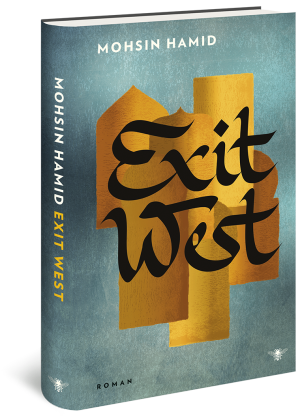
Ddi9789023466512The Hyderabad, Karachi and Lahore Literary Festivals have concluded successfully for this year. And a couple more are about to begin in Gwadar, Islamabad and Faisalabad. These two to three day events full of sessions ranging from literature to songs and theater and stand up comedians and the memoirs of politicians and bureaucrats are a delicious and strong mixed brew of annual events leaving some contented and other not so much. In any event they are now in their third through ninth years of occurrence in Pakistan's all too short season of Spring.

The credit goes to the Karachi Literature Festival for getting this annual event started in Pakistan inspired by the Jaipur Literary Festival in India. In Pakistan all of these festivals include a few sessions for works of fiction, non fiction and poetry in Urdu, Punjabi, Sindhi, Baluchi and Pashto but predominantly the sessions are focused on English writing especially in Karachi, Lahore and Islamabad.

The number of novels written by authors of Pakistani origin who write in English are increasing at an increasing pace. So that from three in the 1960s there are at least twenty whose novels were published in 2017. If I were to hand out awards for best novels in this category it would go to Osama Siddique, for his superb, succinct yet vast book Snuffing Out the Moon, and to Sami Shah for Fire and Earth Boy. With these exceptional debut novels, the two writers have changed the texture and tone of Pakistani English fiction.

The irrefutable evidence that possession and being possessed is the current state of Pakistani English literature can be found in The Djinn Falls in Love, a captivating collection of short stories edited by Mahvesh Murad and Jared Shurin. Included in this collection are spellbinding and riveting stories by new writers of Pakistani origin such as Sami Shah and Usman T Malik. Transformative? Yes.

Most of the authors getting attention are those who emerged on the international scene and are on their third or fourth novel. Mohsin Hamid with Exit West and Kamila Shamsie with Home Fire, were longlisted for the Man Booker Prize in London in 2017. Hamid's The Reluctant Fundamentalist, too, was shortlisted for the Booker, in 2007.

Read more »

From the Khyber Pass to the Great Black Swamp: a conversation with Dr. Amjad Hussain

by Shadab Zeest Hashmi

Wahgah sketchOn particularly tough days of my first Ramadan in college, I had vivid dreams of Peshawar, my hometown. Eager to succeed as an international student, I would never have confessed to being homesick but for my Psychology course “Sleep and Dreaming” which required a dream journal. “It’s mid-day,” I noted in one of the entries,” I’m having piping hot, fried fish from that vendor next to Dr. Framji the dentist’s clinic in sheher (Peshawar city). I’m with my mother. The naan is fresh.”

For years, nostalgia emerged only in poems or in snippets of conversation with my brothers, but around the time I had lived away from Peshawar for longer than I had lived in Peshawar, I began to draw maps from memory: earliest home, school, airport, TV station, Abasin Arts Council, Qissa Khawani bazaar, chowk yaadgaar, Peshawar club… the maps were eccentric, juvenile, and completely inaccurate. The best map of my Peshawar, was handed to me in the neat hand of my father.

Pondering beyond the intimate and focusing on the larger, global significance of the ancient city of Peshawar, as I researched the Silk Road cultures for a manuscript, I found myself irked and emotionally exhausted by the material generated by Western authors; I did not recognize the city in their writings. I continued hitting dead-ends until I came across Dr. Amjad Hussain’s work. As a distinguished cardiovascular surgeon/researcher and long-time academic, Dr. Hussain is well-known in the international medical community, but he’s also recognized as a photographer, an expedition-leader, a builder of interfaith dialogue, a journalist and author; it was quite a stroke of luck for me to receive a beautiful, handmade map of Peshawar from him, to read his publications in Urdu and English, his running journal from a recent Silk Road expedition and especially, to meet this true polymath belonging to my beloved city in person.

Our conversations crisscrossed myriad topics, as expected. For this particular email interview, I decided to capture a part of the wide range of things Dr. Hussain’s work encompasses.

Read more »

24 Things You Should Know about Pocahontas

by Akim Reinhardt

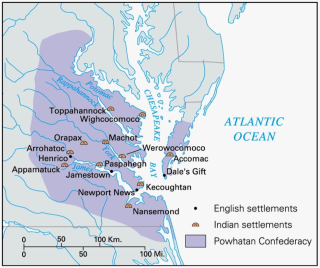
Powhatan Confederacy map ca. 1609Pocahontas was an informal childhood name, a nickname meaning "playful one" or "mischievous girl." Although "Pocahontas" is what the British colonists came to know her by, her formal name in public was Amonute. Her ritual name, known to her kin, was Matoaka.

Amonute spoke an Eastern Algonkian (sometimes spelled Algonquin) language. While some Eastern Algonkian languages are still spoken, such as the Abenakian dialect of Mi'kmaq and the Delawaran dialect of Munsee, Amonute's Powhattan dialect is extinct. However, modern English retains several loan words from her language, including: hickory, hominy, moccasin, muskrat, opossum, persimmon, raccoon, terrapin, and tomahawk.

Amonute was not a "princess." This is a designation of European royalty, not Algonkian hereditary politics. But even if we use the word more colloquially, she still would not qualify, despite being the daughter of "royalty." Her father, Wahunsenacawh, was the werowance (leader/ruler) of a large Native confederacy in the southern Chesapeake Bay region. He is more commonly known by his throne name, Powhatan, which was also the collective name of his confederacy's people. However, the Powhatan people had a matrilineal society, and Amonute's mother was a commoner; thus, her daughter did not inherit any aristocratic lineage from Powhatan.

Amonute was about 9 years old when she first met John Smith, maybe a year or two older.

The story of her saving John Smith from a beheading by her father is a myth, nothing more than a colonial creation story. In later years, Smith published sensationalized accounts of his globe trotting exploits, and a literary theme he repeatedly invoked was stories of exotic and infatuated young women rescuing him from certain doom; it helped sell books. Smith's tale of Pocahontas saving him from execution does not appear in his initial reports, but only in his later, fantastic travelogues. The story also does not align with any known Powhatan diplomatic rituals. Furthermore, the idea that her father, the ruler of some 20,000 people over an area larger than the modern state of Delaware, would set vital foreign policy based on the impetuous whims of a nine year old is, at the very best, utterly laughable. Smith was indeed a captive whom Powhatan eventually adopted diplomatically as a "son" (akin to a vassal). But however Powhatan's diplomatic adoption of Smith unfolded, the young girl either played a minor, prescribed role, or more likely, was not even present. She was probably outside her father's great hall, tending to chores or playing with other children.

Read more »

Dreaming of Al-Andalus

by Leanne Ogasawara

4_el_partal_y_albaicinI've been dreaming of al-Andalus my entire life.

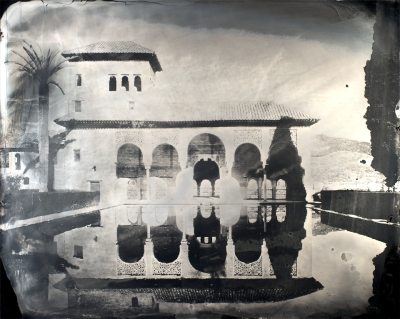
I'm not even sure where I first heard the name–and indeed, the name is like a one-word poem. A magical incantation; for it is enough just to say it–or better, to whisper it. Al-Andalus. I might have learned about the glories of Muslim-ruled Spain in a story by Borges I read as a teenager. It was about the philosopher Averroes. Have you read it? As far as I am concerned, it is the best story ever written. Born in Córdoba during the heyday of the Caliphate, Averroes (aka, Ibn Rushd) represented the golden age of Islamic Spain. This being a subject near to Borges' heart, he once said in an interview that he thought it fortunate his blindness came only after seeing the Alhambra–not before. Not surprising, this palace which moved him so deeply appears in several of his works; as al-Andalus itself became part of his vast fictional landscape.

So, back to Borges' story. Averroes, also known as the smartest man in the world, is utterly absorbed in the task of understanding Aristotle; indeed, so daunting is this challenge that it occupies him day and night for many years. Working one day on a particularly tough problem, he realizes to his great annoyance that his work will be interrupted because he has dinner appointment that evening. A famous traveler it seems, who claims to have traveled all the way to the Kingdom of Sin, had arrived in Córdoba, and Averroes has been invited to dine with this traveler in the esteemed home of Mr. Farach, the city's great scholar of the Koran.

Poor Averroes. All he really wanted to do was continue working on Aristotle.

Working from a translation of a translation (since he could not read Syriac or Greek), Averroes' challenge was enormous. Hating to tear himself away, little did he know that the very question that had been troubling him in the work of Aristotle concerning the words comedy and tragedy, would become clear to him at last that very evening during dinner. However, before discussing the wonders of Cantonese theater, their conversation first turned to the rose garden in the palace. The Koranic scholar Farach asks the traveler about the roses of Hindustan; about which he notes that, "The learned Ibn Qutaiba describes an excellent variety of the perpetual rose, which is found in the gardens of Hindustan and whose petals, of a blood red, exhibit characters which read, 'There is no God but Allah, and Mohammed is his Prophet.'"

As a young teenager (I was probably 12 or 13 when I read the story), I was quite taken by the image à la Borges of scholars looking for the name of God in the rose petals. And I never forgot the story. Delightfully, many, many years later in Tokyo, a friend of a friend (who was also a great scholar at Tokyo University) told me over soba noodles and beer all about the time he fell in love with life one day when he gazed on the roses in the gardens of the Alhambra.

Read more »

Monday, February 26, 2018

George Boole and the Calculus of Thought

by Richard Passov

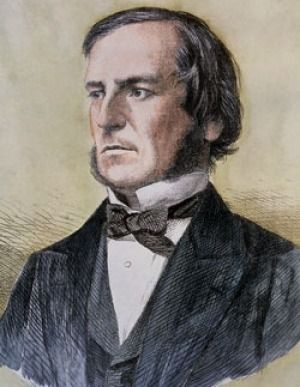
42ecfaceabdf534121e824e991bc0a5f--george-boole-google-doodlesOn the night of December 8th, 1864, George Boole, 49 years of age, in the grips of pneumonia, expired. He left a wife, Mary, and five daughters. Unfortunately, Mary had always carried two of his beliefs: the health benefits of long walks and the healing powers of homeopathic remedies. Late in a winter evening, after finishing his work at the University, under a cold rain, George walked the two miles to his home. Over the next several days, guided by her belief that the cure lay in the symptoms, Mary repeatedly doused George in cold water.

* * *

George was born in a small rail hub one hundred and fifty miles north of London, in the den of a cobbler who, said his wife, was ‘…good at everything except his own business of managing shop.’ Unable to afford an education, Boole’s father nevertheless encouraged his son to study. Dutiful, George taught himself six languages, read the classics, read philosophy and studied his figures.

By twelve he had a reputation owing to his father’s submission to the local newspaper of a poem translated from ancient Greek. Interested readers were surprised to discover that the translator was an unschooled boy. The Town Councilor, fancying himself an amateur mathematician, provided George access to a library filled with mathematics.

George calculated that math would be more remunerative than his first love, theology. Some things don’t change. After enough self-study, hoping for tips from grateful parents he secured a position as an usher tutoring students in theater-sized classrooms. By nineteen, he opened his own school to which he gave the very unoriginal name: “The Classical, Commercial and Mathematical Academy.”

Teaching during the day, studying at night, living with and the sole support for his extended family, George mastered the complete cannon of contemporary math. Mastered to such an extent that in 1837 he responded to an advertisement from a newly established mathematical journal with an astonishingly original piece of work.

Read more »

The Great Clomping Foot: Worldbuilding and Art

by Thomas Manuel

WorldbuildingMore than ten years ago, in a now iconic pronouncement, the writer M. John Harrison decried worldbuilding as “the great clomping foot of nerdism“. He called on every science fiction story to represent “the triumph of writing over worldbuilding”, calling it dull and technically unnecessary. “Worldbuilding literalises the urge to invent”, he wrote. “Worldbuilding gives an unnecessary permission for acts of writing (indeed, for acts of reading). Worldbuilding numbs the reader’s ability to fulfil their part of the bargain, because it believes that it has to do everything around here if anything is going to get done.” To writers and readers of SFF, these words cannot help but be troubled. And yet, they demand being read again and again, as China Mieville said, “especially [by] those of us fortunate enough to look down and see the targets on our shirts, and look up and see one of the most important, savage and intelligent (anti-)fantasists of recent times aiming down the barrel of his scorn-gun at us.”

I am one such fortunate soul. As I write this essay, not five inches from my right hand, is a sheet of paper with the scribbled schematics of my mongrel, dream city of Orbaiz. I patched together this bastardized urban backdrop for an imminent tabletop RPG campaign and a less-imminent fantasy novel and have enjoyed every minute of it. And now, as intended, I am troubled.

It’s clear that Harrison doesn’t mean these words literally. He has, with a certain amount of arrogance clearly, thrown out this provocation, knowing full well that it lends itself to misinterpretation and enraged internet commentary. If the words hadn’t done the job, the tone of moral superiority and whiff of ‘high art’ sentimentality certainly would’ve. But Harrison isn’t a civilian and can’t easily be dismissed. As a writer, critic and editor, he looms over British SFF. He was a vital member of Michael Moorcock’s team at New Worlds, which ushered in the New Wave of the 60s and 70s. For those who are civilians, the New Wave was, in simplistic terms, the movement in SFF away from pulp to more artistic or literary ground. (Of course, the truth is more complicated. As Helen Mirrick writes in the Routledge Companion to Science Fiction, “For some it is “the single most important development in science fiction”, an era that “transformed the science fiction landscape”, but others suggest that it is a meaningless generalization or that it never really existed.”)

Read more »

Scheming Like A State

by Misha Lepetic

"A grandes problemas,
¡grandes soluciones!
"
~ Nicolás Maduro

Bc4One area where proponents of technology customarily get trounced concerns the consideration of unintended consequences. (This is also regrettably true for most commentators.) It's not that people don't take them into account, but rather that when they do, those consequences are extrapolated out to such hyperbolic extremes as to make these scenarios essentially useless. It's much more appealing and click-friendly to sound the alarm that artificial intelligence will turn the entire planet into an ocean of paper clips than it is to think deeply about how AI already influences decisionmaking within our existing social systems. By the same token, it's easier to be terrified of sudden, wholesale unemployment wrought by automation, when, as I noted recently, the far likelier outcome is that we will coexist with technology for a good while yet, with automation eroding work in a gradual, almost invisible fashion. And this is notwithstanding the fact that that there is plenty of room for a well-informed skepticism that questions whether technological unemployment is happening in any appreciable way at all.

Similarly, when proponents of bitcoin, blockchain and distributed technologies advocate for a wave of technologically-driven decentralization, it's rarely described in terms less than messianic. Unintended consequences seem to have gotten only so far as admitting an overenthusiastic consumption of electricity. Now, one of the principal targets of this revolution is the perceived tyranny of the nation-state itself. Janina Lowisz, the (alleged) first holder of an ID that is written into the blockchain, said in an interview with Vice that:

The technology allows for a lot of new possibilities for replacing what the state provides—like, one option would be to offer government services in packages so people can pay for whatever services they're going to use. That's how government should work: Instead of paying taxes that get wasted on things you don't even want, this way you can have a free choice and see exactly where your money is going.

I'll graciously pass over the heartstopping naïveté of this sentiment, but it's worth noting that this model of 'government as a cable TV package subscription' has deep roots. It is a direct ideological descendant of the ur-text of techno-libertarianism, John Perry Barlow's A Declaration of the Independence of Cyberspace, the charismatic and hopelessly romantic 1996 manifesto that Barlow delivered in Davos, of all places. For the purposes of this essay, I have pulled out the following bits:

Governments derive their just powers from the consent of the governed. You have neither solicited nor received ours…You have not engaged in our great and gathering conversation, nor did you create the wealth of our marketplaces…We will create a civilization of the Mind in Cyberspace. May it be more humane and fair than the world your governments have made before.

Blockchain technologies pretty much take dead aim at fulfilling this mandate. Bitcoin's fair face, and the 1,518 ships that it has thus far launched, revel in the notion of decentralized authority. Political vicissitudes cannot devalue these aspiring currencies, and, in their purest forms, transacting in them means immunity from censorship or any other regulatory or even geopolitical restrictions. Except, no one has really thought to ask the nation-states what they think about this.

Read more »

Perceptions

Special K standing

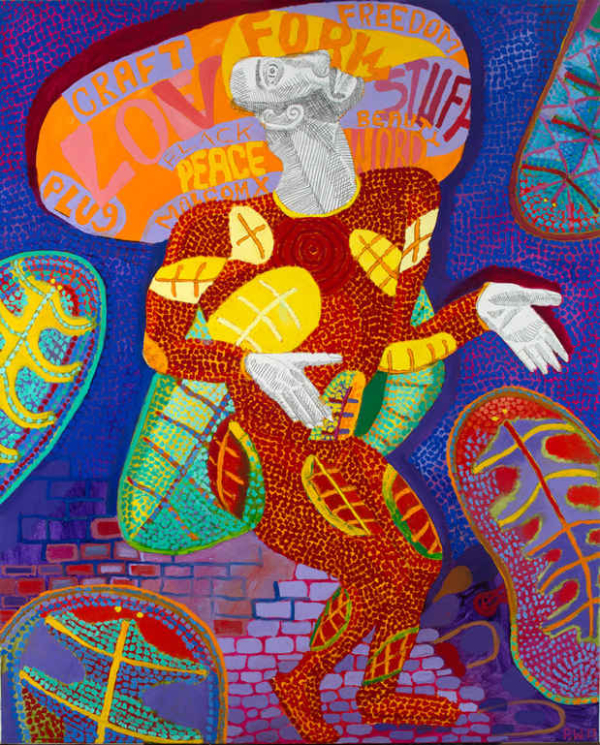
Peter Williams. Special K Standing, 2017.

Oil on canvas.

"… Titled With So Little To Be Sure Of, the exhibition features a series of oil paintings, drawings, and a mixed-media installation that confronts viewers with the traumatic reality of systemic violence towards African Americans. Ossei-Mensah writes, “Commenting on the concepts of race, representation, white supremacy, oppressive social structures, humanity and grace, the works…proselytize their audience with narratives of social surrealism.”"

More here and here.

Thanks to Laura Raicovich for alerting me to this work.

More here, here, and here.

“Hype” or Uncertainty: The Reporting of Initial Scientific Findings in Newspapers

by Jalees Rehman

CoffeeOne of the cornerstones of scientific research is the reproducibility of findings. Novel scientific observations need to be validated by subsequent studies in order to be considered robust. This has proven to be somewhat of a challenge for many biomedical research areas, including high impact studies in cancer research and stem cell research. The fact that an initial scientific finding of a research group cannot be confirmed by other researchers does not mean that the initial finding was wrong or that there was any foul play involved. The most likely explanation in biomedical research is that there is tremendous biological variability. Human subjects and patients examined in one research study may differ substantially from those in follow-up studies. Biological cell lines and tools used in basic science studies can vary widely, depending on so many details such as the medium in which cells are kept in a culture dish. The variability in findings is not a weakness of biomedical research, in fact it is a testimony to the complexity of biological systems. Therefore, initial findings need to always be treated with caution and presented with the inherent uncertainty. Once subsequent studies – often with larger sample sizes – confirm the initial observations, they are then viewed as being more robust and gradually become accepted by the wider scientific community.

Even though most scientists become aware of the scientific uncertainty associated with an initial observation as their career progresses, non-scientists may be puzzled by shifting scientific narratives. People often complain that "scientists cannot make up their minds" – citing examples of newspaper reports such as those which state drinking coffee may be harmful only to be subsequently contradicted by reports which laud the beneficial health effects of coffee drinking. Accurately communicating scientific findings as well as the inherent uncertainty of such initial findings is a hallmark of critical science journalism.

Read more »

Algorithms and The Meaning of Explanation

by Daniel Ranard

Binary

We're surrounded by algorithms. Facebook uses an algorithm to curate your newsfeed, credit agencies use an algorithm to compute your credit score, and soon an algorithm may replace you in the driver's seat. As algorithms come to dictate larger swaths of life, it's important to understand exactly what they are, and especially how they're drastically changing.

On one hand, algorithms are nothing new. An algorithm is just a precise set of instructions for carrying out a task. Any chef with a cookbook already follows the written algorithms within: add two cups of water, mix until smooth. Unlike computer algorithms, these instructions are written in a language meant for humans, so they still retain some ambiguity: how should you go about lifting the cup, and what does it mean to mix until smooth? While most of us have the know-how to surmount these ambiguities, computers are designed to follow much more precise instructions. And unlike cookbook recipes, computer algorithms don't concern the manipulation of physical objects like cups and bowls, but rather the manipulation of abstract objects like numbers and bits. A computer algorithm might say: "Take two numbers as inputs, multiply the larger one by seven, then add them," and so on. Though a modern computer is designed to convert these instructions into physical manipulations of the electricity within, one might also use an abacus, or pen and paper. Indeed, some of today's algorithms have been around for centuries: the way a computer calculates square roots is not so different from the method prescribed by Hero of Alexandria.

So while we built bigger and better equipment to execute our algorithms in the 20th century, the central idea of the algorithm had remained unchanged for millenia. What would algorithms of the future hold? First, let's take a diversion and explain where we thought the most advanced algorithms were likely headed, decades ago. Then, we'll see how the recent success of machine learning methods has changed that vision for many, even posing new questions about the nature of knowledge and explanation.

Read more »

Wine and Food: Are They Craft or Art?

by Dwight Furrow

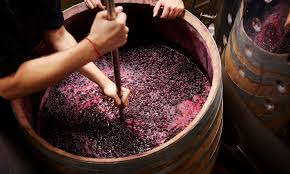
Winemaker at work 2The explosion of interest in the aesthetics of food and beverages over the past several decades inevitably raises the question whether certain culinary preparations or wines can be considered works of art. I have argued elsewhere that indeed food and wine can be works of art. But within the wine and food world many winemakers and chefs prefer to think of themselves as craft persons rather than artists, and in philosophy there is substantial resistance to including food and wine in the category of a fine art. The question of how we distinguish a craft from an art is thus germane to this debate.

Unfortunately, traditional ways of drawing the distinction between craft and the fine arts are inadequate. In fact, a too sharply drawn distinction between art and craft will mischaracterize both. Nevertheless, I think there is a distinction to be made between art and craft and at least some wines and culinary preparations are best viewed as works of art.

As Larry Shiner has pointed out, both the term "fine art" and the term "craft" are relatively recent inventions. ""Craft" as the name of a category of disciplines only goes back to the late nineteenth century when it emerged partly in reaction to machine production, and partly in reaction to the fine art academies' exclusion of the "minor," "decorative," or "applied" arts." Fine art, according to Shiner, was a phrase used to market works of art to the emerging middle class marking off craftwork, works that are merely useful, from works that were "the appropriate object of refined taste."

In the past we might have used the type of material being worked on to distinguish art from craft. Paint on canvas, words on a page, notes played by instruments were candidates for works of art. The transformation of wood, clay, metals or fabric was craft. But since the birth of installations and the expansion of materials used for artistic expression, artists today work in media such as textiles, plastics, metals and wood. So the type of material will no longer suffice to mark the distinction. Why then not food or wine as candidates for artistic expression?

Read more »

Making it up at MoMA

by Katrin Trüstedt

Irene 2On Friday, February 16, 2018, the screening of a documentary film titled The Rest I Make Up at MoMA's Doc Fortnight festival created something like a theatrical event. Moving images of the largely unknown avant-garde playwright Maria Irene Fornes (she goes by Irene) cast a spell on the audience that reacted with tears, laughter, and frenetic applause. The images of her, making up stories, walking down the street Cuba style, flirting with the camera, or questioning the whole filming project while lying on her bed, seemed to turn the basement film theater into an actual theatrical space, one that has always been Irene Fornes’s true habitat. The love story that this film is – the story of her love for the theater, for Cuba, for Susan Sontag, and, ultimately, for the film maker Michelle Memran – seemed to affect everyone in the audience, old friends as well as those who barely knew her name. And yet, as the event of this film had everyone so captivated (including me), I couldn't help but wonder: what exactly is the relation of an artist like Fornes to an institution like MoMA?

The title of this film The Rest I Make Up seems to perfectly capture a feature of her art essential to this relation. It points to a making up of stories and theater worlds that was the work of this writer, as well as to a practice as part of her now dealing with dementia: If she can't remember, she makes it up. Behind the charm and nonchalance with which she graces the screen, one senses an abyss of an unknown, terrifying darkness. It makes its presence felt in silences, glances, or the state that her kitchen is in. When Michelle and Irene return from their visit in Cuba, they stop in Miami to see Irene's sister; Irene cannot tell her about having just visited their family. She does not remember. But the title also seems to address the way Fornes's avant-garde theater used to work in the niche of the Off-Off-Broadway scene (and "Off-Off-MoMA," if you will): improvised and without support, institutionally or financially, it was experimentally "made up" as the productions moved along. Besides writing and directing the plays, Fornes would, for instance, also often do the costumes, with whatever happened to be there. And ultimately, the title also seems to speak to the filmmaking project itself. When I first met Michelle in Berlin about 15 years ago, she was not sure what exactly to do with her life. How to make money. Where to go. What to make. But she knew she was captivated by this playwright Irene Fornes (it was how I learned about her), and wanted to, in some way, do something with her, about her, for her. The rest she was going to make up "as we went along". It turned out to be this film, and she turned out to be a filmmaker in the process.

Read more »

Monday, February 19, 2018

In praise of fallibility: why science needs philosophy

by Paul Braterman

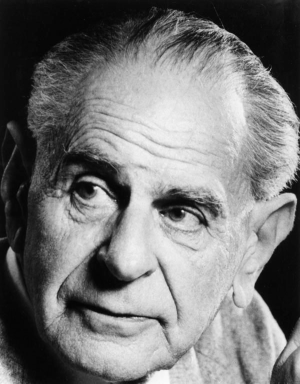
Karl_Popper

Karl Popper

More recent strata lie on top of older strata, except when they lie beneath them. Radiometric dates obtained by different methods always agree, except when they differ. And the planets in their courses obey Newton's laws of gravity and motion, except when they depart from them.

As Isaac Asimov reportedly said, "The most exciting phrase to hear in science, the one that heralds new discoveries, is not 'Eureka!' [I have found it], but 'That's funny …' " And there is nothing that distinguishes so clearly between the scientific and the dogmatic mindset as the response to anomalies. For the dogmatist, the anomaly is a "gotcha", proof that the theory under consideration is, quite simply, wrong. For the scientist, it is an opportunity. If an idea is generally useful, but occasionally breaks down, something unusual is going on and it's worth finding out what. The dogmatist wants to see questions closed, where the scientist wants to keep them open. This is perhaps why the creationist denial of science can often be found among those professions that seek decision and closure, such as law and theology.

The rights and wrongs of falsification

Dogmatists regularly invoke the name of Karl Popper, and the work he did in the 1930s. Popper placed heavy emphasis on falsifiability, denouncing as unscientific any doctrine that could not be falsified. Freud's theories, for example, were unscientific, because a patient's disagreement with its findings could be explained away as the result of repression. Marxism, likewise, he regarded as unscientific because when events failed to unfold as Marx had predicted, his followers could always say that the right historical conditions had not yet arisen. The theory that biological diversity is a product of Intelligent Design is also unscientific by this criterion, since its advocates can and do say1 that any apparent failure of design may merely reflect our lack of insight into the motivations of the designer.

But what about theories that almost all of us would agree to regard as scientific, such as the theory of planetary motion, or atomic theory, or the theories of geology, or of the origin of species by evolution? Here, current thinking can be and at various times has been falsified by observation. But what, precisely, was falsified?

No theory exists on its own, as the philosopher-scientist Duhem pointed out over a century ago,2 and when a theory fails an observational test there are two kinds of possible explanation. The fault may lie with the theory itself, or with the assumptions we make while testing it. More specifically, as Lakatos pointed out in 1970,3 every application of a theory involves ancillary hypotheses, which can range from the grandiose (the laws of nature are unchanging) to the trivial (the telescope was functioning correctly). When a theoretical prediction fails, we do not know if the fault is in one of these, rather than the core theory itself. Much of the time, we are not even aware of our ancillary hypotheses, which is one reason why we need philosophers of science.

Read more »