by Akim Reinhardt
It’s an exhaustive list. Far longer and deeper than you might suspect. The Tribune tracks U.S. school shootings of the past 50 years. A well documented list by Wikipedia goes back to 1840, when a student named Joseph Semmes shot University of Virginia law professor John Anthony Gardner Davis.
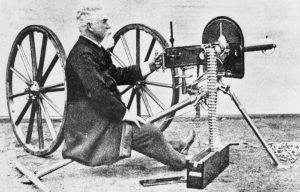
Three more school shootings occurred in the 1850s, when guns were substantially different weapons than they are now. The revolver had been invented in the 1830s, and rifles were beginning to replace muskets, but Hiram Maxim’s machine gun was still decades away. And even when they did arrive, automatic weapons were initially quite expensive and difficult to obtain. In response to the gangland violence of the Prohibition Era (1920-33), the federal government effectively regluated automatic weapons with the 1934 National Firearms Act.
Consequently, even as public school education expanded greatly in the United States after the Civil War (1861-65), documented school shootings were sparse and resulted in relatively few deaths for the remainder of the century.
Decade — (No. of School Shootings) — Deaths/injuries
1860s ——————–(6) ———————————8/1
1870s ——————–(7) ———————————4/4
1880s ——————–(11)———————————2/6
1890s ——————–(8)———————————13/19+
Many school shootings from the 1860s-1950s did not unfold they way we now picture them, with a single gunman mowing down masses of people. Indeed, guns were not even always the preferred weapon. More often, American school violence involved knives and fists. As for school shootings, many resulted from spontaneous fights.
In 1893, a fight erupted at a high school dance in Plain Dealing, Louisiana. Two students died on the scene, two more were fatally wounded, and a teacher was also injured.
That same year, six people were killed and at least one injured at a high school in Charleston, West Virginia when one group of students interrupted another’s performance. A teacher intervened, the antagonizing group turned on him, and then other people joined the fray, resulting in a violent melee. The teacher and five others were shot and killed, and one student died from having his skull crushed. Read more »
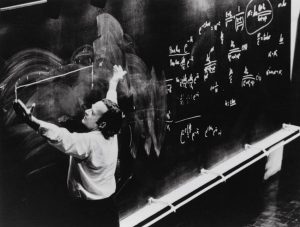 On May 11th, to mark the 100th anniversary of Richard Feynman’s birth, Caltech put on a truly dazzling evening of public talks. I heard that tickets sold-out online in four minutes; and this event was so popular that attendees started queueing up to enter the auditorium an hour before the program began. Held in Caltech’s
 30 years ago I moved from the UK to New York City and I gave up my car. I had mixed feelings about doing so at the time – I was only 21 and driving was still a novelty and an expression of independence. When I moved out of New York City to upstate 13 years later, I again became a car owner and regular driver. After my divorce, when I moved back to New York City, I once again gave up my car, this time happily. I would honestly be thrilled if I never had to get behind the wheel of a car again. I don’t enjoy driving, I’m not the most confident driver (I cannot reverse to save my life even after over 30 years of driving) and I generally would prefer to be driven. My transportation needs are now taken care of by a combination of public transport, ride sharing services and a boyfriend with a car who is very good about driving me around. And thanks to online shopping, the retail convenience of a car ownership has almost totally disappeared. As far as I’m concerned, this is a perfect state of affairs.
  The freer the market, the more people suffer.
 It’s with a certain pleasure that I can recall the exact moment I was seduced by the musical avant-garde. It was in the fourth grade, in a public elementary school somewhere in New Jersey. Our music teacher, Mrs. Jones, would visit the classroom several times a week, accompanied by an ancient record player and a stack of LPs. You could always tell when she was coming down the hall because the wheels of the cart had a particularly squeak-squeak-wheeze pattern. However, such a Cageian sensibility was not the occasion of my epiphany. I’m also not sure if fourth-graders are allowed to have epiphanies, or, which is likelier, if they are not having them on a daily basis.


 If by “objectivity” we mean “wholly lacking personal biases”, in wine tasting, this idea can be ruled out. There are too many individual differences among wine tasters, regardless of how much expertise they have acquired, to aspire to this kind of objectivity. But traditional aesthetics has employed a related concept which does seem attainable—an attitude of disinterestedness, which provides much of what we want from objectivity. We can’t eliminate differences among tasters that arise from biology or life history, but we can minimize the influence of personal motives and desires that might distort the tasting experience.
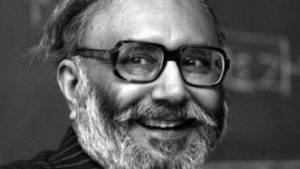 Dr Abdus Salam had once said, “It became quite clear to me that either I must leave my country or leave physics. And with great anguish, I chose to leave my country.”
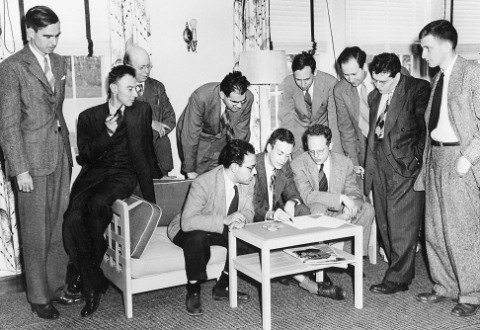 A new theory seldom comes into the world like a fully formed, beautiful infant, ready to be coddled and embraced by its parents, grandparents and relatives. Rather, most new theories make their mark kicking and screaming while their fathers and grandfathers try to disown, ignore or sometimes even hurt them before accepting them as equivalent to their own creations. Ranging from Darwin’s theory of evolution by natural selection to Wegener’s theory of continental drift, new ideas in science have faced scientific, political and religious resistance. There are few better examples of this jagged, haphazard, bruised birth of a new theory as the scientific renaissance that burst forth in a mountain resort during the spring of 1948.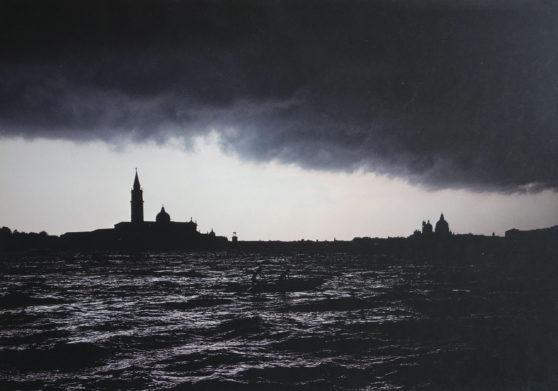
 “Griselda was fighting against the patriarchy the only way she knew – through her unquenchable lust for venison.”