
by Scott F. Aikin and Robert B. Talisse

Fake news is a problem. That’s one thing that most people can agree on, despite the expanding breadth of their various political disagreements. So what is fake news? In their recent article in the journal Science, David Lazer, Matthew Baum, et al. define fake news as “fabricated information that mimics news media content in form but not in organizational process or intent.” That they have provided such a clean and straightforward definition is an achievement — the political vernacular is saturated with charges of fake news, and hence it’s important to introduce some precision into the discourse. This is especially the case in light of the fact that many deployments of the charge of “fake news” are what one might call politically opportunistic, that is, aimed at de-legitimating a story that has been reported as news, while also demonizing the person or agency doing the reporting. Having a precise definition of fake news is needed in order to distinguish actual instances of fake news from the cases in which the charge of fake news is invoked merely opportunistically.
However, it strikes us that the analysis above is yet lacking; there are cases that look to us like instances of fake news that are nonetheless excluded by the definition. So it may be too narrow. Consider the following case:
CRIME REPORT Putative news source (N) reports (accurately) to an audience (A) an incident (I) in which a violent crime is committed within A’s vicinity, by a group identified as Muslim immigrants.
Thus far, the original definition delivers the right result in CRIME REPORT: no fake news is in play. But let’s add to the case that N excessively reports I throughout a news cycle, and reports in a manner that could give a casual member of A the impression that several different crime incidents involving Muslim immigrants have taken place. Now, it seems to us that CRIME REPORT has become an instance of fake news. However, N’s reportage involves no fabricated information; in fact, the reportage is ex hypothesi accurate. The misleadingness might have more to do with errors arising from the availability heuristic and various priming effects than with anything in the content of the claims themselves. Moreover, it might even be the case that CRIME REPORT involves the creation of no new beliefs; the report is misleading in that it confirms or fortifies existing beliefs prevalent in A. Read more »

 It’s with a certain pleasure that I can recall the exact moment I was seduced by the musical avant-garde. It was in the fourth grade, in a public elementary school somewhere in New Jersey. Our music teacher, Mrs. Jones, would visit the classroom several times a week, accompanied by an ancient record player and a stack of LPs. You could always tell when she was coming down the hall because the wheels of the cart had a particularly squeak-squeak-wheeze pattern. However, such a Cageian sensibility was not the occasion of my epiphany. I’m also not sure if fourth-graders are allowed to have epiphanies, or, which is likelier, if they are not having them on a daily basis.


 If by “objectivity” we mean “wholly lacking personal biases”, in wine tasting, this idea can be ruled out. There are too many individual differences among wine tasters, regardless of how much expertise they have acquired, to aspire to this kind of objectivity. But traditional aesthetics has employed a related concept which does seem attainable—an attitude of disinterestedness, which provides much of what we want from objectivity. We can’t eliminate differences among tasters that arise from biology or life history, but we can minimize the influence of personal motives and desires that might distort the tasting experience.
 Dr Abdus Salam had once said, “It became quite clear to me that either I must leave my country or leave physics. And with great anguish, I chose to leave my country.”
 A new theory seldom comes into the world like a fully formed, beautiful infant, ready to be coddled and embraced by its parents, grandparents and relatives. Rather, most new theories make their mark kicking and screaming while their fathers and grandfathers try to disown, ignore or sometimes even hurt them before accepting them as equivalent to their own creations. Ranging from Darwin’s theory of evolution by natural selection to Wegener’s theory of continental drift, new ideas in science have faced scientific, political and religious resistance. There are few better examples of this jagged, haphazard, bruised birth of a new theory as the scientific renaissance that burst forth in a mountain resort during the spring of 1948.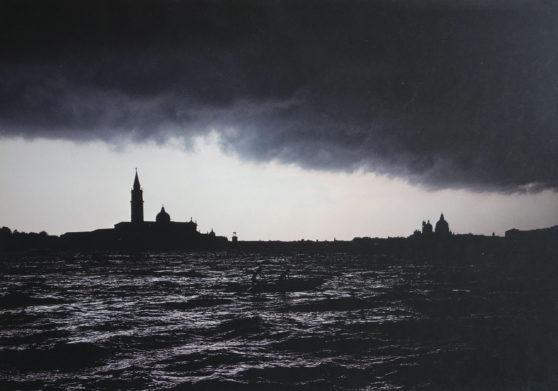
 “Griselda was fighting against the patriarchy the only way she knew – through her unquenchable lust for venison.”

 by Christopher Bacas
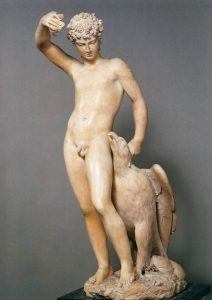 A celebrated altercation between Benvenuto Cellini (1500-1571), the Florentine artist, and fellow sculptor Bartolommeo Bandinello (1493-1560) resulted in the latter exclaiming “Oh sta cheto, soddomitaccio.” [Shut up, you filthy sodomite!]. The accusation had merit in the legal sense at least since Cellini had indeed been accused of the crime of sodomy with at least one woman and several young men. The incident is oftentimes recalled in writings about the period as it provides a compelling illustration of the sexual appetites of the artists of the Renaissance.
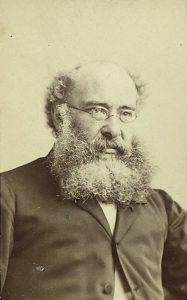 What do 21st century American college faculty and 19th century Church of England Clergyman have in common? A surprising amount. This is one reason I would heartily recommend the novels of Trollope, Austen, and others to my colleagues in academia.