
by Thomas O’Dwyer
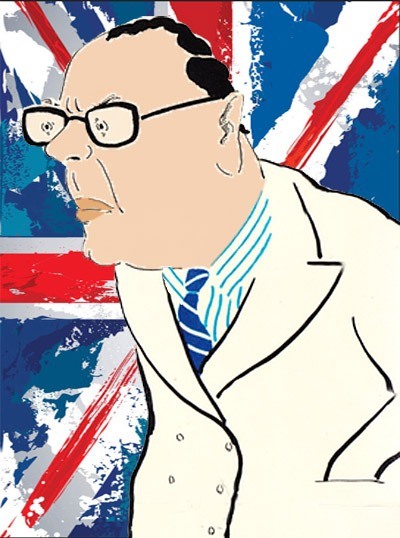 The career of Kenneth Widmerpool defined an era of British social and cultural life spanning most of the 20th century. He is fictional – a character in Anthony Powell’s 12-volume sequence, A Dance to the Music of Time – but he is as memorable as any historical figure. In the first volume, he is a colourless Eton public schoolboy. Across the series, he tunnels his way under British upper-class and bohemian society. A powerful and sinister self-made monster, he even gains a life peerage. In the final volume, the aged Widmerpool joins a hippie cult and dies naked while chasing girls in the woods. Widmerpool lived and prospered in the solid certainties of his acquired culture. He died in the midst of its fragmentation.
Widmerpool was an original snowflake – one who believed that he was so unique that greatness and adulation were his destiny. His lowly father sold fertilisers. His mother raised him to be this snowflake with an inflated uniqueness that would override his mediocrity. The metaphor then was poetic – snowflakes are lovely, and no two are alike.
Today, we have a “snowflake generation,” defined by British author Claire Fox in her 2016 book I Find That Offensive!: “It is a derogatory term for one deemed too vulnerable to cope with views that challenge their own, particularly in universities and other forums once known for robust debate.” With some irony, these delicate modern snowflakes are also called “new Victorians.”
The collapse of cultural certainties was most clear in Britain but rippled through all Western societies. The origin of certain culture-war debates, which erupt from time to time like temperamental volcanoes, is pinned on one Englishman, Lord Charles Percy Snow. A chemist and novelist, Snow in 1959 published The Two Cultures and the Scientific Revolution. He first delivered it as a lecture at Cambridge University. Snow observed that a group of educated people talking in a room would make allusions drawn from books and the arts. Not one of them would be expected to make, or understand, a reference to “the second law of thermodynamics.” Half of human culture – science – appeared to be non-existent for literary intellectuals.
Snow found this odd and alarming, and he considered it a problem whose solution was obvious. Read more »
 It’s a Saturday in May. I’m 17, and I’ve spent the morning washing and waxing my first car, a 1974 Gremlin. I’m so delighted that I drive around the block, windows down, Chuck Mangione playing on the radio. Feels so good, indeed. I’ve successfully negotiated a crucial passage on the road to adulthood, and I’m pleased with myself and my little car. Times change, though, and sometimes even people change. Forty years later, with, I hope, many miles ahead of me, I sold what I expect to be my last car.
 I like playing Scrabble, and part of the reason is creating new words. That and the smack talk. I played a game with the swain of the day decades ago, and he challenged my word, which was not in and of itself surprising. As you may recall, if you lose a challenge, you lose a turn. With stakes so stupendously high, you mount a vigorous defense. I ended up losing the battle (and probably won the war) and thought no more of it. The ex-boyfriend brought it up a few years ago; I think he has put that on-the-spot coinage next to a picture of me in his mind. It is a shame that the word he will forever associate with me is “beardful.”

 In the Municipal building on Livingston Street, two floors are reserved for Housing cases. In each court, dozens of people work and wait, a Bosch tableau with an international cast. HPD lawyers work the perimeter. They bring Respondents to the bench, confer with them in the hallway and negotiate with Petitioners on their behalf. HPD attorneys also lunch with landlord’s counsel. There is little ethical or proximate difference between Officers of the Court, save who signs their checks and the pay scales. To a person, they distribute a crushing weight, balancing malfeasance and negligence, plunder and systemic rot. The lasting effect of a day in Housing court isn’t the stipulation Management makes for repairs, nor the tenant’s payment (sometimes, less an abatement), it is feeling that force haul you down and watching others already borne off by it.


 The controversy over the
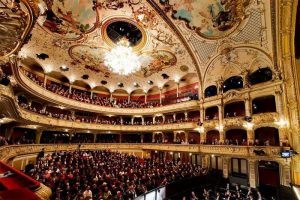 The main job of ‘culture’ in a modern society seems to be shielding people from the demands of morality. In its intellectual role it justifies inequality between citizens. In its national history role it gives citizens a delusional sense of their country’s significance and entitlement, followed by a dangerous sense of grievance when this isn’t sufficiently recognised by the rest of the world. In its identitarian role it deflects demands for justification into mere proclamations of fact: ‘Why do we do this or that awful thing?… Because shut up. It is who we are.’
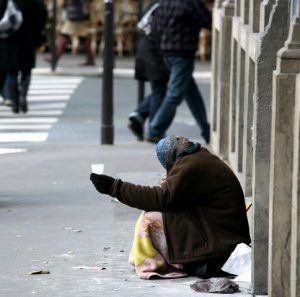 On July 5 The Nation published a 14 line poem by Anders Carlson-Wee entitled “
 That music and emotion are somehow linked is one of the more widely accepted assumptions shared by philosophical aesthetics as well as the general public. It is also one of the most persistent problems in aesthetics to show how music and emotion are related. Where precisely are these emotions that are allegedly an intrinsic part of the musical experience? Three general answers to this question are possible. Either the emotion is in the musician—the composer or performer—in which case the music is expressing that emotion. Or the emotion is in the music itself, in which case the music somehow embodies the emotion. Or the emotion is in the listener, in which case the music arouses the emotion.
 sickness was constantly diagnosed for the once powerful idea. And still, after the impressive Sanders campaign of 2016, the electoral success of Jeremy Corbyn in the 2017 general election, as well as the – for many – surprising victory of Alexandria Ocasio-Cortez in the democratic primary in New York, writers continue to assure us that the idea is, if not dead, having serious problems. In any case, the idea of socialism seemed until recently a relic of the industrial past with little to say about contemporary society.