
by Andrea Scrima
David Krippendorff is a US/German interdisciplinary artist and experimental filmmaker. Based in Berlin, he grew up in Rome, Italy, and studied art at the University of Fine Arts in Berlin, Germany, where he graduated with an MFA. His paintings, drawings, prints, films, and videos have been shown internationally, including at the New Museum (New York), ICA (London), Hamburger Kunsthalle (Hamburg), and the Museum on the Seam (Jerusalem). He has participated in three biennials (Prague, Poznan, Tel Aviv).
Krippendorff’s short film Nothing Escapes My Eyes is currently part of the group exhibition “The Women Behind” at the Museum on the Seam; it was also shown at the Belgrade City Museum for the 56th October Salon in 2016 and has been screened at numerous international film festivals, winning twice as Best Short Film. Kali, a short film based on Brecht’s Threepenny Opera, also features Palestinian actress Hiam Abbass; it premiered at the Braunschweig International Film Festival in 2017.

Andrea Scrima: David, I’d like to begin with a question about your previous work. For decades now, you’ve been incorporating imagery from popular culture; earlier works, particularly There’s No Place Like Home, Sleeping Beauty, and The Beautiful Island, drew on the hidden subtexts in well-known American movies, such as The Wizard of Oz and Gilda. What was the motivating force behind this line of inquiry?
David Krippendorff: I grew up on classic American movies. The Wizard of Oz was an intrinsic part of my childhood, so it felt very natural to work with these films, because I had a personal relationship to them. My interest was in uncovering the ideologies and desires present in these films, but hidden beneath a polished layer of glamour and storytelling. I’m also fascinated by how thin the boundaries have become between the personal and the mediated experience, and films—with their almost mythological function—are the perfect material for this inquiry. Read more »
 In the middle of the night of March 24, 1992, a pressure seal failed in the number three unit of the Leningradskaya Nuclear Power Plant at Sosnoviy Bor, Russia, releasing radioactive gases. With a friend, I had train tickets from Tallinn, in newly independent Estonia, to St. Petersburg the next day. That would take us within twenty kilometers of the plant. The legacy of Soviet management at Chernobyl a few years before set up a fraught decision whether or not to take the train.
 It’s been a while since I posted on this issue, and I’ve already said most of what I intended to say about it, but things seem to be coming to a head in my own state, and I thought I’d report on that, including a couple of weird local wrinkles (the Garden State is a strange place). Three weeks ago, after months of missed deadlines, an adult-use marijuana legalization bill was approved by a joint (Assembly/Senate, that is, not … never mind) committee of the legislature, and may (note: may) be voted on later this year. If it is passed and signed into law by the governor – neither of which is a given – New Jersey would be the eleventh state to legalize adult use, and the second to do so by legislative action. (Washington and Colorado in 2012, Alaska and Oregon in 2014, California, Massachusetts, Maine, and Nevada in 2016, and Michigan in 2018 did so by voter referendum; Vermont did so by legislative action (in 2017, I think), although that state’s bill did not set up a legal market, which means that while it is legal to grow marijuana in one’s basement there, it remains illegal to buy seeds to do so.)
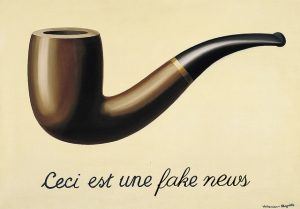
 I met Rene Magritte a few weeks ago at the Starline Social Club in Oakland. A surprisingly jolly fellow, it turns out he’s working these days as a pedicab driver in San Francisco. Surrealism isn’t my jam, but when he offered me a pickup the next morning at the BART and mushrooms and tickets for two to the retrospective of his work at SFMoMA, well—I had to accept.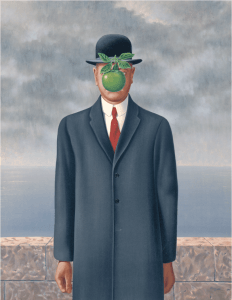

 Magnus Carlsen and Fabiano Caruana faced off for the World Chess Championship over three weeks London. I’d been looking forward to the match all year, and following the progress of the two players towards it. This piece looks at the two players and the situation before the match, gives an account of the Championship games, and concludes with some reflections on the significance of the match for the participants, and for the sport.
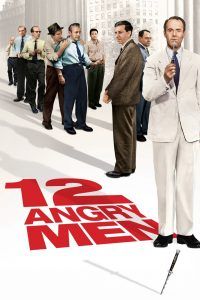 I recently rewatched “12 Angry Men” with The Philosophy Club at the University of Iowa as part of their “Owl of Minerva” film series. The 1957 film has the late, great Henry Fonda as the lone holdout on a jury ready to convict a poor, abused 18-year-old boy for allegedly stabbing his father to death. Over one long, tense evening (shown in something close to real-time), juror #8 – none of the jurors are identified by name, only number – forces the rest of the jury to methodically reexamined the evidence. It’s not a courtroom drama, it’s a jury-room drama in which only 3 of 1:36 minutes of running time take place outside the sweaty, claustrophobic jury room. The film is intense, moving, and effective. Afterwards, I made the following remarks.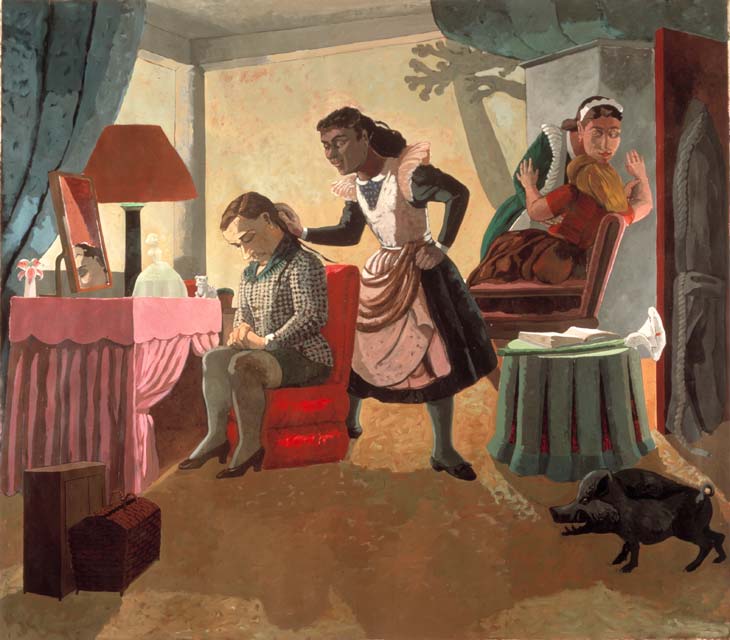

 It’s getting colder now in Beijing, and I can’t help but feel for the clothing left outside to dry. They had to hang through the night and on through the weak sunrise, doing their best to catch the wind before the temperature drops again. How do they feel being out there for passers-by to see, all exposed, caught up in the dust and very small toxic particles?
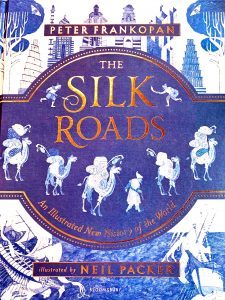 “You start with a scarf…each 90-by-90-centimeter silk carré, printed in Lyon on twill made from thread created by the label’s own silkworms, holds a story. Since 1937, almost 2,500 original artworks have been produced, such as a 19th-century street scene from Ruedu Faubourg St.-Honore, the company’s home since 1880. The flora and fauna of Texas. A beach in Spain’s Basque country” –- this is a fragment from an advertisement article for Hermès in this month’s issue of a luxury magazine. The article is called “The Silk Road.” Does it refer to the “Silk Road” in any way that justifies the title, beyond the allure of legend? No. Does it mention that the first scarves created for this very label, in 1937, were made with raw silk from China? No. Not necessary, not relevant to the target reader. In fact, the less we mention the “East” while trying to sell such luxury designer items, the better, aiming as we are for the rich collector, the global consumer of fashion (whether belonging to the East or West) willing to spend hundreds of dollars on a small square of silk, and more likely to associate such status symbols with Western Europe rather than with the “underdeveloped,” impoverished, overpopulated, conflict-ridden East.
 A few months back my boss and I had lunch with the person who, wearing a t-shirt that read “black death spectacle”, stood in protest in front of a painting of Emmett Till by Dana Schutz called Open Casket at the last Whitney Biennial. Shortly after his gesture another artist penned an open letter about how Schutz’s painting uses “black pain” as a medium, and how this use by non-Black artists needs to go. I’m not sure what the ethical verdict is (of whether or not Schutz made a gravely racist error), or whether the artist’s letter voiced an instance of over-reaching aesthetic censorship, nor will I make any attempt at trying to resolve that issue here; it would take far more space than what is available and is not my aim. Consider reading Aruna D’Souza’s recent book Whitewalling: Art, Race & Protest in 3 Acts for a thorough treatment (which, not so incidentally, the above mentioned protestor provided images for).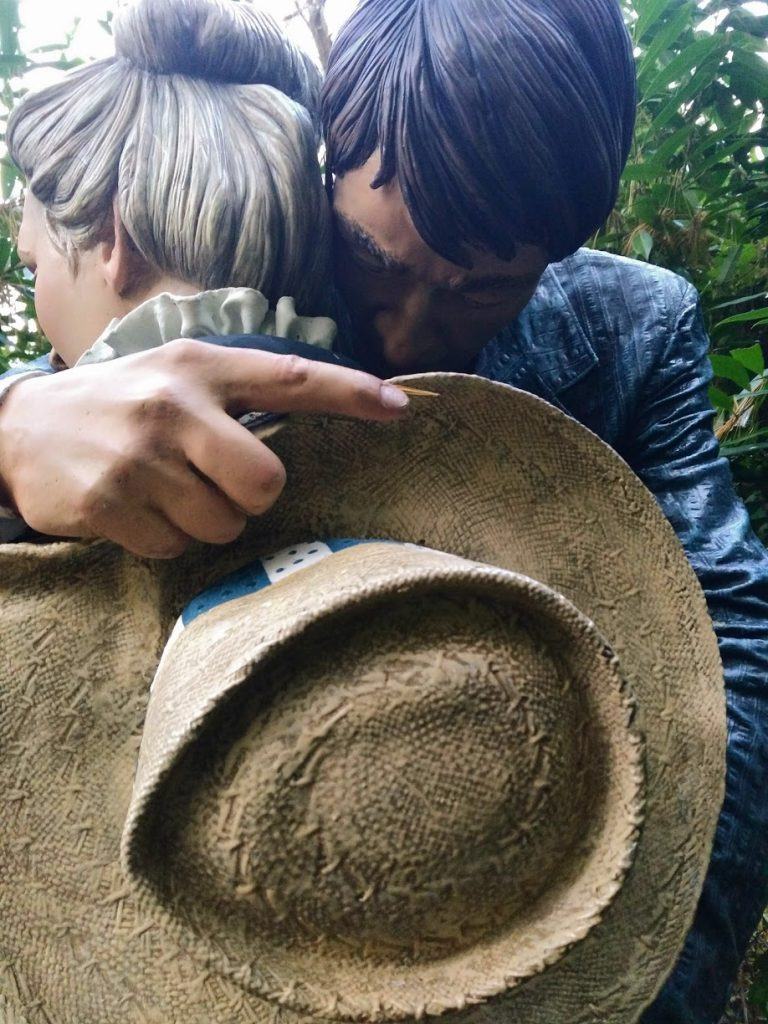
 Ever since my childhood I have been excited, even electrified, by movies. In my college days in Calcutta, in search of alternate experience beyond Indian and Hollywood movies, I used to frequent the local Film Society events, showing some commercially unavailable European fare. Short of funds these Film Society outfits mainly went for movies they could procure at low cost. The East European consulates in the city were particularly generous in making available films from their countries.
 Many decades ago, I packed my bags and left the shores of Australia and headed to the United Kingdom (UK). My secondary years of education had taught me to believe that my journey to the UK would amount to a ‘return’ to the ‘motherland’. A ‘return to the motherland’? Really? That says more about the education system I was exposed to, than just how naïve I was. However, having learned after my arrival that the UK was not, in fact, my ‘motherland’, I did discern that it had more to offer in terms of being ‘in’ the world than the distant shores of Australia, and I decided to stay. Thus, after many years resident in the UK, I considered myself as someone familiar with the country, until, that is, a change in my life circumstances provided me the opportunity to know the UK, or more specifically, England, in a totally different way.