by Chris Horner
To become mature is to recover that sense of seriousness which one had as a child at play. —Nietzsche
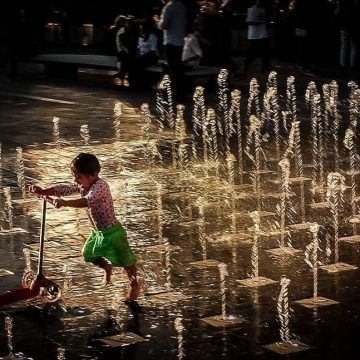
Freud is supposed to have claimed that the two key things for happiness in life are work and love. If he did, he should have added a third: play. It’s this that Nietzsche is referring to in the quotation above. The aphorism states a paradox: we are told that to be ‘mature’ (whatever that is) we must return to playing like we did as a child. And what to make of that ‘sense of seriousness’ in a child’s play? Surely Nietzsche is thinking of the complete absorption and focus that a child is supremely capable of experiencing. If we are lucky we can recall times in our childhood when we were completely lost in the thing we were doing, seeing or hearing: serious play. As adults this can all too often elude us. It can seem a thing belonging to the lost time of childhood. But we should not give up the quest for it: it is a key to joy in life.
But let’s not idealise or sentimentalise the child. Children are in fact often intolerant of frustration, easily bored and keen to get shiny new stuff. And adults really can learn important habits of discipline and perseverance that children find so irksome. But they are also capable, to a degree that many adults find difficult, of the opposite of all that. A distinction needs to be made between childish and childlike. With the former we have all the characteristics associated with immaturity: a tendency to be easily distracted or bored, the urge for immediate gratification, demand for toys, and so on. All characteristics, incidentally, that our society tends to encourage in the adult. One of the key features of our time, surely, is divided attention, distraction and the promotion of multi-tasking. We even have an ‘attention economy’ in which corporations compete to distract us. And we know about the twitchy addiction to the smartphone and to social media. But all this hyperactivity, this constant busyness, can actually block us from attending to what is important. A drifting, distracted attention actually narrows our focus, because it thinks it knows what it wants, that it is looking for ‘something interesting’. It stays one step ahead of boredom – for a while.
To be childlike is quite different. Read more »
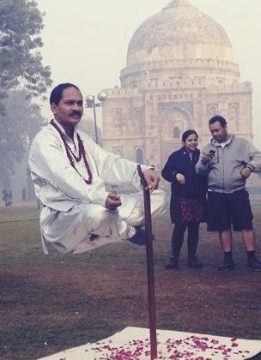
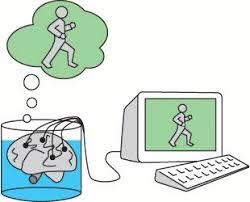 Unfortunately, you have a brain tumor. You don’t know it yet. Your doctor doesn’t know it yet. But you are beginning to have symptoms. The tumor is pressing on surrounding brain tissue and causing you develop a number of delusional beliefs. You believe you are the best swimmer in the world. You believe that dogs and cats are aliens. You believe that you invented the apostrophe. You also, as it happens, believe that you have a brain tumor.
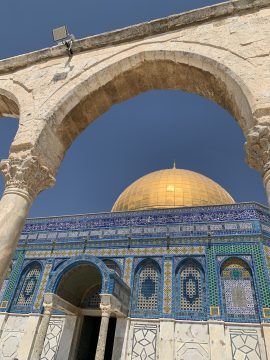 “Taxi to Bethlehem, taxi to Jericho!” the man at a tourism kiosk is shouting, as I make my way from the tram to Jaffa Gate, known also as Hebron Gate, to Muslims as “Bab al Khalil,” or “door of the friend,” named after Hebron where the prophet Ibrahim/Abraham (Khalil al Allah “God’s Friend”) is laid to rest. Of significance too, is the association of this gate with King David’s (prophet Dawud’s) chamber, for followers of the three Abrahamic faiths: the crusaders named it “King David’s Gate.” It is one of the seven main stone portals of the walled city of Jerusalem.
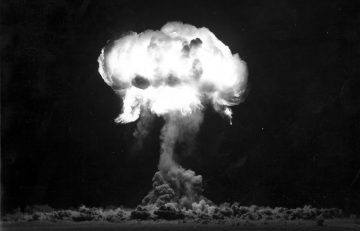 Calls for a Manhattan Project–style crash effort to develop artificial intelligence (AI) technology are thick on the ground these days. Oren Etzioni, the CEO of the Allen Institute for Artificial Intelligence, recently issued such a call on
 Fans are the people who know the quotes, the dates of publication, the batting averages, the bassist on this album, the team that general manager coached before. I am not a fan. Don’t get me wrong. I’m full of enthusiasms. But I can’t match you statistic for statistic. I haven’t read the major author’s minor novel. I don’t care who the bassist was. You win. I’m an amateur.
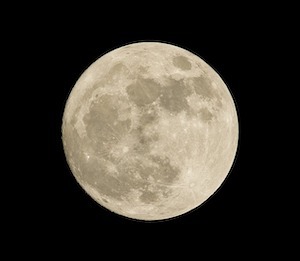 When I watched the 2019 documentary on Apollo 11, it carried me back not to the summer of 1969, when it happened, but to the mid-1980s, when I was an undergrad. I was eight when Apollo 11 launched; of course I was aware of the space program and the moon landings, but I don’t have any memories of everyone gathering around to watch those first steps on another world. My parents weren’t particularly interested, and I don’t remember being caught by the spirit of the times myself.
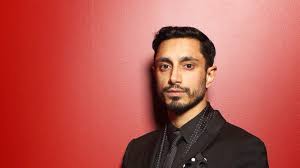 cinematic representations of Muslims. Stage One features stereotyped figures (the taxi driver, terrorist, cornershop owner, or oppressed woman). Stage Two involves a portrayal that subverts and challenges those stereotypes. Finally, Stage Three is ‘the Promised Land, where you play a character whose story is not intrinsically linked to his race’. Does
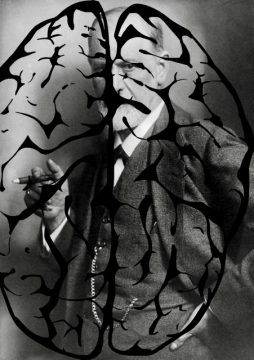 Our expectations sculpt neural activity, causing our brains to represent the outcomes of our actions as we expect them to unfold. This is consistent with a growing psychological literature suggesting that our experience of our actions is biased towards what we expect. —
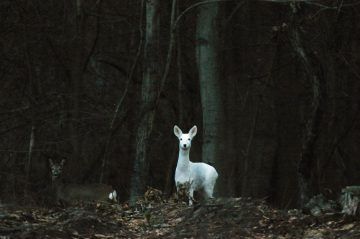 Into the Woods
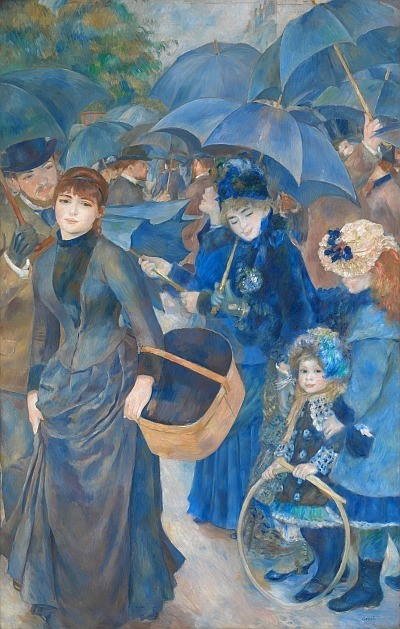
 My friend does not use punctuation when he texts, so there is a stream-of-consciousness quality to much of his communications. According to the fine folks at