by Elizabeth S. Bernstein
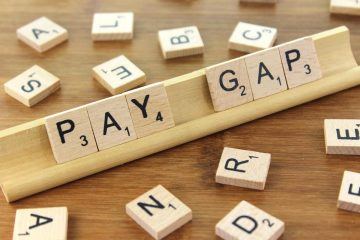 To follow the popular discourse about the gender wage gap in the United States is to confront perpetual confusion. It is a confusion created at least in part by pronouncements of the type many of us have heard: “Women are paid only 82 cents for every dollar men earn! It is high time for women to earn equal pay for equal work!” Two sentences, each true standing alone, but in juxtaposition creating the impression that the 82-cent figure was derived by comparing men and women in similar jobs.
The commonly used statistic does not however represent any comparison of men and women doing equal work. It is simply a comparison of the median wages earned by each gender in the whole assortment of jobs they hold. Though the calculation is typically limited to full-time workers, defined as those working at least 35 hours per week, men and women do not work the same number of hours. There are more women than men working between 35 and 39 hours, more men than women working over 40. On any of a number of measures – the dangers inherent in their work, the amount of travel required – the jobs worked by men and women are not the same.
This is not to say that outright wage discrimination doesn’t exist. To tease out that part of the gap, economists control for an assortment of measurable differences between men’s and women’s employment situations. Some portion of the “unexplained” gap that remains is assumed to reflect discrimination. In 2016, Glassdoor compared the earnings of men and women who were not only of similar age, education, and years of experience, but who also worked for the same employer, in the same location, with the same job title. (They did not, however, control for number of hours worked.) The resultant gap was 5.4%. In 2019, Payscale compared the median salaries of men and women with the same jobs and qualifications, and found the gap to be 2%.
Whether that “controlled” gap is two cents or five, whatever part of it is due to gender discrimination is wrong, and illegal. The good news is that that portion of the gap has decreased steadily over the decades. The women who have fought to accomplish that deserve great credit. Read more »
 On occasions, while meandering the various English countryside and woodland paths, I have been pleasantly surprised to come across anglers. I have met fishermen dangling their lines in either a pond in some remote corner of the low-lying areas, or wading in water and casting a line down through the waters of a gently flowing river.

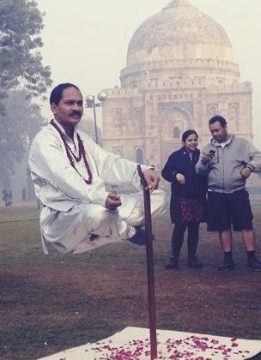

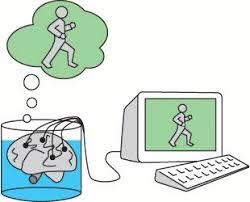 Unfortunately, you have a brain tumor. You don’t know it yet. Your doctor doesn’t know it yet. But you are beginning to have symptoms. The tumor is pressing on surrounding brain tissue and causing you develop a number of delusional beliefs. You believe you are the best swimmer in the world. You believe that dogs and cats are aliens. You believe that you invented the apostrophe. You also, as it happens, believe that you have a brain tumor.
 “Taxi to Bethlehem, taxi to Jericho!” the man at a tourism kiosk is shouting, as I make my way from the tram to Jaffa Gate, known also as Hebron Gate, to Muslims as “Bab al Khalil,” or “door of the friend,” named after Hebron where the prophet Ibrahim/Abraham (Khalil al Allah “God’s Friend”) is laid to rest. Of significance too, is the association of this gate with King David’s (prophet Dawud’s) chamber, for followers of the three Abrahamic faiths: the crusaders named it “King David’s Gate.” It is one of the seven main stone portals of the walled city of Jerusalem.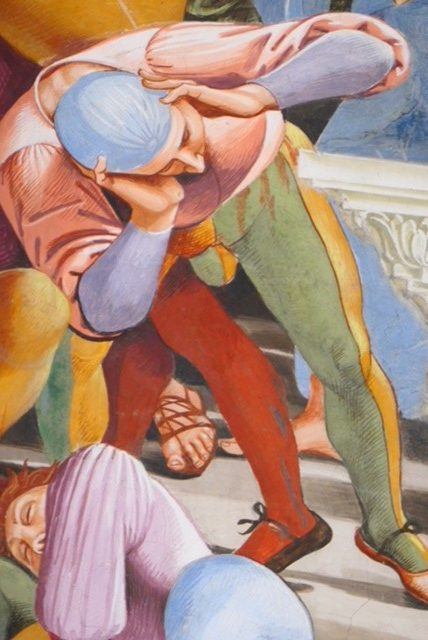
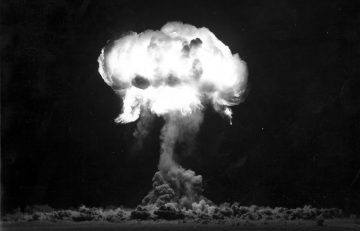 Calls for a Manhattan Project–style crash effort to develop artificial intelligence (AI) technology are thick on the ground these days. Oren Etzioni, the CEO of the Allen Institute for Artificial Intelligence, recently issued such a call on
 Fans are the people who know the quotes, the dates of publication, the batting averages, the bassist on this album, the team that general manager coached before. I am not a fan. Don’t get me wrong. I’m full of enthusiasms. But I can’t match you statistic for statistic. I haven’t read the major author’s minor novel. I don’t care who the bassist was. You win. I’m an amateur.
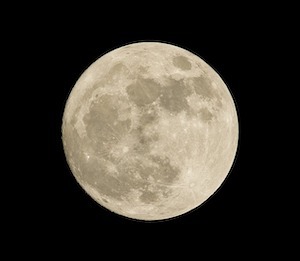 When I watched the 2019 documentary on Apollo 11, it carried me back not to the summer of 1969, when it happened, but to the mid-1980s, when I was an undergrad. I was eight when Apollo 11 launched; of course I was aware of the space program and the moon landings, but I don’t have any memories of everyone gathering around to watch those first steps on another world. My parents weren’t particularly interested, and I don’t remember being caught by the spirit of the times myself.
 cinematic representations of Muslims. Stage One features stereotyped figures (the taxi driver, terrorist, cornershop owner, or oppressed woman). Stage Two involves a portrayal that subverts and challenges those stereotypes. Finally, Stage Three is ‘the Promised Land, where you play a character whose story is not intrinsically linked to his race’. Does
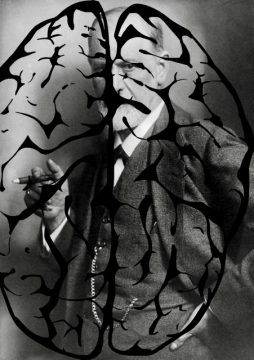 Our expectations sculpt neural activity, causing our brains to represent the outcomes of our actions as we expect them to unfold. This is consistent with a growing psychological literature suggesting that our experience of our actions is biased towards what we expect. —
 Into the Woods