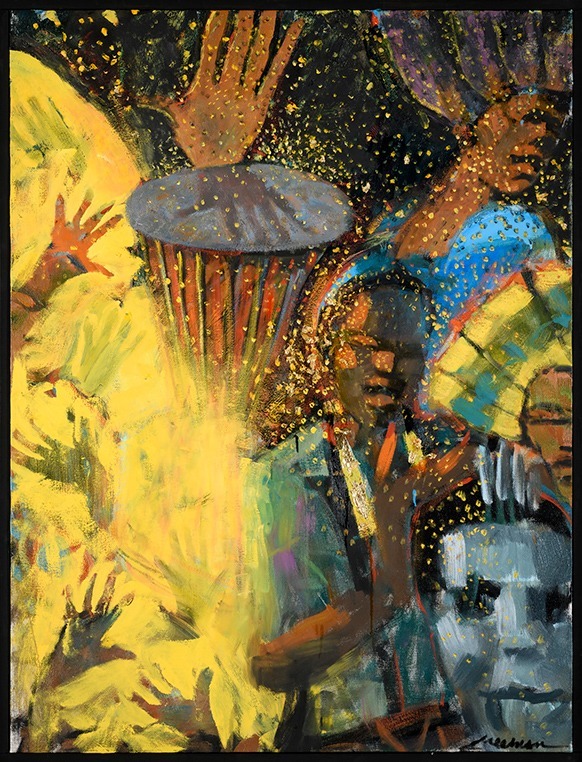
Maria Thereza Alves. Seeds of Change: New York – A Botany of Colonization; 2019.
Thanks Bringing this interesting project to my attention, Bunny Harvey! 🙂

by Eric J. Weiner
 An intransigent form of identity politics in combination with neoliberal ideology has left the modern university, if not in ruins, then lacking imagination and cultural capital. It has become a place of sequestered spaces—symbolic and real—where too many students and faculty fear discussing issues deemed to be controversial, inappropriate, or “political.” Across the social sciences/humanities, politics, religion, sex, sexual orientation, climate change, science, gender, economic inequality, poverty, reproductive rights/regulations, homelessness, race, Trump, democracy, capitalism, patriarchy, anti-Semitism, Israel, terrorism, gun violence, sexual violence, and white supremacy are just some of the topics that today make students and even some teachers uncomfortable. At best maybe these topics are addressed by creating some kind of false equivalent in an effort to feign neutrality and keep people comfortable. Discomfort in the classroom from ignorance, tension, power imbalances, conflict, disagreement, or any degree of affective and cognitive dissonance is no longer tolerated. While it used to be considered a fundamental part of the critical learning experience, discomfort of this sort now signals a flaw in pedagogy and/or the curriculum and a betrayal of trust. Learning should always feel good, be nurturing (maternalistic), and, above all, fun. If it’s not then there is hell to pay.
The fear of being emotionally and intellectually uncomfortable and the strategies used to avoid it come from all over the ideological spectrum. Avoidance strategies, from the right and left, take the form of accusations about political bias; political (in)correctness-gone-wild; claims of social/intellectual marginalization; censoring viewpoints (books, speakers, media) that are deemed offensive; silencing people through various forms of protest; creating homogenized “safe spaces”; and policing, through different modes of surveillance, language, thoughts, and behavior. Retreating into intellectual silos on campus and online, students and teachers find comfort and solace in group-think, shared social practices, and aligned ideologies. The cost of these avoidance strategies for the individual and the republic is a form of idiocy, from the Greek “idiotes,” which describes a person who cannot participate in political and intellectual life because of their lack of skills, knowledge, and general ignorance about the responsibilities of civic life. At the same time the left and right are doing their best to defang the critical civic function of the university, most universities are now aligned with neoliberal ideology, focusing on market-based competition, branding, privatization, the de-unionization of faculty/staff, and job training. Within this toxic brew of schooling, tribalism, and ideology, students are seen (and generally want to be seen) first and foremost as children in need of protection, entertainment, and comfort; savvy and influential consumers; agile agents of social media unofficially employed to promote their schools; and docile members of the university “family.” Read more »
by Michael Liss
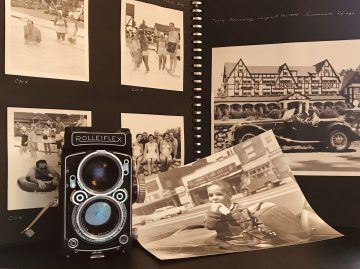
I’ve been thinking a lot about Joe Biden recently. Joe Biden and nostalgia, Joe Biden and memory. Joe Biden and Mad Men.
There is a wonderful scene to close the first season as Don Draper pitches an ad campaign to two exceptionally nerdy guys from Kodak. The boys from the lab want to talk technology, but a plastic and metal “wheel” is decidedly unsexy. Stumped at first, Don puts in a few of his own 35mm slides and an idea emerges. The lights dim, and images of happy moments with wife and kids, some posed, more not, each appear on the screen, with Don providing narration:
Well, technology is a glittering lure. But, there is the rare occasion when the public can be engaged on a level beyond flash, if they have a sentimental bond with the product. My first job, I was in-house at a fur company, with this old-pro copywriter, a Greek named Teddy. Teddy told me the most important idea in advertising is new. Creates an itch. You simply put your product in there as a kind of calamine lotion. But he also talked about a deeper bond with the product. Nostalgia. It’s delicate, but potent. … Teddy told me that in Greek, ‘nostalgia’ literally means ‘the pain from an old wound.’ It’s a twinge in your heart far more powerful than memory alone. This device isn’t a spaceship, it’s a time machine. It goes backwards, forwards, takes us to a place where we ache to go again. It’s not called the wheel. It’s called the carousel. It lets us travel the way a child travels. Round and around, and back home again, to a place where we know we are loved.
I’ve never had an itch to see Joe Biden as President. I do like him. A lot of Americans of a certain age like him, friendly and familiar and a bit worn, like a favorite old jacket you take out every fall when it gets a little chilly. The country could do a lot worse than elect Joe Biden. He has the temperament and the policy chops: former Chairman of both the Senate Foreign Relations and Judiciary Committees, former Vice-President, former glad-hander, back-slapper, and deal maker. Republicans who mocked him during the Obama Administration were often secretly relieved when the occasionally aloof President would send Joe to work the back-rooms and rope-lines. Joe got it done. Read more »
Kanti R. Rai, MD, is professor of medicine at The Karches Center for Oncology Research, The Feinstein Institute for Medical Research; director of the Center for Oncology and Cell Biology, Long Island Jewish Medical Center; and professor of medicine and molecular medicine at Hofstra University Northwell School of Medicine. He has been involved in diagnosing and treating Chronic Lymphocytic Leukemia for almost 40 years and the staging system that bears his name came out of his early breakthrough research. His research led to the eventual development of idelalisib (Zydelig) as a second-line treatment for patients with CLL and ibrutinib (Imbruvica), used to treat mantle cell lymphoma, CLL, and Waldenström macroglobulinemia. He has been collaborating with other CLL scientists at The Feinstein Institute for years establishing the importance of fludarabine, now a standard-of-care treatment for CLL, and demonstrating the effectiveness of cladribine in treating hairy cell leukemia. Dr.Rai is an active investigator in the Chronic Lymphocytic Leukemia Research Consortium, the International Workshop on CLL, and Cancer and Leukemia Group B. He is a member of the American Society of Clinical Oncology, the American Association for Cancer Research and the American Society of Hematology (ASH).
Azra Raza, author of the forthcoming book The First Cell: And the Human Costs of Pursuing Cancer to the Last, oncologist and professor of medicine at Columbia University, and 3QD editor, decided to speak to more than 20 leading cancer investigators and ask each of them the same five questions listed below. She videotaped the interviews and over the next months we will be posting them here one at a time each Monday. Please keep in mind that Azra and the rest of us at 3QD neither endorse nor oppose any of the answers given by the researchers as part of this project. Their views are their own. One can browse all previous interviews here.
1. We were treating acute myeloid leukemia (AML) with 7+3 (7 days of the drug cytosine arabinoside and 3 days of daunomycin) in 1977. We are still doing the same in 2019. What is the best way forward to change it by 2028?
2. There are 3.5 million papers on cancer, 135,000 in 2017 alone. There is a staggering disconnect between great scientific insights and translation to improved therapy. What are we doing wrong?
3. The fact that children respond to the same treatment better than adults seems to suggest that the cancer biology is different and also that the host is different. Since most cancers increase with age, even having good therapy may not matter as the host is decrepit. Solution?
4. You have great knowledge and experience in the field. If you were given limitless resources to plan a cure for cancer, what will you do?
5. Offering patients with advanced stage non-curable cancer, palliative but toxic treatments is a service or disservice in the current therapeutic landscape?
by Robert Fay
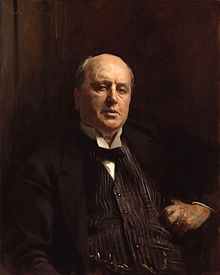
In 1899 at the age of 59 Henry James began work on The Ambassadors, the first of his brilliant, ground-breaking final three novels that included The Wings of the Dove and finally The Golden Bowl. James’ biographer Leon Edel writes, “The Ambassadors was told by James in a complex, indirect style he had never attempted before…rather than accept the old tradition of the novel which told everything, James allowed his readers to know only as much as one learns in life.” And R.P. Blackmur wrote of these final novels, “James made a spiritual trilogy which, with each succeeding volume, approaches nearer and nearer the condition of poetry.”
James is the exemplar of producing unparalleled, distinctive work late in life when the artist must confront, not only the specter of death, but the more intimidating nemesis of one’s previous output, duel foes which can freeze one into a morbid nostalgia. I’m reminded of the Reverend Gail Hightower in William Faulkner’s Light in August, who cannot escape the chimera of his grandfather’s battles in the Civil War, and how this fixation destroys his marriage and his ministry. The past can strangle us indeed.
The challenge of doing true important “late work,” or “late style” as Edward Said called it, should stoke the ambitions (and anxieties) of all serious artists. And while it’s not an impossible mountain to summit, the list of accomplished mountaineers and their treks is intimidating, for it includes: Beethoven’s Late String Quartets; Philip Roth’s great late novels, American Pastoral (published when Roth was 64), I Married a Communist and The Plot Against America; as well as works from Picasso’s Late Period (though there are still critics who disparage these pieces), to name a few. But there is more here than the individual artist bravely exploring his own dimensions, there is the effect on the surrounding culture which (in our present age) is deprived of mature thought, being seduced by the lazy discourse of the adolescent and the crudely juvenile (I’m not speaking of chronological age here). And if you think I’m overstating it, go see what’s trending right now on your favorite social media platform. Read more »
by Rafaël Newman

It was Ramadan on Mother Teresa Street, so the professor and his wife were discreetly abstaining. Their daughter, an aspiring YouTuber, had been granted special dispensation and was gorging herself on chocolate ice cream and Coca Cola, along with me and my colleague, an Israeli poet who had won an award from the Ministry of Culture, Sport and Youth the evening before, both of us treated to refreshments at one of the many outdoor cafés that lined the pedestrian zone in the middle of Prishtinë.
It had taken us a while to reach the café, constantly interrupted in our progress from one end of the mall to the other by passersby greeting the professor – colleagues from the local university and its sister institutions elsewhere in Kosovo; relatives and well-wishers, offering our host “respekt”; and an instrument vendor, who insisted on the professor’s demonstrating his prowess on the qifteli, a long-necked, two-stringed local guitar – so I was delighted when I heard myself greeted, as we took our place at the café, by a Kosovar of my own acquaintance from the French-speaking region of Switzerland, who happened to be in town to visit family.
The Israeli poet and I were in Prishtinë on the last leg of a three-day stay in Kosovo. Our time had been spent not in the capital but in the town of Pejë, in the northwest of the country near the borders with Montenegro and Albania, once a significant stop on the trade route between Dubrovnik and Istanbul. We had been attending a literary festival there, taking part in readings, lectures, and a dizzying round of awards ceremonies. Most of the writers in attendance – largely poets – were “ethnic” Albanians, from the eponymous country to the west, from the significant minority community in Macedonia, to the south, as well as from Kosovo itself, our host. Read more »
by Maniza Naqvi
Grief stages its unfurling
Towards the promise of sorrow,
Strips away to beauty
Peels in layers
Sheds
Skin,
Leaks
Bleeds.
Sheds and sheds.
A friend texts
A song by Daniel Johnston.
An icon. Gone.
Says: Transitioned,
As you would say.
It has taken years, eight
To get here
To rescue stone.
This state.
To transform.
An avocado’s stone
Witness peel
Slip away
Pit turn to flesh
Shed
Dye.
Stone turned flesh,
Weeps,
Bleeds,
Dye.
Heart, pit, stone.
Reborn as stain.
On white sheet.
Tree.
Now washed:
Now bathed,
Now dipped,
Now dunked,
Now immersed,
Now lifted.
Now stained,
Faded rose red,
The hue of that stone
We picked for you
Now glimpses
Glimmers
Gold scapes
Sea blues,
And yes shades,
Crimson and beyond
Brushes and
Strokes
Thoughts
Eternity.
Struggle.
by R. Passov
When I arrived in California, when I was born, I joined 15 million inhabitants, including my parents.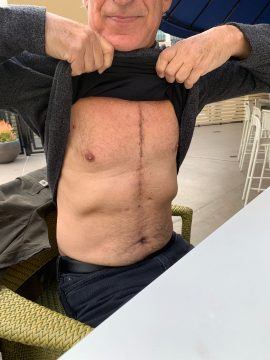
They were part of a long wave of predominately eastern European descendants who came in such numbers as to pull west much of post-WWII American culture.
In the year I found California, 16 million people lived in New York State. It was the New York of West Side Story and the Bronx Bombers, the year when the Boys of Summer would play their first game in Los Angeles.
In the early 1970s my family took a cross-country road trip. For four days we drove toward our history.
I was in school with children of the East, growing in the seams of our parent’s dreams of leaving places with exotic names like Brooklyn, Hoboken and best of all, the Bronx. That’s where we aimed on that cross-country drive to visit my great grandparents, so old by then they no longer moved.
Two floors up a dark stairwell on the Grand Concourse, once the boulevard of dreams for Jews, the lights of Yankee Stadium shown in their summer windows. Sitting on their tattered sofa surrounded by their old country furnishings, wearing the same formal clothing that protecting them across the Atlantic, they were old-country old. How glad I was that my parents had come west.
In 1997 I left California’s then 32 million inhabitants to move East, thereby adding one to New York’s 18 million. Read more »
by Akim Reinhardt
 It doesn’t take much. A small piece of gravel, spit out by a truck’s wheel, ricochets off the windshield, taking a tiny chip of glass with it. A microscopic divot and discreet little lines, like crow’s feet at the corner of an eye. Barely noticed for months, the accordion of heat and cold compress and expand, adding and relieving pressure. Then finally, the scratches spread out across the glass like an avant garde spider web.
The windshield has not fractured into zagged plates or smashed into a thousand glass pebbles. Perhaps that is its future, but for now it is merely degraded and slightly obscurant. Yet it was never true. Tinted, laminated, curved, and often dirty, the windshield always presented a slightly skewed image of the outside world. Not grotesquely wrong, but fundamentally distorted in minor ways difficult to detect from inside the car. Now, however, the little cracks have suddenly made you aware that the image upon the glass is subtly warped.
*
As in many countries, if not most, American school children are indoctrinated with nationalistic history that incorporates heroic narratives and stirring interpretations. From kindergarten through high school, state sanctioned curricula present a range of facts and viewpoints that coalesce into what can fairly be called imperial mythology. Most of it is technically correct, but the total image produced is often heavy on the rah-rah and short on critical self-examination. Of course some states are worse than others, and some teachers better than others, but the overall effect across society is consistent. Read more »
by Brooks Riley

 by Leanne Ogasawara
Photographs by Tracey Parmley Nuki
1.
Back from three weeks on the road, I immediately consult my Japanese almanac. To my delight, I see we are now in the Time of White Dew (白露):
Falling just prior to the Autumnal Equinox, the sun is said to have passed the 165th solar degree on its journey south. Although the afternoons are still dominated by the lingering heat of August and September, Autumn-like weather can increasingly be felt, deepening with each passing rain shower, especially noticeable in the mornings and evenings as the equinox approaches.
It’s like clockwork. Every year, by mid-September, the dew point is reached and suddenly there are glistening dewdrops –like diamonds– scattered in the morning grass.
This was true in Tokyo and it’s true in Los Angeles.
In Japan, these pearly gems are not only treasured for their gem-like beauty, but they are also appreciated for their fleetingness; which, like scattering cherry blossoms, are likened to the transience of our human existence. For life, like the disappearing dewdrops in the morning sunlight, is too often cut short. In this way, dewdrops have been considered, since ancient times, along with “scattering flowers and fallen leaves” (飛花落葉) as a poetic metaphor for impermanence, or mujo (無常).
Have you heard of the dewdrop world? Read more »
by Bill Murray
The first part of this century West Africa was no place to be. Liberia was led by Charles Taylor, now serving a fifty year sentence for “aiding and abetting as well as planning some of the most heinous and brutal crimes in recorded human history.” In Sierra Leone’s civil war, entire families were gunned down in the street. Children and adults had their limbs hacked off with machetes.
A few years later in 2010, Laurent Gbagbo, the incumbent president of Côte d’Ivoire, refused to cede power following elections. Subsequent clashes led to 3000 deaths. (Gbagbo was acquitted of war crimes in January of this year).
In the late 1990s though, you might casually catch a flight to Abidjan on now defunct Air Afrique for a bit of innocent, if unlikely, tourism.
It was still the era of guidebooks. Here is the then-current Lonely Planet Guide to West Africa:
“On the northwest edge of town near the beginning of the road to Dabou is the Parc du Banco. Several hundred meters beyond the dirt road entrance to the park you’ll see … Africa’s largest outdoor laundrette – some 750 fanicos (washermen), mostly Burkinabé and none Ivorian, jammed together … in the middle of a small stream frantically rubbing clothes on huge stones held in place by old car tyres.” Read more »
 What is peculiar about this photo is that what you see behind the metal frame of the door is not a supermarket. It is a giant photo of the supermarket affixed to the wall which is a couple of meters behind this door. The actual supermarket shown in the photo on the wall is off to one side. I don’t know why. Photo of photo taken last week in Vahrn, South Tyrol.
September 4, 2019: Adam Satariano, “The World’s First Ambassador to the Tech Industry”, The New York Times, September 3, 2019.
In 2017, Denmark became the first nation to formally create a diplomatic post to represent its interests before companies such as Facebook and Google. After Denmark determined that tech behemoths now have as much power as many governments — if not more — Mr. Klynge was sent to Silicon Valley.
“What has the biggest impact on daily society? A country in southern Europe, or in Southeast Asia, or Latin America, or would it be the big technology platforms?” Mr. Klynge said in an interview last month at a cafe in central Copenhagen during an annual meeting of Denmark’s diplomatic corps. “Our values, our institutions, democracy, human rights, in my view, are being challenged right now because of the emergence of new technologies.”
He added, “These companies have moved from being companies with commercial interests to actually becoming de facto foreign policy actors.”
Here we go, I thought, I’ve seen this kind of thing before.
September 12, 2019: Miriam Pawel, You Call It the Gig Economy. California Calls It ‘Feudalism’. The New York Times, September 12, 2019.
Labor leaders cheered in the balcony and lawmakers embraced on the floor of the California Senate on Tuesday as it passed a landmark measure that defines  employees, a move that could increase wages and benefits for hundreds of thousands of struggling workers. […]
The “new economy, the gig economy, the innovation economy” is “feudalism all over again,” said the Assembly speaker, Anthony Rendon, a Los Angeles Democrat.
Bam! Another one.
What kind of thing is that? – you ask. Virtual Feudalism, that’s what.
* * * * *
Abbe Mowshowitz is a mathematician and computer scientist interested in the impact of computing technology on society. I’d met Abbe when I was on the faculty at The Renssalaer Polytechnic Institute in the previous century. He was interested in how the deployment of computer technology was creating virtual organizations that would lead to a virtual feudalism. He would eventually publish a book on the subject [1]. Before that, however, he commishioned me to to ghost an article on the subject. Alas, that article never got published. Here it is. The ideas are Abbe’s. The prose and stories are mine. Read more »
by Dave Maier
Sometimes I think I should post new mixes more often; but one advantage of doing them only twice a year is that I have no shortage of really excellent material. (Actually that’s always true, so so much for that excuse …). Nothing of my own this time, but in recent months I have obtained some amazing tools, with another on the way in December, so next year could be quite interesting in that regard, once I figure out what I’m doing. Stay tuned!
Star’s End Annex 9/19 [direct link if widget fails]
FernLodge – a brief time [Hjemve]
En – Elysia [Already Gone]
Halftribe – Virus [v.a./Illuminations II (The New Year 2018 charity compilation)]
Jarguna – Garden of the Gods [Fusion of Soul]
Knivtid – Paus I [v.a./the opposite of aloof vol. 1]
Noveller & thisquietarmy – Reverie 3 [Reverie]
Ann Annie – delicate landscape [Cordillera]
Beaunoise – Forst, 1975 [Buchlaworks, Module 1]
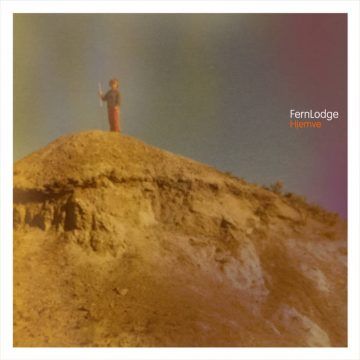 We’ve seen a couple of these artists before. FernLodge is this guy Joe from Canada, whose music is (as is all of this music actually; follow the links) available on Bandcamp. However, while most artists, even when giving their music away for free, allow you to “name your price” (which in turn allows you, if your price isn’t zero, to put that music into your Bandcamp “collection,” available to download whenever you want), Joe simply sets the price at “free” (which means you can’t put it into your online collection even if you want to). As you can tell by listening, Joe is being way too modest, as Hjemve in particular is excellent, his best yet. Incidentally, one of the instruments Joe used on this record (a Ciat-Lonbarde Cocoquantus 2) is now in my possession, as earlier this year I traded him some Eurorack modules for it. If I ever do anything with it as good as Hjemve, I’ll be very happy! Read more »
by Michael Klenk
 Someone else gets more quality time with your spouse, your kids, and your friends than you do. Like most people, you probably enjoy just about an hour, while your new rivals are taking a whopping 2 hours and 15 minutes each day. But save your jealousy. Your rivals are tremendously charming, and you have probably fallen for them as well.
I am talking about intelligent software agents, a fancy name for something everyone is familiar with: the algorithms that curate your Facebook newsfeed, that recommend the next Netflix film to watch, and that complete your search query on Google or Bing.
Your relationships aren’t any of my business. But I want to warn you. I am concerned that you, together with the other approximately 3 billion social media users, are being manipulated by intelligent software agents online.
Here’s how. The intelligent software agents that you interact with online are ‘intelligent agents’ in the sense that they try to predict your behaviour taking into account what you did in your online past (e.g. what kind of movies you usually watch), and then they structure your options for online behaviour. For example, they offer you a selection of movies to watch next.
However, they do not care much for your reasons for action. How could they? They analyse and learn from your past behaviour, and mere behaviour does not reveal reasons. So, they likely do not understand what your reasons are and, consequently, cannot care for it.
Instead, they are concerned with maximising engagement, a specific type of behaviour. Intelligent software agents want you to keep interacting with them: To watch another movie, to read another news-item, to check another status update. The increase in the time we spend online, especially on social media, suggests that they are getting quite good at this. Read more »
by Chris Horner

In my years in education I have regularly come across what I call the lightbulb fallacy: the view that people have degrees of brightness and that it is the job of education to measure the wattage of learners in order to find the best social sockets to plug them into. It is a noxious idea. The notion that intelligence is a measurable ‘something’ that is possessed by people in varying degrees is one of the ways in which we end up with an education system that fails the majority of those it is supposed to be helping. It damages not just those in schools and colleges but people in general, and it is based on a fallacy about what it is to learn and understand.
One can see a number of reasons why adopting a notion like this would seem useful for an education system like ours: if people have amounts of intelligence that can be identified and measured, then people can be classified and fitted into the place in education, and later in the economy, that will suit their degree of ‘brightness’. But the problem is that people aren’t like lightbulbs with differing degrees of wattage, and this essentialising approach, that imputes a fundamental, intrinsic trait to an individual, leaves most people experiencing education as a demotivating process in which they learn to experience themselves as failures. Examinations put the seal on this by placing students in an ascending hierarchy of brightness. The effect of this on many, if not most, learners is unhelpful, to put it mildly. As an educator I have had to deal with numerous situations in which students have in effect used this as an alibi for giving up, since if those other students are brighter than oneself, why bother? Of course, not every learner reacts to lower marks in that way – but most get the message, in the end, that they cannot get far up the ladder of educational achievement, and that success is the preserve of a small number of the very bright. Read more »
Wadih Arap is the Director of the Rutgers Cancer Institute of New Jersey at University Hospital and Chief, Division of Hematology/Oncology in the Department of Medicine at Rutgers New Jersey Medical School. He has served on the National Cancer Institute’s Board of Scientific Counselors, several review boards for the National Institutes of Health and the U.S. Department of Defense’s Prostate and Breast Cancer Research Program. His research is based on the premise that differential protein expression in disease tissues enables the development of novel, targeted drugs to treat human disease. By integrating genomic analyses and analytical high-throughput technology, functional protein-protein interactions can be manipulated to develop clinical strategies for effective disease management.
Azra Raza, author of the forthcoming book The First Cell: And the Human Costs of Pursuing Cancer to the Last, oncologist and professor of medicine at Columbia University, and 3QD editor, decided to speak to more than 20 leading cancer investigators and ask each of them the same five questions listed below. She videotaped the interviews and over the next months we will be posting them here one at a time each Monday. Please keep in mind that Azra and the rest of us at 3QD neither endorse nor oppose any of the answers given by the researchers as part of this project. Their views are their own. One can browse all previous interviews here.
1. We were treating acute myeloid leukemia (AML) with 7+3 (7 days of the drug cytosine arabinoside and 3 days of daunomycin) in 1977. We are still doing the same in 2019. What is the best way forward to change it by 2028?
2. There are 3.5 million papers on cancer, 135,000 in 2017 alone. There is a staggering disconnect between great scientific insights and translation to improved therapy. What are we doing wrong?
3. The fact that children respond to the same treatment better than adults seems to suggest that the cancer biology is different and also that the host is different. Since most cancers increase with age, even having good therapy may not matter as the host is decrepit. Solution?
4. You have great knowledge and experience in the field. If you were given limitless resources to plan a cure for cancer, what will you do?
5. Offering patients with advanced stage non-curable cancer, palliative but toxic treatments is a service or disservice in the current therapeutic landscape?
by Anitra Pavlico
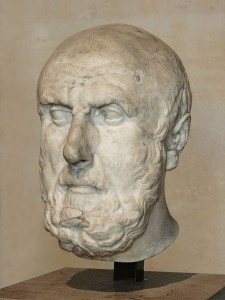
Most of the modern revival of Stoicism has centered on the works of Seneca, Epictetus, and Marcus Aurelius–all from the “Late Stoa,” or the third phase in the history of Stoicism. No complete works survive from either the early or middle period.
Chrysippus (c. 279-206 B.C.E.) was one of the most influential early Stoics. He studied with Cleanthes, who studied directly with Zeno, who founded the school in 262 B.C.E. You won’t see his quotes on any inspirational desktop art, but Chrysippus was perhaps the one most responsible for keeping Stoicism alive in its early years. A later Stoic saying was, “If Chrysippus had not existed, neither would the Stoa.”
Chrysippus was prolific, having reportedly written over 705 books. No single book remains, and today we only have around 475 fragments. He was the second great logician, after Aristotle. Diogenes Laertius reported in his Lives of the Philosophers that most people believed that if the gods were to pursue dialectic, they would adopt Chrysippus’ system alone. The seemingly airtight logic of many Stoic approaches to life, as they have filtered down to us, stems directly from Chrysippus. The Stoic philosophy featured three branches: logic, physics, and ethics. The scope of logic also included the analysis of argument forms, rhetoric, grammar, propositions, perception, and thought. [1] Josiah Gould points out that Chrysippus felt that logic should be studied before the other two branches of the philosophy. [2] While Gould notes that it is lamentable that we do not have a single full logic treatise when they have such “tantalizing” titles as On Negative Propositions, An Introduction to the Study of Ambiguity, On Imperatives, and Reply to Those Who Think that a Proposition Can be Both False and True, he maintains that we can reconstruct some of his views based on the fragments we possess. Read more »