
Dr. Mark Heaney is a hematologist and an active principal investigator of several clinical trials that have aimed at developing novel treatments for leukemia. His research has focused on metabolic differences between leukemia cells and normal cells that can provide understanding into how leukemias behave in the individual patient and how they respond to treatment. He chiefly focussed on the new treatments of the myeloproliferative neoplasms, primary myelofibrosis, polycythemia vera and essential thrombocythemia, however, has also studied new treatments for chronic myeloid leukemia, mastocytosis and Langerhans cell histiocytosis in keeping with his clinical expertise in rare blood cancers. He currently serves as Professor of Medicine and Director of Hematology and Medical Oncology Fellowship Program at Columbia University Medical Center.
Azra Raza, author of The First Cell: And the Human Costs of Pursuing Cancer to the Last, oncologist and professor of medicine at Columbia University, and 3QD editor, decided to speak to more than 20 leading cancer investigators and ask each of them the same five questions listed below. She videotaped the interviews and over the next months we will be posting them here one at a time each Monday. Please keep in mind that Azra and the rest of us at 3QD neither endorse nor oppose any of the answers given by the researchers as part of this project. Their views are their own. One can browse all previous interviews here.
1. We were treating acute myeloid leukemia (AML) with 7+3 (7 days of the drug cytosine arabinoside and 3 days of daunomycin) in 1977. We are still doing the same in 2019. What is the best way forward to change it by 2028?
2. There are 3.5 million papers on cancer, 135,000 in 2017 alone. There is a staggering disconnect between great scientific insights and translation to improved therapy. What are we doing wrong?
3. The fact that children respond to the same treatment better than adults seems to suggest that the cancer biology is different and also that the host is different. Since most cancers increase with age, even having good therapy may not matter as the host is decrepit. Solution?
4. You have great knowledge and experience in the field. If you were given limitless resources to plan a cure for cancer, what will you do?
5. Offering patients with advanced stage non-curable cancer, palliative but toxic treatments is a service or disservice in the current therapeutic landscape?

 If you have read reports about Mr. Barr’s remarks, you probably already know they have been criticized for their ferocious partisanship. There is unquestionably a considerable amount of energy devoted to critiquing those who get in President Trump’s way (Congress, the federal courts, Progressives, and private citizens who exercise their right of free speech). But M
 Theodore M. Bernstein – Miss Thistlebottom’s Hobgoblins: The Careful Writer’s Guide to the Taboos, Bugbears, and Outmoded Rules of English Usage (1971)
 Godfrey points the Land Rover toward Ngorongoro Crater. The road is fine to lull the unwary, but before you know it there is one lane, then no tarmac, then mud and potholes and empty hills.


 Europeans spent 400 years killing, raping, lying to, and robbing Indigenous Americans. And then, when they’d taken most everything they wanted, they turned Native peoples into tokens, costumes, mascots, and fashion accessories. Like most fashion trends, it’s gone in cycles.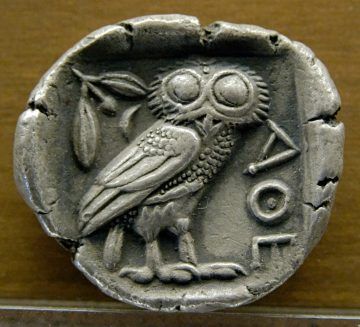



 Childrearing practices in the United States underwent a radical alteration during a period from the last decade of the nineteenth century through the first few decades of the twentieth. In 1929, psychologists William Blatz and Helen Bott looked back on the changes they credited to Dr. Luther Emmett Holt, whose childcare manual was first published in 1894 and continued to come out in new editions every few years:
 I recently read Jill Lepore’s
  At the heart of French existentialism – and especially the version associated with its most famous representative, Jean Paul Sartre – was the notion of radical freedom. On this view, when we choose, we choose our values and thus what kind of person we are going to be. Nothing can prescribe to us what we ought to value, and the responsibility of freedom is to accept this fact of the human condition without falling into the ‘bad faith’ which would deny it. The moment of existentialism may have passed, but the view that we are radical choosers of our values persists in many quarters, and so I want to consider how well this idea holds up, and what an alternative to it might look like.
 Facebook, Amazon, Apple, Microsoft, and Google, often referred to as Big Tech, know more about you than your closest friends and family. They know who you are talking to and what you are talking about, what you are buying or are thinking of buying, how much money you have, and what your fears and desires are. What a few years ago may have sounded like a dystopic vision, is today a reality of our online life (our ‘onlife’). In this setting, even Facebook’s plans of introducing their own currency, Libra, does not seem out of the ordinary.
 A long time ago, on a mountainside in Liechtenstein, I tuned my transistor radio to the Deutschlandfunk, one of neighboring Germany’s state radio stations whose broadcast range leaked into that tiny country. This is what I heard:
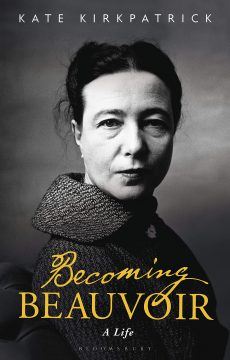 Biographies frequently provide us with insights into individual characters in a way that autobiographies might not: the third person narrator offers the prospect of greater ‘objectivity’ when evaluating and narrating information and events and circumstances. And so it is with Paul Avrich and Karen Avrich’s Sasha and Emma: The Anarchist Odyssey of Alexander Berkman and Emma Goldman,and Katie Kirkpatrick’s Becoming Beauvoir: A Life.These two books provide a wealth of knowledge on the political and philosophical thinking that engaged the brilliant minds of two significant women of the twentieth century: Emma Goldman and Simone Beauvoir.
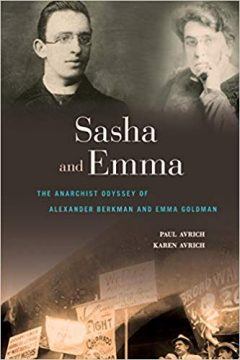 The life trajectories of the two women could not have been more different: Goldman was a Jewish Russian émigré to the United States; she learned her politics through experience and in that process clarified her political thinking on anarchism, and her life was lived humbly. Beauvoir on the other hand, was from a bourgeois Catholic family and benefited from a formal education and she lived life relatively comfortably. However, despite their divergent lifestyles and politics, similarities can be drawn between their thinking on women, love and freedom.