
by Callum Watts
Christmas gets me thinking about magic. Remembering the way I enjoyed Christmas as a child brings me back to a time when I believed in the power of supernatural phenomena. The most exciting piece of magic I performed was writing a message on a piece of paper, addressing it to Santa Claus in the North Pole, and setting it alight so that the smoke would be carried away on the winter breeze and read by him (I thought flying reindeer seemed pretty neat as well). The joy was of taking some of my innermost desires, embodying them materially and sending them into the world through a very practical activity, so that the universe could respond.
The sadness I felt at my loss of belief in Santa came from the realisation that I was living in a solely ‘material’ universe. As a scientifically curious child with no religious beliefs, the last bastion of magic had fallen. This death of magic was deeply disappointing, but this loss is not just at an individual one. In society as in biology, ontogeny recapitulates phylogeny. That is to say, I was merely following in the steps of a journey of disenchantment that many secular societies had already been on.
Max Webber was the first to comment on the way the triumph of science and bureaucracy was melting away traditional beliefs about the power of religion and the supernatural. He christened this process, which is distinctive of modernity, ‘disenchantment’. Science, by reducing the functioning of the universe to physical cause and effect gets rid of the need for explanations in terms of magic and gods and spirits. Likewise, modern bureaucratic systems reduce social life to rationalised processes which become ever more difficult to escape from, and dilute social activities of their traditional meaning in the name of efficiency and process. Read more »



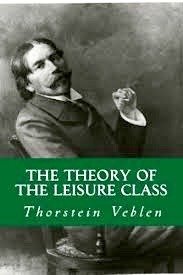 Thorstein Veblen’s The Theory of the Leisure Class is a famous, influential, and rather peculiar book. Veblen (1857 – 1929) was a progressive-minded scholar who wrote about economics, social institutions, and culture. The Theory of the Leisure Class, which appeared in 1899, was the first of ten books that he published during his lifetime. It is the original source of the expression “conspicuous consumption,” was once required reading on many graduate syllabi, and parts of it are still regularly anthologized.




 Last month
  My Jewish maternal grandparents came to America just ahead of WWII. Nearly all of my grandmother’s extended family were wiped out in the Holocaust. Much of my grandfather’s extended family had previously emigrated to Palestine.

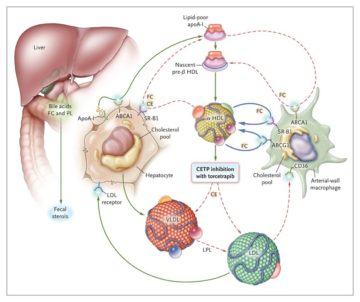 shocking. Torcetrapib, for example, failed at the very end of its phase III trial. So many resources had been expended to get that far in development. Everything spent was lost. All that remained was a big data pile worth virtually nothing, along with pilot plants that were built to supply the drug to thousands of patients across years of clinical trials.