by Chris Horner
Beauty is nothing more than the promise of happiness —Stendhal

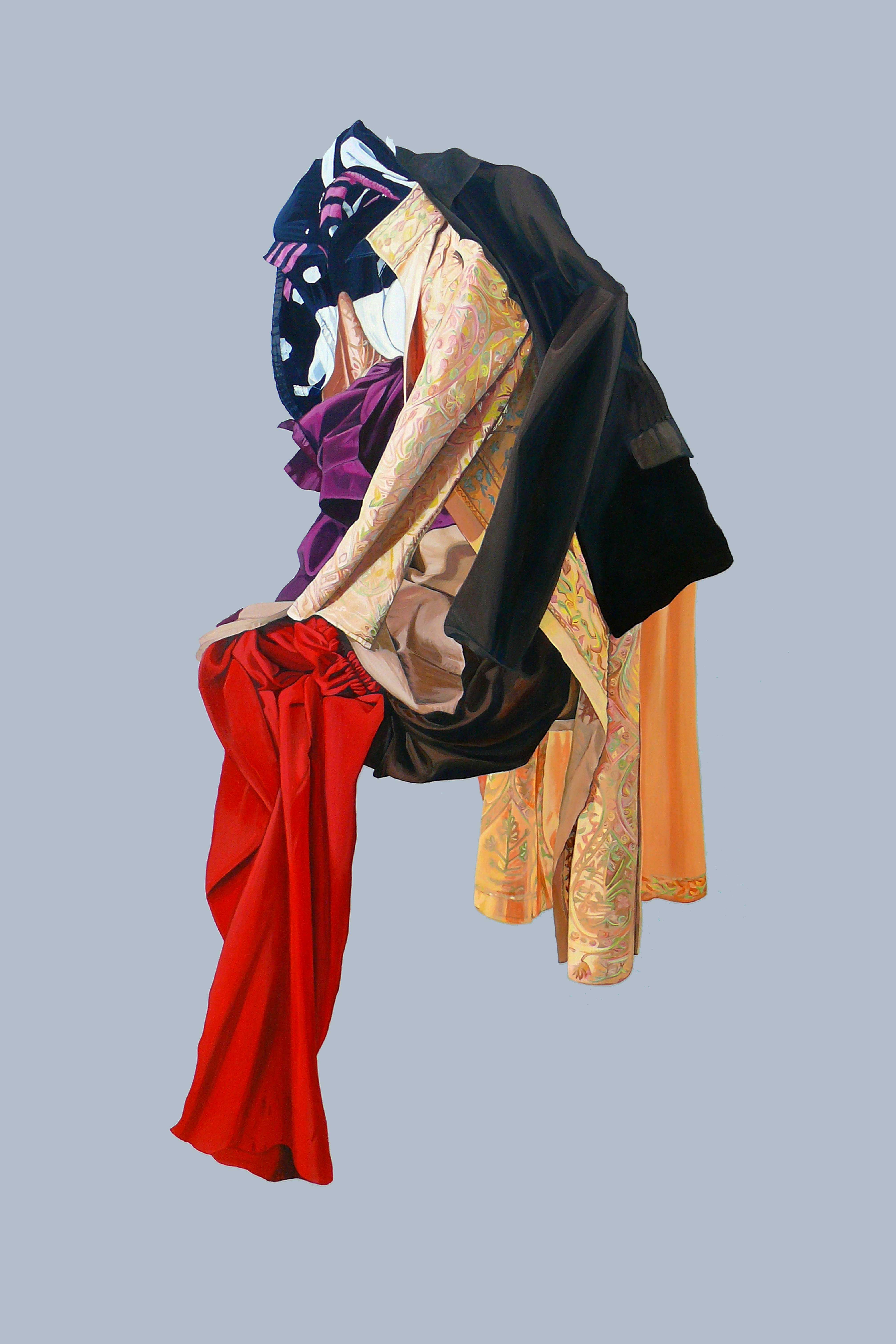
How can beauty promise happiness? And what kind of beauty would this be? What sort of happiness? Happiness and Beauty have been central issues for thinkers since antiquity, and the question of what they really are, and whether we should even prize them as we do, have been subjected to sustained critique and discussion for millennia. I don’t intend to join that debate here. Happiness and Beauty: the more we try to get clear about them, the more they seem to recede from us. But, like Stendhal, we cannot do without them.
The origin of the quotation at the top of the page is his On Love, in a footnote in about the possibility of loving that which is ugly. He gives an anecdote about a man who falls in love, not with a woman who is conventionally beautiful but rather one who is not good looking, is too thin and is scarred with smallpox. He falls for her because she reminds him of a past love. Stendhal’s claim here is that beauty isn’t based on physical perfection. The idea of beauty is distinct from the physical form of the thing we desire. This may seem an odd way of conceiving of beauty, but it has a lineage that goes back to Plato. Beauty is kind of message or sign of something else.
Happiness, it seems, is elsewhere. We recall it or anticipate it, and the thing desired is somehow Other to where we are in space and time. The pursuit is not necessarily pleasurable, as the recollection of past happiness can be painful [1]. For Stendhal it is prompted by an erotic encounter, but presumably anything might serves as a trigger: the smell of autumn leaves, the hills in summer, a piece of music. One is reminded of Proust’s Madeleine, and the onrush of unbidden memory in his In Search of Lost Time. We are a long way from conventional ideas of harmony of form, or pleasing combinations of colour or tone. It seems to be less about beauty as it is usually understood, and more about a longed for state of felicity, however it is imagined: for past loves, for home, for childhood. Read more »
 In my earlier column, “





 The stories in Seiobo There Below, if they can be called stories, begin with a bird, a snow-white heron that stands motionless in the shallow waters of the Kamo River in Kyoto with the world whirling noisily around it. Like the center of a vortex, the eye in a storm of unceasing, clamorous activity, it holds its curved neck still, impervious to the cars and buses and bicycles rushing past on the surrounding banks, an embodiment of grace and fortitude of concentration as it spies the water below and waits for its prey. We’ve only just begun reading this collection, and already László Krasznahorkai’s haunting prose has submerged us in the great panta rhei of life—Heraclitus’s aphorism that everything flows in a state of continuous change.
 by Callum Watts
 “Battle of Algiers”, a classic 1966 film directed by Gillo Pontecorvo, seized my imagination and of my classmates as well when it was shown three years later at the Palladium in Srinagar. A teenager wearing bell-bottoms, dancing the twist, I was a Senior at Sri Pratap College, named after Maharajah Pratap Singh, a Hindu Dogra ruler of Muslim majority Kashmir.
 I remember as a child watching the made-for-tv movie
 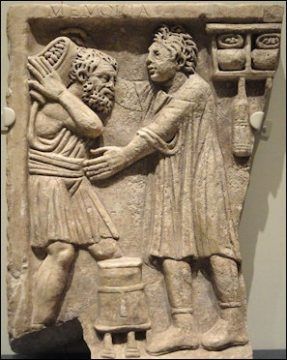 Whether or not a certain line of work is shameful or honorable is culturally relative, varying greatly between places and over time. Farmers, soldiers, actors, dentists, prostitutes, pirates and priests have all been respected or despised in some society or other. There are numerous reasons why certain kinds of work have been looked down on. Subjecting oneself to the will of another; doing tasks that are considered inappropriate given one’s sex, race, age, or class; doing work that is unpopular (tax collector); or deemed immoral (prostitution), or viewed as worthless (what David Graeber labelled “bullshit jobs”), or which are just very poorly paid–all these could be reasons why a kind of work is despised, even by those who do it. One of the oldest prejudices though, at least among the upper classes in many societies, is against manual labour.